














You can overcome a strong fear of public speaking by retraining your mind and body to respond with calm. Start by challenging negative thoughts and rewriting them into realistic statements. Reinterpret your racing heart as excitement, not danger, and pair this shift with slow, diaphragmatic breathing. Prepare thoroughly so your material feels familiar, then rely on repeated practice to steadily reduce anxiety. The techniques ahead show you exactly how to make each step work. New mom scary intrusive thoughts can often feel overwhelming and isolating. It’s important to acknowledge that these feelings are common and part of the adjustment to motherhood.
Key Takeaways
- Reframe negative thoughts into realistic statements and interpret a racing heart as excitement rather than danger.
- Practice slow diaphragmatic or 4-7-8 breathing to calm physiological arousal and steady a shaky voice.
- Prepare early and know your topic well to build familiarity, control, and confidence.
- Use progressive exposure, mirror, webcam, small groups, to steadily desensitize fear without skipping steps.
- Seek support groups, counseling, or professional help if fear remains strong despite consistent practice.
How Do You Overcome Fear of Public Speaking Anxiety

You overcome fear of public speaking anxiety by addressing both your body and your mind. Start with cognitive reframing: challenge specific worries and rewrite negative thoughts into realistic statements. You can even interpret racing symptoms as excitement rather than threat. Pair this with slow, diaphragmatic breathing to calm your physiological arousal before you speak. Then rely on exposure, practicing repeatedly in front of mirrors, friends, or small groups, gradually increasing difficulty rather than avoiding it. With careful preparation and strong topic knowledge, your material feels familiar, and your anxiety steadily becomes more manageable.
What Causes the Fear of Public Speaking
The fear of public speaking is caused by the mind amplifying a manageable situation into a perceived threat. When you focus inward, self-focused worry intensifies, and performance anxiety grows larger than the actual risk. Your body reads this as danger, activating physiological arousal that feels overwhelming. Coping becomes harder when unfamiliar material, weak preparation, or imagined judgment compounds the pressure. Social anxiety in the workplace can further exacerbate these feelings of unease. Colleagues and supervisors may unintentionally contribute to this stress, leading individuals to avoid interactions or opportunities for growth.
Several factors commonly drive this fear:
- Self-focused worry that magnifies mistakes and imagined audience criticism.
- Limited preparation or shaky topic knowledge that increases uncertainty.
- Physiological arousal, like a racing heart, misread as a threat signal.
- Performance framing, where you see speaking as a test rather than a conversation.
Recognizing these causes makes them manageable.
What Are the Physical and Mental Symptoms

Physical symptoms of speech anxiety include a racing heart, shallow breathing, and tight muscles as your nervous system prepares to defend you. Mental symptoms often include thoughts that spiral toward worst-case outcomes, self-criticism, and a heightened focus on your own performance.
| Physical Symptoms | Mental Symptoms |
|---|---|
| Racing heart or pounding chest | Fear of judgment or embarrassment |
| Shallow, rapid breathing | Catastrophic, worst-case thinking |
| Trembling hands or shaky voice | Intense self-focused worry |
| Sweating or flushed skin | Difficulty concentrating |
| Dry mouth or tight throat | Blanking or losing your train of thought |
Naming these symptoms helps you understand they’re manageable, not dangerous.
How Do You Calm Your Nerves Before You Speak
Calm your nerves before you speak by using preparation and body-based techniques together to steady your nervous system, and starting early gives you the most control. Your body is reacting to a perceived threat, not an actual one, and that means you can calm it.
- Breathe deeply. Use diaphragmatic or 4-7-8 breathing, extending your exhale to slow your heart rate and trigger a calming response.
- Arrive early. Check the room and test your equipment so surprises don’t compound your anxiety.
- Reframe your thoughts. Interpret the racing heart as excitement, not danger, and challenge worst-case worries realistically.
- Relax your body. Release tension through muscle relaxation and grounding to reduce visible signs of stress.
These small, repeatable steps ease you into steadier, more confident delivery.
What Techniques Build Long-Term Confidence

Techniques that build long-term confidence include repeated practice, progressive exposure, and honest reflection over time. The most consistent strategy is repeated practice. Start with easier settings, like a mirror, webcam, or a few friends, then gradually face larger or more challenging audiences. This progressive exposure desensitizes your fear, so avoid skipping steps or backing away from harder situations. After each speech, reflect on what went well rather than fixating on flaws, and treat yourself with self-compassion. When fear stays strong or persistent, consider support groups, counseling, or professional help. Don’t overlook your baseline health, either. Regular exercise, adequate rest, and steady habits can lower your overall anxiety, making each speaking opportunity feel more manageable over time.
When Is Public Speaking Anxiety a Sign of Something More
Public speaking anxiety signals something more when persistent, intense fear disrupts your life. Occasional anxiety before a speech is expected, but when the strategies you’ve practiced consistently fail to help, it’s worth seeking support.
Watch for these signs:
When practiced strategies consistently fail, persistent fear may be signaling it’s time to seek professional support.
- Persistent avoidance, you turn down jobs, classes, or opportunities to escape speaking situations.
- Overwhelming physical symptoms, you experience panic, racing heart, or nausea that feels uncontrollable.
- Intense anticipatory dread, you worry for days or weeks before an event.
- Lasting distress, your fear remains strong despite repeated practice and exposure.
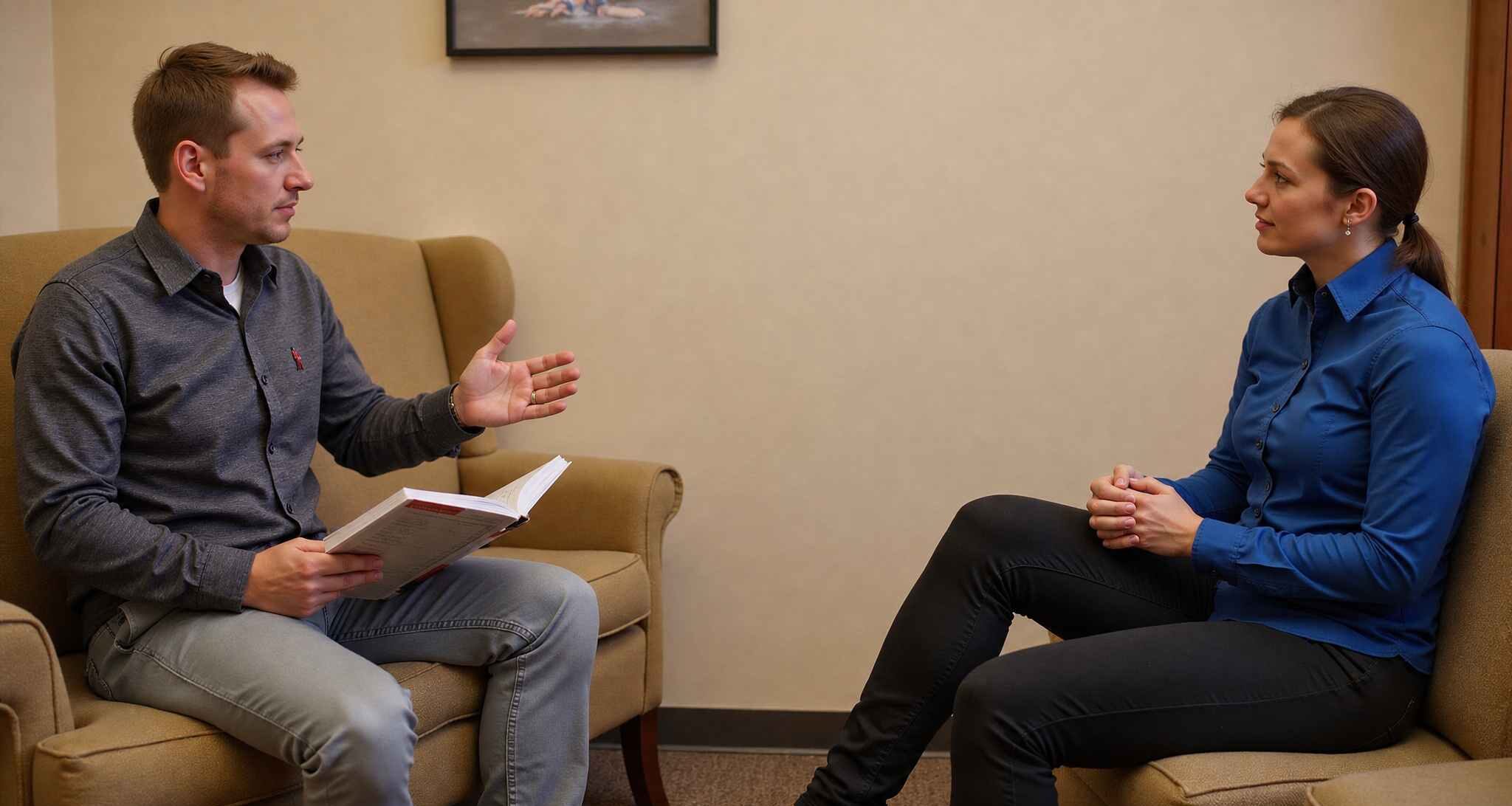
When fear stays this persistent, counseling, support groups, or professional help can offer effective, evidence-based relief. How exposure therapy works involves gradually increasing the patient’s interaction with the source of their fear in a controlled environment. This method helps individuals to gradually diminish their anxiety response and gain more control over their emotions.
How Do You Find Help for Public Speaking Anxiety
Finding help for public speaking anxiety starts with recognizing that you don’t have to manage it alone. When fear stays strong or persistent, professional support can make a meaningful difference. Counseling gives you a structured space to challenge specific worries and reframe negative thoughts into realistic statements. Support groups let you practice through gradual exposure to increasingly challenging audiences, which desensitizes fear over time. If you’re not ready for a formal setting, start smaller. Rehearse in front of a mirror, webcam, friends, or small group as a stepping-stone. These repeated, progressively harder practice sessions build confidence more effectively than avoidance. Reaching out isn’t a sign of weakness. It’s a practical step toward steadier delivery and long-term relief when self-guided strategies aren’t enough.
Conclusion
Fear of public speaking is one of the most common anxieties, and it responds well to preparation and practice. Rehearsing, breathing and grounding techniques, reframing nervousness as energy, and gradual exposure to speaking situations all reduce the fear over time. Focusing on the message rather than on being judged changes the experience entirely. With steady practice, and therapy when needed, most people become far more confident speakers.
Call Today and Build Confidence in Every Situation
From public speaking to workplace meetings, professional support helps you handle social situations with confidence. Through National Mental Health Support serving Poughkeepsie, NY, we connect you with licensed mental health counselors who provide the right Individual Therapy built around your story. Call +1 (844) 435-7104 today and begin a healthier chapter in your life.
Frequently Asked Questions
Can Medication Help Reduce Public Speaking Anxiety Before a Presentation?
Yes, medication can help reduce public speaking anxiety for some people. Beta-blockers are commonly prescribed on a short-term, as-needed basis to ease the physical symptoms of performance anxiety, such as a racing heart and trembling, without causing drowsiness. For anxiety that is more persistent or part of a broader social anxiety disorder, longer-term options such as SSRIs may be considered. Any medication should be discussed with a doctor, who can weigh the benefits and risks for your situation, and it usually works best alongside techniques like preparation, rehearsal, breathing exercises, and gradual exposure.
Does Public Speaking Anxiety Go Away Completely With Age?
You shouldn’t expect your public speaking anxiety to vanish completely with age. Instead, you can reduce it considerably through repeated practice and gradual exposure to increasingly challenging audiences, which desensitizes fear over time. As you build topic knowledge, rehearse thoroughly, and reflect on what went well, you’ll gain steadier confidence. If your fear stays strong or persistent, counseling and professional support can help you manage it more effectively.
Are Some Personality Types More Prone to Public Speaking Fear?
Yes, some personality traits can make you more prone to public speaking fear. If you tend toward introversion, high self-consciousness, or perfectionism, you might feel anxiety more intensely, since self-focused worry often amplifies fear. But your personality doesn’t determine your outcome. The strategies that help, preparation, breathing, cognitive reframing, and repeated practice, work regardless of temperament. You can build steadier confidence over time, no matter how you’re naturally wired.
How Long Does It Take to Overcome Public Speaking Anxiety?
There’s no fixed timeline, since your progress depends on how consistently you practice and how strong your fear starts out. What we do know is that repeated, progressively harder exposure works best when it’s sustained over time rather than avoided. You’ll likely notice gradual gains as you rehearse and face increasingly challenging audiences. If your fear stays strong or persistent, professional help and support groups can meaningfully speed your recovery.
Can Virtual or Online Presentations Trigger the Same Speaking Anxiety?
Yes, virtual presentations can trigger the same anxiety you’d feel in person. You’re still facing an audience, managing self-focused worry, and interpreting physical symptoms as danger. The good news is that many strategies still apply. Try slow, diaphragmatic breathing to calm your nervous system, rehearse thoroughly so your material feels familiar, and shift your attention outward toward your message. Arriving early to test your equipment can also reduce surprise-related stress.