

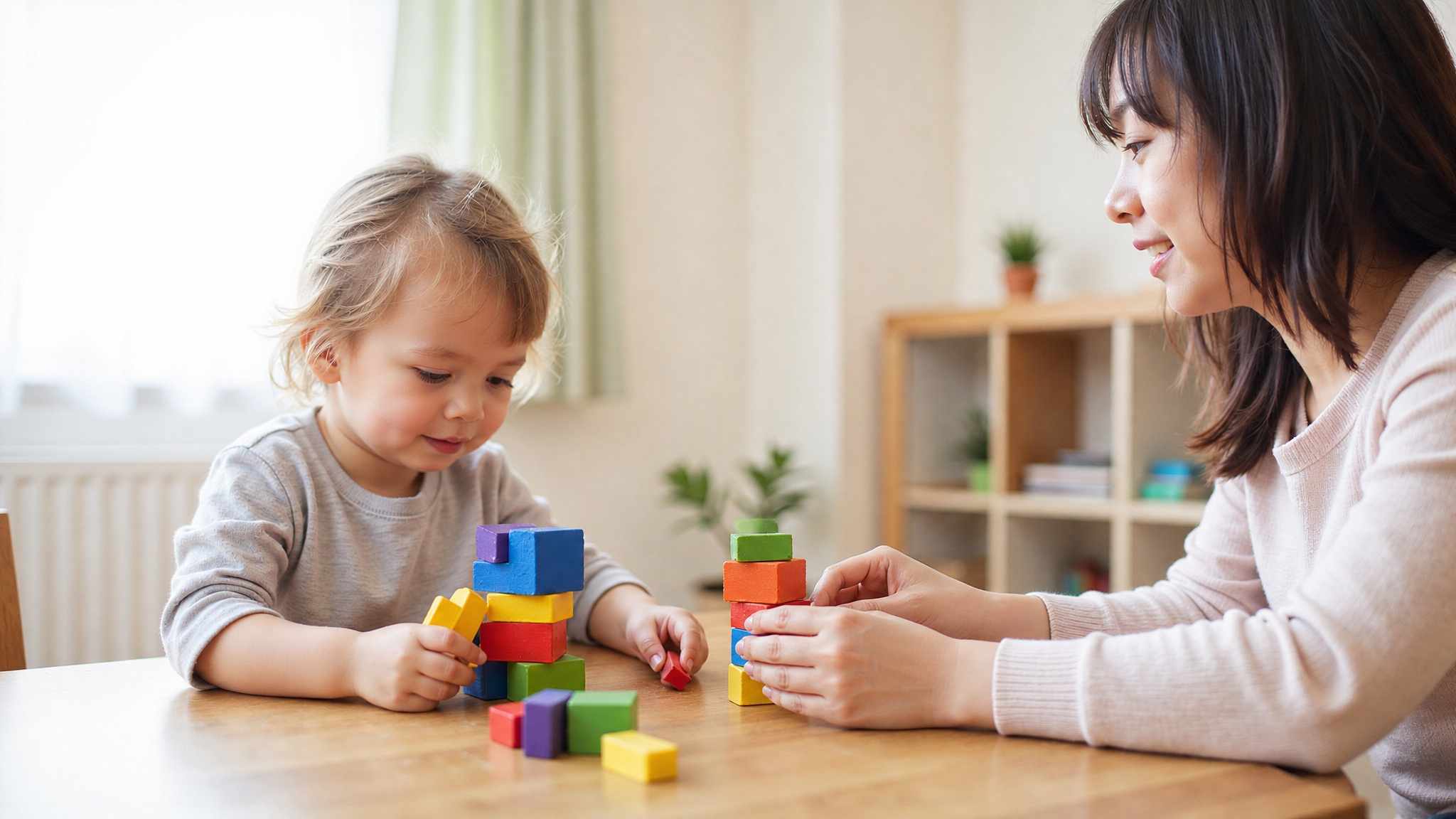













In a play therapy session, your child uses play as their natural language for expressing emotions they can’t yet name. Your child might reach for dolls, puppets, sand trays, or art supplies while the therapist observes play themes and gently reflects feelings back. Sessions typically last 30 to 60 minutes and unfold in a safe, welcoming playroom. Whether directive or non-directive, the approach meets your child where they are. Here’s what that really looks like.
Key Takeaways
- Sessions typically last 30 to 60 minutes, opening with a warm-up, greeting, check-in, and transition into the playroom.
- Children play with tools like dolls, puppets, sand trays, art supplies, aggression toys, and sensory items to express emotions.
- Therapists observe play themes and reflect back actions, feelings, and possible meanings to build insight and safety.
- Gentle prompts may invite a new story ending or helper character, while directive models introduce specific goal-focused tasks.
- A five-minute warning signals the session’s end, followed by clean-up and sometimes a brief recap to support progress at home.
What Happens in Play Therapy for Children
In play therapy, children express what they can’t always put into words in a safe, structured space. Your child will usually start with a brief warm-up, a greeting, a check-in, and a gentle transition into the playroom. You’ll often meet with the therapist first to review your concerns and treatment goals. Talking to a teenager about therapy can feel daunting for many parents. It’s essential to approach the conversation with empathy and openness, allowing them to express their thoughts and feelings. Providing a supportive environment can help them understand the benefits of therapy and how it can be a positive step in their personal growth.
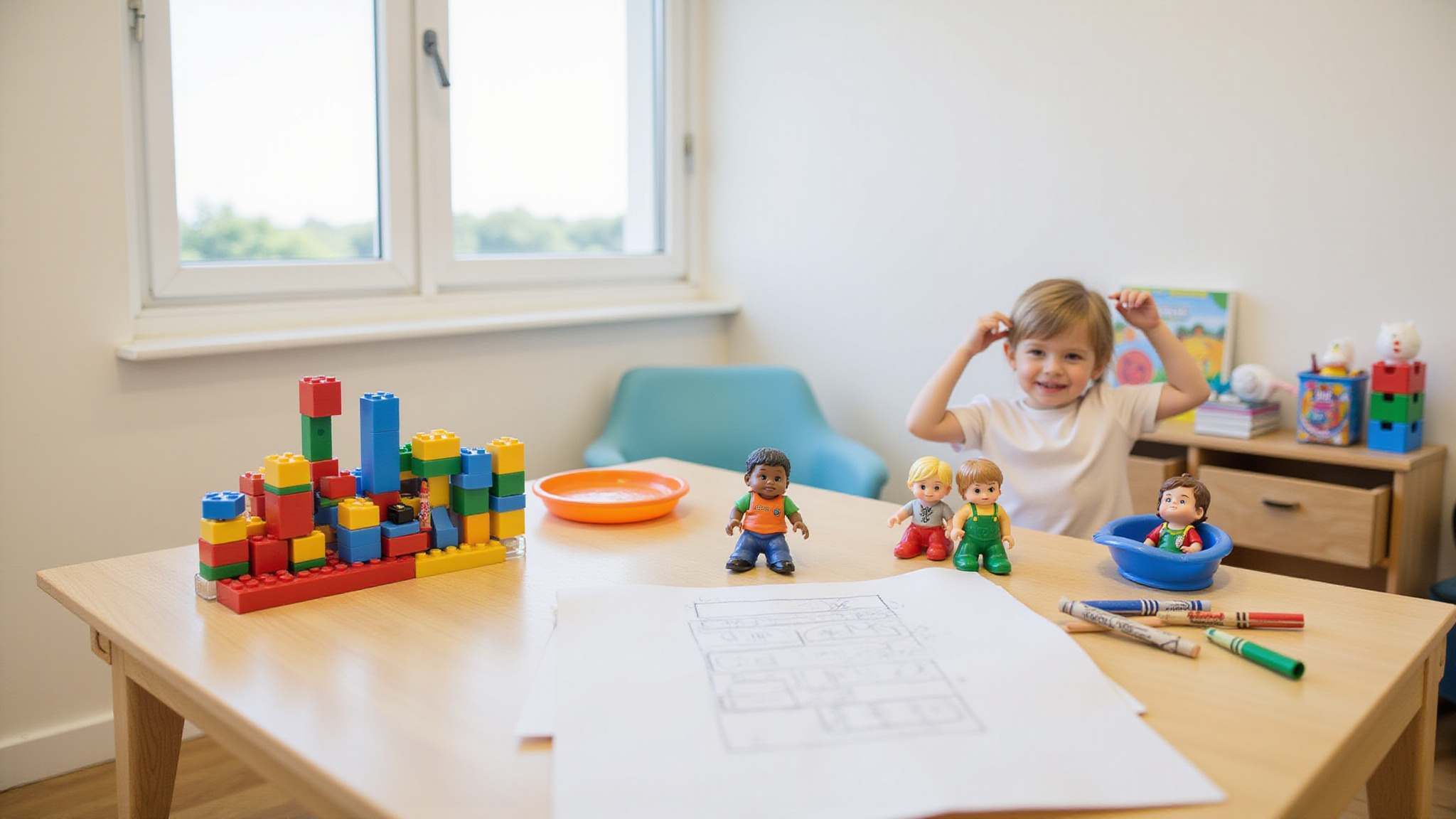
Inside the room, your child chooses from toys like dolls, puppets, art supplies, and sand trays. In child-centered approaches, the therapist reflects your child’s actions and feelings, letting them lead the therapeutic play. In directive models, the therapist introduces a specific task or story to target a goal.
Sessions typically last 30 to 60 minutes, ending with a five-minute warning, clean-up, and a supported transition back to you.
What Is Play Therapy and How Does It Work
Play therapy is a psychotherapy approach designed specifically for kids, most often those between ages 3 and 12. Instead of asking a child to talk through problems the way adult child counseling might, it uses play as the natural language for emotional expression. The Association for Play Therapy defines it as a systematic process where trained therapists use the therapeutic powers of play to address psychosocial difficulties and support healthy development.
Depending on your child’s needs, the therapist may use directive or non-directive techniques, either guiding activities or letting your child lead. This developmentally-informed approach meets children where they are, making difficult feelings safer to explore. A child refusing to go to school may indicate deeper emotional struggles that need to be addressed. Understanding the reasons behind this reluctance is essential for providing appropriate support.
What Techniques and Tools Do Play Therapists Use

Play therapists use dolls, puppets, sand trays, art supplies, aggression toys, and sensory tools to help your child express what words can’t reach. Every item’s chosen intentionally. Therapists observe play themes for insight, then respond with reflection, describing actions, feelings, and possible meanings. Sometimes they’ll offer gentle prompts, inviting a new ending or a helper character. In directive models, they’ll introduce a specific task or story to target a goal.
| Tool | Therapeutic Purpose |
|---|---|
| Dolls & puppets | Explore relationships and nurturance |
| Sand tray & figures | Build scenes, process experiences |
| Art supplies | Express emotions creatively |
| Aggression toys | Release and manage difficult feelings |
| Puzzles & sensory tools | Support mastery and self-regulation |
You’ll notice the room empowers your child to choose freely, making expression feel safe.
What Issues Can Play Therapy Help With
Play therapy can help with anxiety, trauma, grief, and behavioral challenges that show up at home or school. If your child struggles to name what they’re feeling, play therapy gives them another way to work through it. Signs of teenage depression can also manifest in withdrawal from friends and family, changes in appetite, or declining academic performance. Recognizing these signs early can be crucial for getting the support they need.
Play therapy can support children navigating family changes like divorce, coping with loss, or processing frightening experiences. It’s also helpful for kids managing anger, social difficulties, or low self-esteem.
Because the therapist meets your child at their developmental level, play becomes a safe space to express hard emotions and build coping skills. Whether your child needs help with a specific concern or broader emotional growth, play offers a path forward.
What Does a Typical Play Therapy Session Look Like
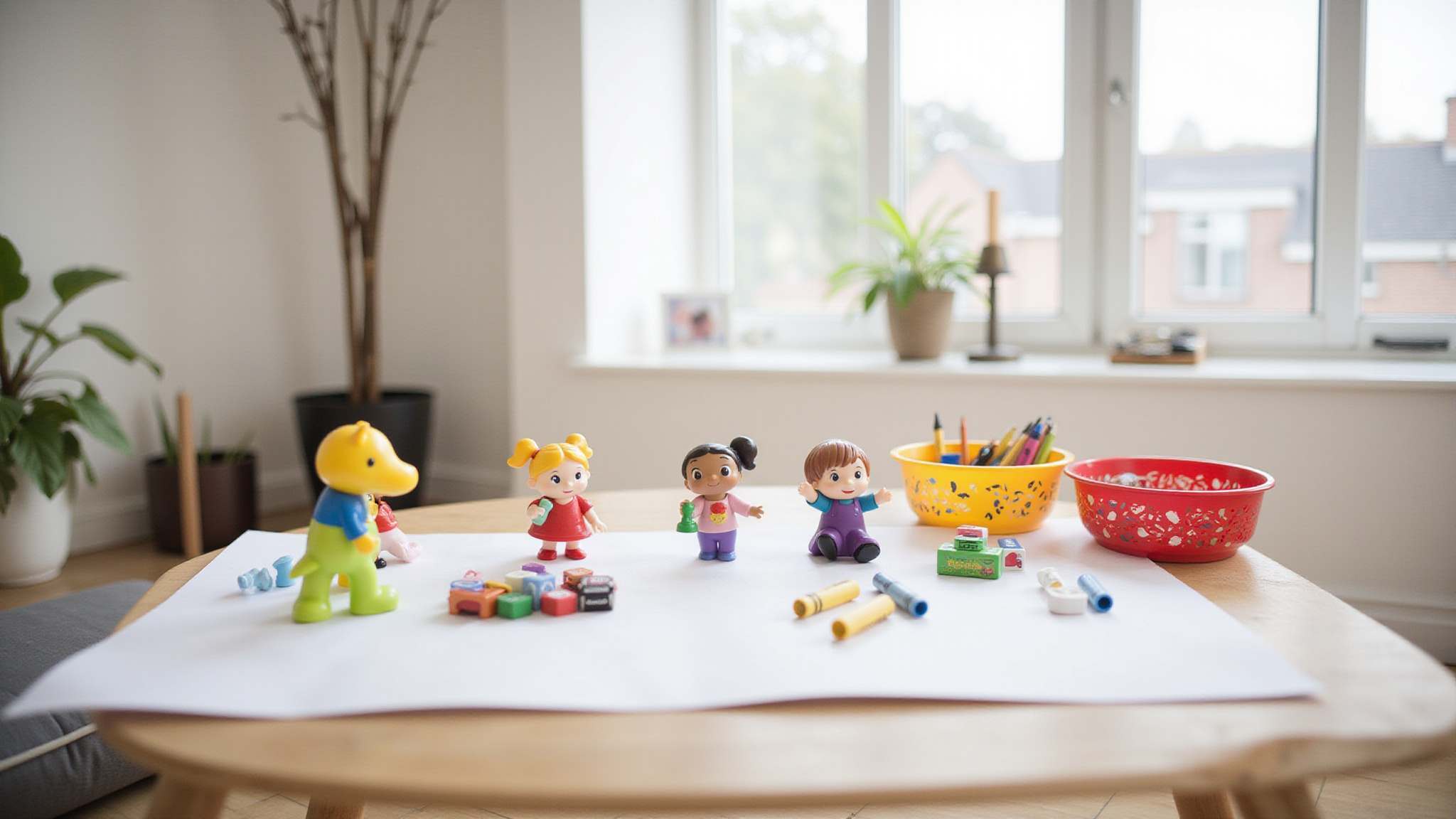
A typical play therapy session follows a familiar rhythm: a warm-up, play time, a wind-down, and closure. Your child enters at a comfortable pace, greeted by a therapist who explains the room, materials, and basic boundaries in age-appropriate language.
During play, the therapist observes themes and reflects your child’s actions and feelings, sometimes offering gentle prompts or a specific task tied to treatment goals. Sessions typically last 30 to 60 minutes and happen weekly, often over several months.
Near the end, you’ll notice a five-minute warning, followed by clean-up and transition. Some therapists share a brief recap so you can support progress at home.
How Do You Know if Play Therapy Is Working
You know play therapy is working when you notice shifts in how your child plays, relates, and copes rather than a single dramatic change. Because progress often shows up gradually, play themes tend to evolve over time, often moving toward mastery, and your therapist can help you interpret what these changes mean.
Look for signs like these:
Progress rarely arrives all at once, watch for richer play, stronger connections, and calmer coping unfolding gradually over time.
- Richer play, where stories move from stuck or repetitive patterns toward resolution or mastery.
- Stronger connection with you, the therapist, or peers.
- Better coping, such as naming feelings or calming down more easily.
- Fewer symptoms, like reduced tantrums, anxiety, or withdrawal.
- Everyday gains at home, school, or in friendships.
Since every child’s pace differs, you’ll check in regularly with your therapist to track meaningful progress.
How Do You Find a Qualified Play Therapist
Finding a qualified play therapist starts with looking for a licensed mental health professional, a psychologist, counselor, or social worker, who has specialized training in play therapy. You’ll want to check whether they hold the Registered Play Therapist (RPT) credential through the Association for Play Therapy, which signals advanced supervised experience. Ask how they work with children ages 3 to 12 and whether they use directive, non-directive, or blended approaches. It’s worth asking about their experience with your child’s specific concerns, like anxiety, trauma, or behavior challenges. Trust matters here, so notice how they explain their process and how comfortable your child feels meeting them.
Conclusion
Play therapy gives children a natural way to express feelings they cannot yet put into words, using play as their language. Through games, art, and imaginative activities, a trained therapist helps them process emotions, work through difficulties, and build coping skills in a safe space. It is a well-established, effective approach for many childhood challenges. For children, healing often happens through play rather than talk.
Call Today and Help Your Child Feel Seen
From play therapy to teen counseling, expert care helps young people navigate their emotions and thrive. Through National Mental Health Support serving Hyde Park, NY, we connect you with licensed mental health counselors who provide the right Individual Therapy built around your child’s needs. Call +1 (844) 435-7104 today and begin a healthier chapter for your family.
Frequently Asked Questions
How Much Does Play Therapy Typically Cost per Session?
Play therapy typically costs about $100 to $200 per session in the United States, with rates ranging from roughly $75 to $250 depending on location, the therapist’s credentials, and the setting. Sessions usually last 30 to 60 minutes and often run weekly over several months. Insurance frequently covers play therapy when it is medically necessary and provided by a licensed clinician, and sliding-scale fees or community clinics can reduce out-of-pocket costs. Asking providers about fees and checking your insurance benefits gives you the clearest picture for your family.
Does Insurance Cover Play Therapy for Children?
Insurance coverage for play therapy varies, so you’ll want to check your specific plan. Many providers cover it when a licensed therapist bills it as psychotherapy tied to a diagnosis, but some plans limit or exclude it. You’ll often need a referral or pre-authorization. It helps to call your insurer directly, ask about mental health benefits, and confirm your therapist’s credentials. Don’t hesitate to request cost estimates before starting sessions.
Should Parents Be Present During Play Therapy Sessions?
It depends on your child’s needs and the therapy model. Often, you’ll join an initial meeting to share concerns and goals, then let your child explore the playroom independently to build trust with the therapist. Many practices include a brief recap afterward so you can continue strategies at home. Sometimes you’ll be invited into sessions directly. Your therapist will guide you on what supports your child’s growth best.
Can Play Therapy Be Done Online or Virtually?
Yes, play therapy can be done online, though it works best when adapted thoughtfully to your child’s developmental level. Your therapist might guide storytelling, drawing, or pretend play through video, while you help set up materials at home. Younger children often need your support to stay engaged, and a quiet, comfortable space matters. Virtual sessions won’t suit every child, so you’ll want to discuss whether it fits your family’s needs.
Is Play Therapy Suitable for Teenagers or Adults?
Play therapy’s designed primarily for children ages 3 to 12, so it’s most suitable for that developmental range. If you’re supporting a teenager or adult, you’ll typically find approaches adapted to their developmental level work better, though creative and expressive activities can still help older clients. For teens and adults, you might explore art therapy, sand tray work, or talk-based therapies that use similar therapeutic principles to support emotional expression and growth.