












Exposure therapy eases social anxiety slowly by helping you face feared situations in safe, gradual steps. Instead of avoiding what scares you, you practice manageable moments and stay long enough for anxiety to peak and settle. Each exposure gives you real evidence that feared outcomes are survivable, so your threat predictions update over time. Avoidance drops first, then distress. Change unfolds incrementally, not overnight. Here’s how this gradual process actually works.
Key Takeaways
- Exposure therapy gradually reduces avoidance, interrupting the fear cycle and building tolerance to feared social situations over time.
- Practice starts with manageable steps using a 0 to 100 hierarchy, progressing from easier to harder anxiety-provoking situations.
- Staying in feared situations long enough lets anxiety peak and settle, providing real evidence that outcomes are survivable.
- Learning is incremental, so distress decreases only after repeated exposures update threat predictions, not in a single session.
- Repeating lower-rated items until anxiety drops ensures steady, controlled progress before advancing to more challenging steps.
How Does Exposure Therapy Work for Social Anxiety Disorder

Exposure therapy works for social anxiety disorder by giving your brain repeated, real-world evidence that feared outcomes are survivable through gradual, repeated contact with the situations you dread. When you avoid a feared social situation, you feel immediate relief, but that relief quietly reinforces the fear and teaches your brain to keep escaping. Exposure therapy interrupts this cycle. You practice feared social moments in a safe, controlled way, starting with manageable steps rather than forcing high-intensity confrontation. The core mechanism is avoidance reduction. Through gradual learning, your nervous system learns to tolerate discomfort instead of reinforcing escape. Each exposure updates your threat predictions over time, so anxiety doesn’t vanish in a single session. Instead, you build tolerance incrementally, and change often shows first as reduced avoidance, then reduced distress.
What Is Exposure Therapy and How Does It Work
Exposure therapy is a structured, scientifically supported treatment that helps you practice feared social situations in a safe, controlled way. It’s a core component of CBT for social anxiety, and it works by reducing avoidance, the habit that keeps fear alive.
When you gradually and repeatedly face what you dread, your brain collects real-world evidence that feared outcomes are survivable. This process, sometimes called desensitization, teaches your nervous system to tolerate discomfort instead of escaping it.
You’ll typically start with manageable steps and build upward, rather than confronting the most intense situations first. With each repetition, your brain updates its threat predictions, so anxiety loosens its grip over time. Overcome fear of public speaking involves facing these challenges gradually and recognizing that each successful attempt reinforces your confidence.
You’re not eliminating discomfort overnight, you’re learning, step by step, that you can handle it.
How Is an Exposure Hierarchy Built for Social Anxiety

An exposure hierarchy is built by mapping the social situations you avoid, then ranking them from least to most anxiety-provoking. You’ll rate each situation using a distress scale, typically 0 to 100, so you can pace your practice from manageable steps upward. This structure matters because learning is incremental. Your brain updates threat predictions through repeated, real-world contact, not a single confrontation.
| Situation | Distress Rating | Step Order |
|---|---|---|
| Making eye contact briefly | 30 | Early |
| Asking a stranger a question | 55 | Middle |
| Giving a short presentation | 85 | Later |
You’ll start with lower-rated items, repeating each until anxiety drops before moving up. This deliberate progression reduces avoidance gradually, giving you evidence that feared outcomes are survivable while building genuine, lasting tolerance.
What Happens in an Exposure Therapy Session
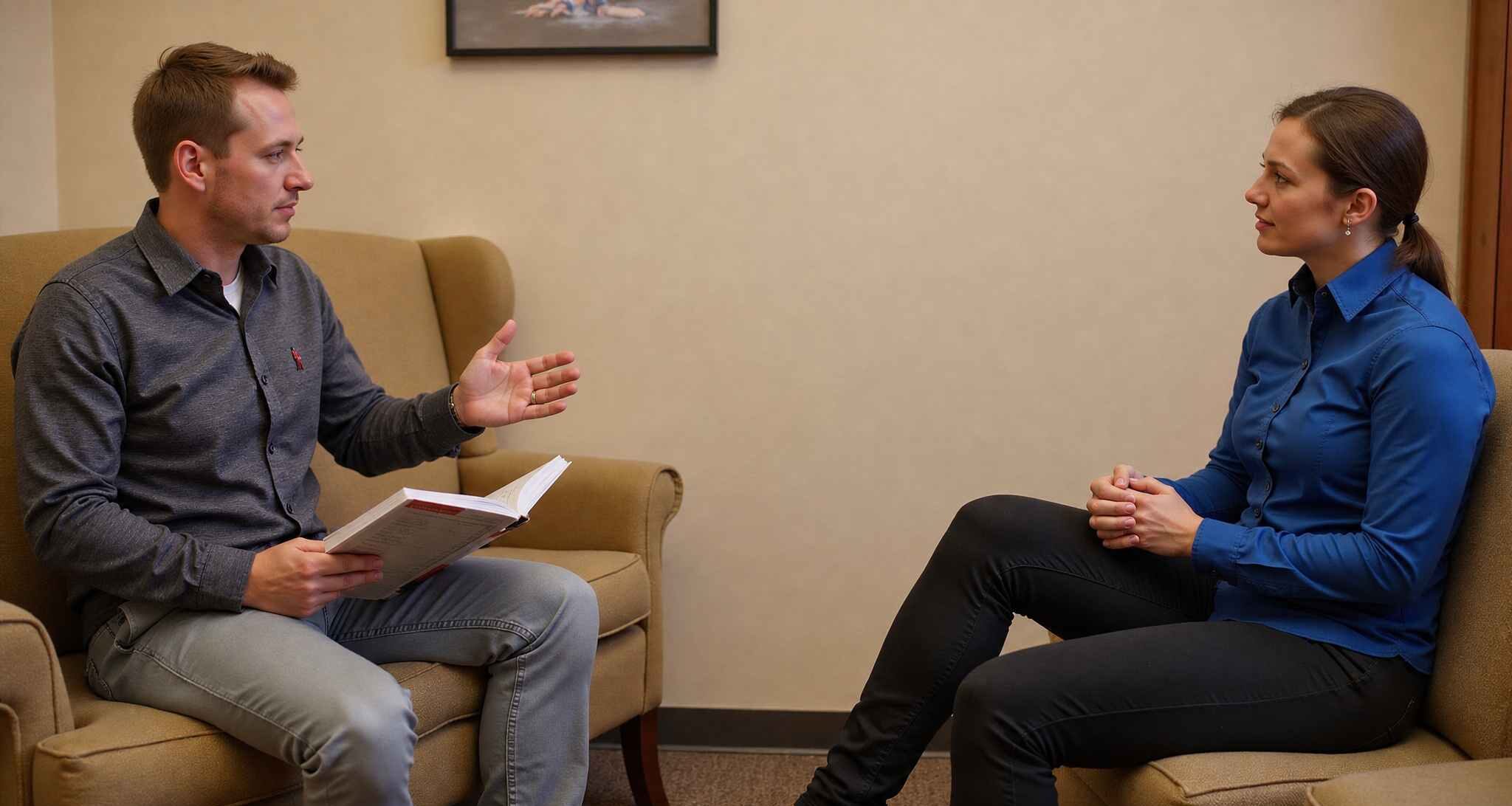
A typical exposure therapy session puts your hierarchy into practice. You’ll start with a manageable step rather than your hardest fear, giving your nervous system a chance to learn tolerance instead of escape. Your therapist guides you through structured, repeated contact with the feared situation while you stay present.
- Choose the step: You pick a hierarchy item that feels challenging but doable, targeting avoidance directly.
- Stay and observe: You remain in the situation long enough for your anxiety to peak and gradually settle, collecting real evidence.
- Reflect and repeat: You review what actually happened versus what you feared, then plan the next repetition.
Expect discomfort early on. That’s part of how your brain updates its threat predictions over time.
How Effective Is Exposure Therapy for Social Anxiety

Exposure therapy works well for social anxiety, and the evidence is strong. A scoping review found very large within-subject effect sizes at post-treatment (d = 1.97) and follow-up (d = 2.31), pointing to substantial, lasting reductions in fear. Broader psychotherapy data show an overall effect size of g = 0.88 with a number-needed-to-treat of 3.8. In one study, 54% of exposure-only patients no longer met diagnostic criteria after treatment.
Keep in mind that exposure isn’t always the single best option. A meta-analysis found cognitive therapy outperforming exposure alone for social phobia, so your treatment might combine approaches depending on whether cognitive distortions, skill deficits, or avoidance dominate. Either way, you can expect meaningful, measurable improvement over time.
What Are the Challenges and Risks
The challenges and risks of exposure therapy include temporary distress, slow progress, and limited effectiveness for certain conditions. Meaningful improvement comes with real costs, and you deserve to know them. Exposure therapy asks you to face discomfort deliberately, and that’s hard. Because learning is incremental, progress often feels slow, and you may notice short-term distress before symptoms ease. Understanding these challenges helps you stay committed.
- Temporary spikes in anxiety: You’ll feel discomfort during exposures, since the process updates threat predictions through repetition rather than eliminating fear instantly.
- Slow, uneven pace: Early gains often appear only after weeks of consistent practice, so patience matters.
- Not a universal fix: When social skill deficits or cognitive distortions dominate, exposure alone may fall short, and cognitive therapy can outperform it.
You can pace steps wisely and reduce avoidance sustainably.
How Do You Find an Exposure Therapy Provider
Find the right exposure therapy provider by looking for a clinician trained in exposure-based treatment, which has strong empirical support for social anxiety disorder. Ask directly whether they use structured, gradual exposure and how they pace sessions from manageable steps upward. A good provider won’t force immediate high-intensity confrontation; they’ll build your tolerance incrementally.
Look for credentials in cognitive behavioral therapy, since cognitive therapy and exposure often work well together. If in-person access is limited, consider virtual reality exposure therapy, which research shows is as effective as in vivo exposure. Self-guided smartphone and imaginal exposure tools can also help.
Don’t hesitate to ask about their experience, methods, and expected timeline before you commit.
Conclusion
Exposure therapy eases social anxiety by helping you face feared situations gradually and safely, rather than avoiding them. Step by step, repeated exposure teaches the brain that the feared outcome rarely happens and that anxiety fades on its own. Paired with supportive techniques, this slow, structured approach builds real, lasting confidence. It is one of the most effective treatments available for social anxiety disorder.
Overcome Social Anxiety With Real Support
Social anxiety can hold you back in ways others don’t see, but expert care brings genuine, lasting relief. Through National Mental Health Support serving Newburgh, NY, we connect you with licensed mental health counselors who provide the right Individual Therapy and compassionate support for your goals. Call +1 (844) 435-7104 today and take the first step toward healing.
Frequently Asked Questions
Can Exposure Therapy Be Combined With Medication for Social Anxiety?
Yes, exposure therapy can be combined with medication for social anxiety, and the two are often used together. Exposure therapy gradually reduces avoidance so the brain learns that feared situations are survivable, while medication such as SSRIs or SNRIs can lower baseline anxiety enough to make exposure more manageable. Exposure works well on its own too, and the skills learned tend to last, so a clinician may recommend either approach or both depending on the severity of symptoms. A qualified professional can weigh your situation and tailor the combination to you.
How Much Does Exposure Therapy Typically Cost per Session?
Exposure therapy usually costs about the same as other talk therapy, roughly $100 to $200 per session in the United States, with a broader range of $75 to $250 depending on location, the provider’s credentials, and the format. With insurance, you often pay only a copay of around $20 to $50. Self-guided or group formats can be cheaper, while specialised approaches such as virtual reality exposure may cost more. Asking providers about fees, sliding-scale rates, and insurance coverage helps you find an affordable option.
Is Exposure Therapy Safe for Children and Teenagers?
Yes, exposure therapy is considered safe and effective for children and teenagers when delivered by a trained therapist. For young people it is adapted to their age and carried out gradually, often with parents involved to provide support and reinforce progress at home. It is a well-established, first-line approach for childhood anxiety, including social anxiety and phobias. A clinician experienced with children can tailor the pace and steps so the process feels safe and manageable.
Can I Do Exposure Therapy Without a Professional Therapist?
Yes, you can. Self-guided formats work for many people. Studies show virtual reality exposure and brief imaginal exercises delivered through smartphone apps produce significant reductions in social anxiety, sometimes matching in-person treatment. You’ll benefit most by pacing yourself gradually, starting with manageable steps and repeating them consistently. That said, if your anxiety feels overwhelming or progress stalls, a therapist can tailor the approach and support you through tougher moments.
How Long Do Exposure Therapy Results Last After Treatment Ends?
Your results can last well beyond treatment. Research shows exposure therapy’s benefits often hold, or even strengthen, over time. One scoping review found effect sizes actually grew at follow-up (d = 2.31) compared to post-treatment (d = 1.97), suggesting gains tend to stick. You’ll likely maintain progress best if you keep practicing what you’ve learned, since ongoing real-world exposure reinforces those updated threat predictions and keeps avoidance from creeping back in.