















You’ll find effective anxiety management through structured worksheets that target specific aspects of your mental health journey. Key tools include trigger identification logs, daily thought records based on CBT techniques, and all-encompassing symptom tracking sheets. Physical response monitoring, breathing logs, and pattern recognition charts help you develop personalized coping strategies. These evidence-based resources create a systematic approach to understanding and managing your anxiety, with deeper insights awaiting in each specialized worksheet.
Understanding Your Anxiety Triggers Worksheet

Understanding your anxiety triggers is the crucial first step in managing anxiety effectively. Through personalized symptom tracking, you’ll identify both internal triggers (like worrying thoughts and physical sensations) and external triggers (such as social situations or work pressure). Your anxiety worksheet should document specific details about each stress event, including the first signs you notice and your body’s alarm responses. Rather than feeling helpless, tracking your triggers helps you move from being a passive anxiety victim to taking control.
For effective stress event planning, categorize your triggers into emotions, mental images, physical states, thoughts, and situations. You’ll want to record the exact moment anxiety begins, paying attention to racing thoughts, physical sensations, and environmental factors. This systematic approach helps you recognize patterns and develop targeted coping strategies. By consistently tracking these elements, you’ll create an extensive understanding of your unique anxiety profile.
Daily Thought Record for Anxiety Management
When managing anxiety through structured self-monitoring, Daily Thought Records serve as a powerful cognitive behavioral therapy (CBT) tool to identify and challenge anxious thinking patterns. You’ll document your triggers, automatic thoughts, and emotional responses in clear, factual statements across structured columns, enabling you to track how specific thoughts connect to your anxiety symptoms. Maintaining a consistent practice of thought record journaling helps separate intrusive thoughts from objective reality while preventing rumination. Identifying and labeling cognitive distortions in your recorded thoughts can increase motivation to challenge anxious thinking patterns. This systematic approach to challenging negative thoughts aligns with proven CBT techniques for improving overall mental well-being.
Physical Symptoms Tracking Sheet
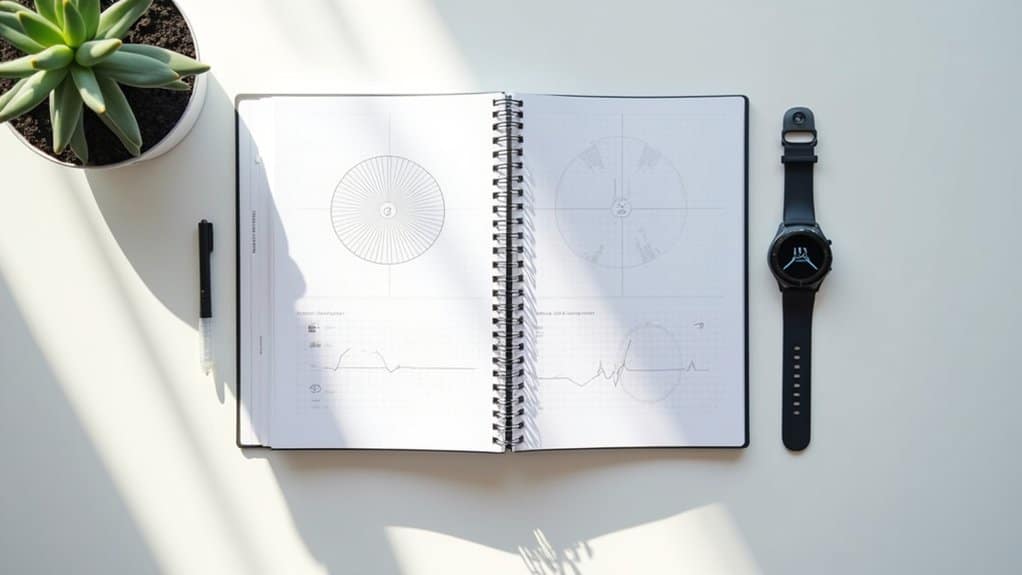
Your body sends clear stress signals through physical symptoms when you’re experiencing anxiety, including rapid heartbeat, muscle tension, and digestive changes. Since anxiety affects daily functioning, excessive worry patterns often accompany these physical manifestations. You’ll benefit from tracking these bodily responses daily using a structured worksheet that measures symptom intensity on a 1-10 scale and records the timing of physical changes. By documenting your body’s anxiety patterns consistently, you’ll start recognizing early warning signs and can implement coping strategies more effectively before symptoms escalate. Maintaining a consistent journaling habit helps provide valuable insights into your physical symptoms and their triggers over time. Sharing these completed tracking sheets with your therapist during sessions can help them better understand your condition and adjust treatment plans accordingly.
Identifying Body Stress Signals
Physical symptoms of anxiety manifest through distinct bodily signals that you can systematically track and measure. Using symptom monitoring techniques, you’ll identify patterns in your physical manifestation signs, enabling better management of anxiety episodes. Quick and easy tracking of your symptoms can be done with just a few taps using specialized health monitoring apps.
| Body Signal | What to Monitor |
|---|---|
| Heart Rate | Track palpitations, racing sensations |
| Breathing | Note shallow breaths, shortness of breath |
| Muscle Tension | Record location and intensity of tightness |
You can rate each symptom’s intensity on a 0-10 scale, documenting the duration and context of your experiences. By maintaining consistent records of your physical responses, you’ll develop a clearer understanding of your anxiety triggers and the effectiveness of your coping strategies. This data-driven approach supports more productive discussions with healthcare providers and helps refine your anxiety management plan.
Daily Symptom Pattern Recognition
Building on our understanding of body stress signals, systematic tracking through a dedicated symptom pattern recognition worksheet amplifies your ability to detect and respond to anxiety manifestations. You’ll record specific physical symptoms like racing heart or muscle tension on a daily grid, rating their intensity on a 1-10 scale while noting both symptom frequency trends and symptom duration patterns. These resources serve as educational tools rather than therapy substitutes.
Your tracking sheet includes fields for date, time, and multiple concurrent symptoms, enabling you to identify correlations with mood and specific triggers. By documenting how long each episode lasts and how often symptoms occur, you’ll uncover valuable patterns in your anxiety experiences. Using a body outline diagram, you can precisely mark and track where physical symptoms manifest in your body. This data-driven approach supports early intervention by highlighting increases in symptom persistence and helps you develop targeted coping strategies based on your unique anxiety profile.
Anxiety-Related Physical Changes
Three core components form the foundation of anxiety-related physical symptom tracking: detailed documentation of bodily changes, severity ratings, and temporal patterns. You’ll need to record heart rate changes, sweating patterns, breathing difficulties, muscle tension, and gastrointestinal symptoms on your tracking sheet. A clean and calming layout helps reduce stress while logging your symptoms.
For medication considerations, precise timing of physical symptoms helps your healthcare provider adjust treatment protocols effectively. Your 0-10 severity ratings provide quantifiable data to assess medication efficacy. Physical activity benefits can be monitored by noting how exercise impacts your symptoms throughout the day.
Digital tracking tools now offer customizable fields and export features, making it easier to share extensive symptom histories with your healthcare team. Morning and evening symptom spikes, particularly common in anxiety cases, warrant special attention in your documentation.
Social Situation Analysis Template

You’ll benefit from mapping your specific anxiety triggers using a structured template that identifies situations, their intensity levels, and contextual factors that increase distress. Your analysis should include detailed documentation of physical symptoms, thoughts, and behavioral responses that occur during anxiety-provoking social encounters. The template helps you establish clear patterns between triggers and responses, enabling you to develop targeted coping strategies for challenging social situations. Working with a template aligns with cognitive behavioral therapy principles for effectively identifying and challenging negative thought patterns. This approach is particularly valuable since social anxiety disorders affect approximately 6.8% of adults annually, making it essential to properly document and address symptoms.
Anxiety Trigger Mapping
A systematic approach to mapping anxiety triggers in social situations forms the cornerstone of effective anxiety management. You’ll need to document specific triggers and track your responses using evidence-based situational coping strategies. Through gradual exposure planning, you can build resilience while challenging anxious predictions. The process of trigger identification and coping has proven to be highly effective and intuitive for most clients seeking treatment.
| Trigger Type | Expected Fear | Actual Outcome |
|---|---|---|
| Small Talk | Judgment | Brief, neutral chat |
| Group Meeting | Embarrassment | Active participation |
| Public Speaking | Failure | Clear delivery |
Your trigger mapping should capture both internal responses (thoughts, physical sensations) and external factors (environment, social dynamics). By recording these elements immediately after each event, you’ll develop insight into your unique pattern clusters. This reality-testing approach helps distinguish between perceived threats and actual outcomes, forming the basis for targeted intervention strategies.
Coping Response Framework
Understanding how you respond to social anxiety requires a structured framework for analyzing challenging situations. When you evaluate a stressful social scenario, focus on documenting key elements: the specific situation, your emotional reactions, thought patterns, and coping responses used. This systematic approach helps you identify patterns in your reactive vs. proactive coping styles.
Research shows that personality traits and culture can significantly influence which coping mechanisms someone naturally gravitates toward. Women particularly demonstrate higher support-seeking behaviors when managing anxiety symptoms. Your coping strategy selection considerably impacts anxiety management outcomes. Research shows problem-focused and solution-oriented approaches consistently reduce anxiety symptoms, while avoidance and emotion-focused strategies often increase distress. Using validated assessment tools like the Brief-COPE can help you track which methods work best for you. By examining the effectiveness of different responses through structured analysis, you’ll develop more adaptive coping skills for future social situations.
Progressive Muscle Relaxation Guide
While many anxiety management techniques exist, Progressive Muscle Relaxation (PMR) stands out as a scientifically-validated method for reducing physical and mental tension. This systematic approach to muscle tension regulation activates your body’s natural relaxation response triggers through a sequence of tensing and releasing specific muscle groups.
| Body Region | Tension Time | Key Actions |
|---|---|---|
| Lower Body | 5-10 seconds | Curl toes, tense calves |
| Core | 5-10 seconds | Contract abdomen, arch back |
| Upper Body | 5-10 seconds | Clench fists, raise shoulders |
| Face/Head | 5-10 seconds | Furrow brow, clench jaw |
You’ll want to practice PMR for 10-20 minutes daily in a quiet space, wearing loose clothing. Remember to breathe deeply, inhaling during tension and exhaling during release. Skip any injured areas and focus on the sensation of release.
Anxiety-Based Cognitive Distortions Worksheet
Identifying and challenging cognitive distortions forms an indispensable cornerstone of anxiety management. Through cognitive distortions mitigation, you’ll learn to recognize how catastrophizing, mind reading, and fortune telling can escalate your anxiety levels and reinforce avoidance behaviors.
Your worksheet will guide you through a structured process of irrational thought restructuring. You’ll start by describing triggering situations and your automatic responses, then label specific distortions at play. Next, you’ll examine supporting and opposing evidence for your thoughts, creating balanced alternative perspectives. This process helps break negative thought cycles that maintain anxiety.
Track your mood changes as you practice these skills regularly. With consistent application, you’ll develop stronger abilities to spot distortions early and replace them with more realistic thinking patterns.
Panic Attack Response Plan Builder
Building a personalized panic attack response plan starts with identifying your unique early warning signals, such as racing heartbeat, sweating, or feelings of dread. You’ll want to document specific step-by-step actions to take when these symptoms emerge, including breathing exercises, grounding techniques, and clear communication protocols with your support network. The plan should designate safe spaces you can access quickly and include essential contact information for mental health professionals, trusted allies, and crisis support services.
Step-by-Step Crisis Planning
How can you prepare for a panic attack before it strikes? Creating a personalized response planning worksheet during calm periods helps you act decisively when anxiety intensifies. Your plan should outline specific triggers, coping strategies, and support contacts across three phases: prevention, escalation, and full crisis.
- Document your unique anxiety triggers and early warning signs, including both internal sensations and external situations that typically precede panic attacks
- List crisis de-escalation strategies you’ll use for at least 30 minutes, such as deep breathing, grounding techniques, or mindfulness exercises
- Include emergency contacts, crisis hotlines (988), and safe locations where you can receive immediate support if self-management steps aren’t sufficient
Review and update your plan after each crisis event, noting which interventions worked best and where adjustments might be needed for future episodes.
Early Warning Signal Checklist
A thorough early warning signal checklist serves as your personal anxiety detection system, helping you spot panic attacks before they reach full intensity. Create your checklist by tracking physical signs like muscle tension and rapid heartbeat, along with psychological indicators such as excessive worrying and difficulty concentrating.
Your proactive self-monitoring should include behavioral cues like pacing and indecisiveness, plus verbal indicators such as tone changes or withdrawal from conversations. Document environmental triggers that spark your anxiety, including work stress or routine disruptions.
Implement early response actions when you notice validated assessment tools showing increased GAD-7 scores or observe escalating symptoms. Pay special attention to prodromal signs like chest tightness, dizziness, and sudden behavioral changes. This systematic approach enables timely intervention before anxiety peaks.
Mindfulness and Grounding Exercises Chart
Mindfulness and grounding exercises provide essential tools for managing anxiety through systematic, sensory-based techniques. You’ll find that mindfulness meditation combined with tactile engagement using grounding objects can effectively interrupt anxiety cycles and restore emotional balance. The 5-4-3-2-1 technique engages all your senses to anchor you in the present moment, while deep breathing patterns activate your body’s natural relaxation response.
- Practice body scanning to identify and release physical tension while strengthening your mind-body connection
- Incorporate visualization techniques that engage multiple senses to create a mental sanctuary during stressful moments
- Combine deep breathing exercises with physical grounding methods for maximum anxiety reduction
These evidence-based approaches, when practiced regularly, can considerably improve your ability to manage anxiety symptoms and maintain emotional equilibrium throughout your day.
Anxiety Intensity Rating Scale
You’ll find it helpful to track your anxiety levels daily using a simple 0-10 scale, where 0 represents no anxiety and 10 indicates severe distress requiring immediate intervention. To monitor physical symptoms effectively, note specific manifestations like rapid heartbeat, muscle tension, or sweating alongside your intensity ratings. Using a color-coded system (green for mild, yellow for moderate, and red for severe symptoms) can provide quick visual feedback about your anxiety patterns and help you identify when to implement specific coping strategies.
Measuring Daily Anxiety Levels
Measuring daily anxiety levels through standardized rating scales provides clinicians and individuals with valuable data to track symptoms and monitor treatment progress. You’ll find most rating tools use a 0-10 scale, where 0 indicates no anxiety and 10 represents extreme distress. Self-reported measurement combined with biofeedback monitoring helps create a thorough picture of your anxiety patterns.
- Track your anxiety using validated tools like the Hamilton Anxiety Rating Scale (HAM-A) or State-Trait Anxiety Inventory (STAI) to assess both immediate and long-term symptoms
- Document physical, emotional, and cognitive symptoms daily to identify triggers and patterns that inform treatment strategies
- Use visual analog scales or simple numeric ratings to quickly capture anxiety intensity during different times of the day, enabling more targeted interventions
Tracking Physical Anxiety Symptoms
Tracking physical anxiety symptoms through standardized rating scales provides a critical foundation for understanding symptom patterns and severity. You’ll want to monitor bodily stress signals across multiple domains, including muscular tension, cardiovascular changes, respiratory issues, and gastrointestinal distress.
Use validated tools like the Hamilton Anxiety Rating Scale (HAM-A) to rate your symptoms from 0 (not present) to 4 (very severe), or the Anxiety Symptoms Questionnaire (ASQ) with its 0-10 scale. When tracking physical symptoms over time, pay attention to muscle aches, heart palpitations, shortness of breath, upset stomach, and autonomic responses like sweating or dizziness. Regular monitoring helps you identify triggers, measure treatment effectiveness, and communicate changes to your healthcare provider. This systematic approach supports more targeted interventions and better management of your anxiety symptoms.
Using Color-Coded Rating Systems
Building on standardized symptom tracking, color-coded rating systems offer a powerful visual approach to monitoring anxiety intensity. Through user friendly color coding, you’ll find it easier to communicate your distress levels using intuitive anxiety assessments, whether in therapy sessions or during self-monitoring. Research shows these visual scales maintain high reliability and validity, with particularly strong accuracy among older adults.
- Green-to-red gradients provide clear anchors for rating anxiety from 0-10, helping you quickly identify your current state
- Digital tools enable real-time tracking with color-coded feedback, boosting your engagement in anxiety management
- Color-based worksheets help partition anxiety into specific dimensions like physical tension and worry, allowing for more targeted intervention strategies
The simplicity and clarity of these systems make them effective for both daily self-monitoring and clinical assessment purposes.
Coping Skills Development Planner
Successfully managing anxiety requires a systematic approach to developing and implementing personalized coping skills. Your coping skills development planner will serve as an accountability tool to track progress and disrupt anxiety patterns through structured monitoring.
| Time of Day | Anxiety Trigger | Coping Strategy |
|---|---|---|
| Morning | Work deadlines | Deep breathing |
| Afternoon | Social calls | PMR exercises |
| Evening | Family stress | Visualization |
| Bedtime | Future worry | Thought record |
| As needed | Unexpected | Physical activity |
You’ll want to customize this planner based on your specific triggers and most effective coping methods. Track your implementation consistency and rate each strategy’s effectiveness daily. This systematic approach helps you identify which techniques work best at different times, strengthening your anxiety management toolkit while maintaining professional oversight of your progress.
Exposure Hierarchy Worksheet
The Exposure Hierarchy Worksheet serves as a cornerstone tool in anxiety treatment by systematically mapping out feared situations from least to most distressing. You’ll define your exposure threshold definition through rating each scenario using the SUDS scale (0-100), creating a personalized roadmap for confronting fears. Following graded exposure guidelines, you’ll progress from manageable challenges to more demanding situations, allowing your brain to form new neural pathways that counteract anxiety patterns.
- Convert overwhelming fears into smaller, achievable steps that build confidence gradually
- Track your progress through both in-vivo and imaginal exposures while eliminating safety behaviors
- Collaborate with your therapist to adjust the hierarchy as your comfort levels change
This evidence-based approach helps you systematically overcome avoidance patterns while developing lasting resilience against anxiety-provoking situations.
Breathing Technique Practice Log
When tracking your daily breathing exercises, a structured practice log becomes an essential tool for managing anxiety symptoms effectively. Your log should record comparative breathing styles, including cyclic sighing, diaphragmatic breathing, and the 4-7-8 technique, helping you identify which methods work best for your needs.
Start by documenting the technique used, session duration, and time of day. Rate your anxiety levels before and after practice on a 0-10 scale. Research shows that choosing personalized techniques through consistent logging leads to better outcomes, especially when emphasizing extended exhales. Include observations about physical sensations and environmental factors that might affect your practice. Whether you prefer digital or paper formats, maintain daily entries to track your progress and optimize your anxiety management routine.
Worry Time Management Template
Managing intrusive thoughts becomes more effective through a structured Worry Time Management Template, which provides a systematic framework for containing and processing daily anxieties. By implementing consistent scheduling and minimizing distractions, you’ll establish a dedicated 15-20 minute period to address your concerns systematically. Using your template, record worries throughout the day, noting their intensity and emotional impact, then review them during your designated worry time.
Take control of anxious thoughts by scheduling dedicated worry time, transforming scattered concerns into structured, manageable reflection sessions.
- Create clear boundaries by selecting either morning or evening sessions, depending on when anxiety typically peaks for you
- Document both hypothetical and practical worries in your template, enabling focused problem-solving for actionable concerns
- Follow your worry session with planned mood-lifting activities to reinforce positive shifts and emotional recovery
This structured approach helps transform overwhelming anxiety into manageable, time-limited reflection periods.
Self-Care Assessment and Planning Tool
Building on the structured approach to worry management, a thorough Self-Care Assessment and Planning Tool offers systematic evaluation across physical, emotional, social, spiritual, and professional domains. You’ll identify strengths and areas for improvement through structured checklists and reflective questions that guide your self-care goal setting.
| Self-Care Type | Key Components |
|---|---|
| Maintenance Planning | Daily routines, nutrition, sleep |
| Emergency Planning | Crisis strategies, support systems |
| Progress Tracking | Regular assessment, outcome measures |
Through self-care maintenance planning, you’ll develop customized action steps for consistent integration of beneficial activities into your daily life. The tool helps you recognize barriers to implementation while documenting your progress over time. This systematic approach correlates with reduced anxiety and enhanced resilience, making it an essential component of your anxiety management toolkit.
Anxiety Pattern Recognition Chart
Through systematic tracking of anxiety episodes, the Anxiety Pattern Recognition Chart integrates both neurobiological markers and behavioral indicators to help you identify recurring triggers and response patterns. The chart combines neurophysiological data like EEG readings and fMRI patterns with your self-reported emotional states, allowing for inclusive pattern analysis. You’ll document event-related triggers, environmental factors, and physical states alongside objective measurements to reveal your unique anxiety profile.
Mapping your anxiety through both brain activity and behavioral patterns reveals hidden triggers and empowers more effective, personalized treatment approaches.
- Beta wave ratios above 30% at temporal and parietal sites, combined with documented evening spikes, indicate disrupted sleep patterns requiring intervention
- Color-coded emotional pattern tracking helps differentiate between anxiety, stress, and depression states for more targeted treatment
- Longitudinal charting reveals correlations between neurobiological markers and environmental triggers, enabling proactive anxiety management strategies
Frequently Asked Questions
How Long Should I Continue Using Anxiety Worksheets Before Seeing Improvement?
You’ll typically notice initial improvements within 10-12 sessions when using anxiety worksheets consistently. Duration varies based on your anxiety severity and worksheet adherence, but significant results often emerge by 12-20 sessions. Your gradual progress depends on maintaining regular practice and completing exercises as directed. Studies show that more frequent worksheet use leads to better outcomes, so aim for steady engagement rather than sporadic practice to achieve the most effective results.
Can Anxiety Worksheets Replace Professional Therapy or Medication Completely?
No, anxiety worksheets shouldn’t completely replace professional therapy or medication. While they’re valuable self-care techniques and can help you develop effective coping mechanisms, they work best as complementary tools rather than standalone treatments. For moderate to severe anxiety, or when you have co-occurring conditions, you’ll need professional guidance and possibly medication. Worksheets can support your mental health journey, but they can’t provide the individualized diagnosis, real-time feedback, and clinical expertise that licensed professionals offer.
What if Completing Anxiety Worksheets Actually Increases My Anxiety Levels?
If you notice worksheets increasing your anxiety, you’re not alone, this can happen when certain potential triggers are highlighted during completion. Take a step back and try incorporating distracting activities between worksheet sections. You can also start with simpler exercises, work with a therapist for guidance, or modify the worksheets to better suit your comfort level. Remember, it’s okay to pause or adjust your approach if something isn’t helping.
Should I Share My Completed Anxiety Worksheets With Family Members?
The decision to share your anxiety worksheets should be entirely your choice and comfort level. If you have trustworthy family members who provide emotional support, sharing can strengthen open communication and build understanding. However, only share when you’re ready and set clear boundaries about how you’d like them to respond. Consider starting with small portions of your worksheets rather than full disclosure, and discuss your preferences with your therapist first.
Are Digital Anxiety Worksheet Apps as Effective as Paper Versions?
Research shows digital and paper worksheets can be equally effective for anxiety management, with unique benefits to each format. You’ll find strong mobile app usability advantages like automatic tracking, lifetime access, and personalized features in digital versions. While paper worksheets may enhance cognitive absorption and tactile engagement, digital worksheet engagement rates remain high and show comparable anxiety-reduction outcomes. Your choice should depend on your comfort level with technology and personal learning style.