














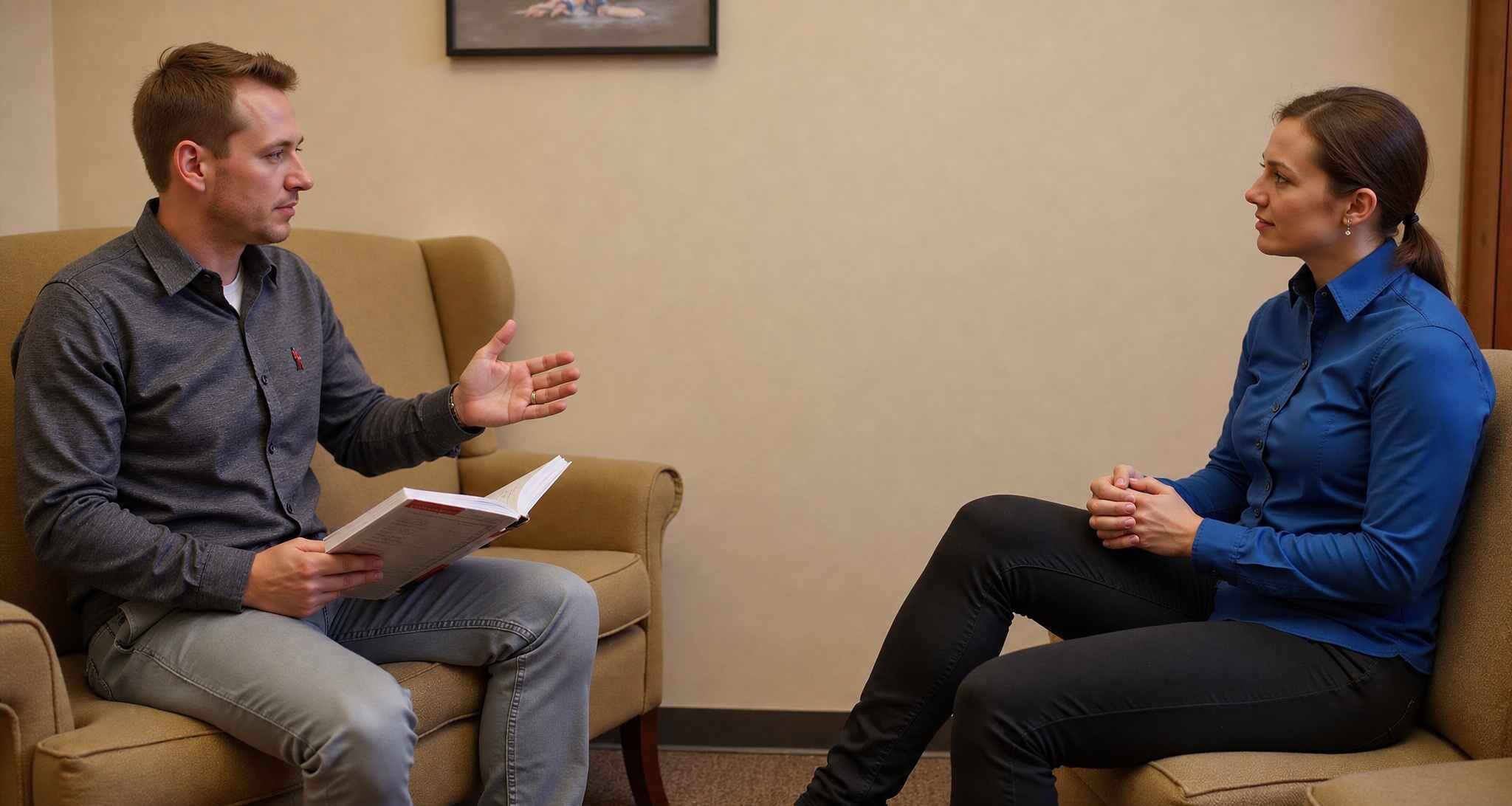

Cognitive Behavioral Therapy (CBT) fundamentally operates on the principle that your thoughts, emotions, and behaviors are interconnected in what’s called the cognitive triangle. This connection means negative thinking patterns directly influence how you feel and act. By identifying and challenging unhelpful thoughts and core beliefs, you can break destructive cycles and develop healthier response patterns. CBT’s structured, present-focused approach empowers you with practical skills to transform your thinking a process backed by decades of compelling neurobiological and clinical evidence.
The Cognitive Triangle: Understanding the Thought-Emotion-Behavior Connection

The Cognitive Triangle represents one of the foundational frameworks in Cognitive Behavioral Therapy, illustrating how thoughts, emotions, and behaviors continuously influence one another in a cyclical pattern.
When you experience situational triggers, your immediate thoughts often automatic and potentially involving cognitive distortions directly shape your emotional responses. These emotions, in turn, drive your behavioral responses, creating feedback loops that can either reinforce negative cycles or build positive reinforcement.
Developing self-awareness of these connections empowers you to intervene at any point in the triangle. CBT efficacy studies have demonstrated that approximately 80% of adults benefit from cognitive therapy interventions targeting these interconnected elements. The therapy remains goal-oriented throughout the treatment process, helping clients develop practical skills they can apply independently. By practicing thought reframing, emotional regulation, and intentional behavior modification, you can break destructive patterns.
Without intervention, the triangle becomes a vicious cycle that perpetuates negative patterns in daily life.
This understanding forms the basis for effective coping strategies, helping you transform negative cycles into constructive ones, regardless of which component you initially target.
Core Beliefs and Their Impact on Mental Health
While thoughts and behaviors fluctuate from moment to moment, core beliefs operate as the foundational architecture of your cognitive framework, profoundly shaping your perception of reality.
These deeply held convictions, largely formed through childhood experiences, act as filters for all emotional processing and subsequent reactions.
Negative core beliefs can have a devastating impact on mental health, manifesting as self-sabotage, diminished self-worth, and persistent anxiety or depression. Core beliefs play a significant role in various mental health disorders, particularly in how symptoms develop and persist.
Core negative beliefs hijack our self-perception, fueling destructive patterns of self-sabotage and emotional distress.
When you believe you’re fundamentally flawed or unlovable, you unconsciously seek evidence that confirms these distortions. This perpetuates a cycle where experiences contradicting negative beliefs are often cognitively filtered out.
Cognitive restructuring in CBT helps you identify and challenge these unhelpful beliefs, gradually replacing them with more balanced, adaptive beliefs. Dr. Aaron Beck’s revolutionary approach established that changing these thought patterns directly improves emotional well-being.
This transformation process is essential for sustainable mental health improvement and breaking free from self-limiting patterns.
Evidence-Based Foundations of CBT’s Effectiveness

CBT’s effectiveness rests on decades of solid empirical research, with meta-analyses consistently demonstrating significant symptom reduction across different mental health conditions compared to control groups.
You’ll find strong neurobiological evidence supporting CBT’s mechanisms, including studies showing changes in brain activity patterns following successful treatment.
This evidence-based approach has established CBT as a primary treatment recommendation in clinical guidelines worldwide, with particularly strong outcomes for anxiety disorders, depression, and PTSD. A recent study published in The Lancet Psychiatry demonstrated that CBT provides long-term benefits for patients with depression, especially those who did not fully respond to antidepressants alone. The structured techniques employed in CBT effectively transform thought patterns and behaviors, which contributes to its widespread success as a therapeutic intervention. Current research recognizes CBT as having the most supporting evidence among all psychological therapies for improving health-related quality of life.
Empirical Research Outcomes
Extensive research spanning decades has firmly established Cognitive Behavioral Therapy as one of psychology’s most empirically validated treatment approaches. The empirical efficacy of CBT is demonstrated across numerous mental health conditions, with therapeutic outcomes consistently showing strong and lasting effects.
- Large effect sizes for both depression and anxiety disorders, with CBT often outperforming antidepressant medications.
- Proven effectiveness across age ranges, from very young children (3-6 years) to adults with diverse conditions.
- Superior long-term outcomes, with patients showing lower relapse rates compared to medication-only treatments.
- Cost-effectiveness particularly notable in mindfulness-based CBT for depression relapse prevention.
Meta-analyses have consistently shown that CBT is more effective than psychodynamic therapy and comparable to other therapeutic approaches for treating anxiety and depression.
While CBT’s effectiveness differs by condition and delivery method, the evidence overwhelmingly supports its central role in contemporary mental health treatment, especially when customized to specific disorders.
Meta-Analysis Support Data
The empirical foundation of Cognitive Behavioral Therapy rests upon an impressive body of meta-analytic research that substantiates its effectiveness across diverse psychological conditions. A thorough review identified 269 meta-analytic studies, with strongest support for anxiety, somatoform disorders, bulimia, anger, and stress.
Meta-analysis findings reveal moderate to large effects compared to control conditions (g=0.79), with benefits maintained at follow-up periods of 6-12 months.
You’ll find CBT outperforms other psychotherapies and shows greater long-term effectiveness than pharmacotherapy at one-year follow-up (g=0.34).
Treatment efficacy extends beyond mental health to physical conditions, demonstrating medium effect sizes for chronic pain and fatigue. Recent research demonstrates that ultra-complex CBT shows the highest effectiveness in reducing depression with standardized mean differences of -1.45. Recent evidence shows CBT significantly improves outcomes for patients with bipolar disorder when used as an adjunctive therapy to medication.
CBT also proves effective for children and adolescents, with particularly strong outcomes for youth anxiety disorders.
Neurobiological Change Evidence
Modern neuroscience has dramatically expanded our understanding of how cognitive behavioral therapy creates measurable changes in brain structure and function. Research demonstrates CBT’s ability to produce significant neurotransmitter modulation and brain structure changes visible through sophisticated imaging techniques.
Key neurobiological findings include:
- Decreased amygdala activation and volume following CBT treatment, correlating with reduced anxiety responses
- Normalized prefrontal cortex activity in depression patients, improving cognitive control over emotions
- Improved neurochemical concentrations in the OFC, ACC, and striatum regions following therapeutic interventions
- Formation of new neural pathways as you practice CBT techniques, demonstrating the brain’s remarkable neuroplasticity
Studies show approximately 70% of OCD patients respond positively to CBT treatment, with many exhibiting lower relapse rates compared to those treated with pharmacotherapy alone.
These biological changes confirm that CBT doesn’t just alter thoughts and behaviors it physically rewires your brain, creating lasting neurological improvements that support recovery from psychological distress. Meta-analyses of neuroimaging studies reveal consistent changes in the default mode network following effective CBT interventions across various psychiatric disorders. The intervention’s effectiveness is based on the fundamental principle that cognitions influence emotions and behaviors, providing the theoretical foundation for therapeutic approaches.
Challenging Cognitive Distortions and Automatic Thoughts

Five fundamental patterns of distorted thinking lie at the heart of cognitive behavioral therapy practice. These include all-or-nothing thinking, overgeneralization, mental filtering, catastrophizing, and personalization.
These exaggerated thought patterns, formed during childhood, can greatly worsen symptoms of anxiety and depression.
Through automatic thought identification, you’ll learn to recognize those immediate, unquestioned responses that trigger emotional reactions. Mental flexibility in thought can help break these rigid thinking patterns and allow for more balanced interpretations. Cognitive reframing techniques like Socratic questioning and examining evidence help you critically assess these thoughts.
By documenting your thoughts using structured records, you’ll develop awareness of recurring patterns.
The restructuring process involves identifying distortions, evaluating evidence, and generating balanced alternatives. Cognitive therapy emphasizes that thought modification leads to improved mental health outcomes. Maintaining a growth mindset rather than a fixed one is essential in cognitive restructuring, as replacing entrenched negative thought patterns requires persistence. As you practice challenging these distortions, you’ll experience improved emotional regulation, improved problem-solving abilities, and greater resilience when facing life’s challenges.
The Present-Focused Nature of CBT Intervention
CBT’s effectiveness stems from its focus on your current challenges rather than extensive exploration of your past.
You’ll develop practical skills to address immediate thought patterns and behaviors that contribute to your distress today.
This present-centered approach enables you to make meaningful changes in your daily life while building sustainable coping strategies for long-term wellbeing.
The therapy’s structured approach allows for clear goal-setting and measurable progress throughout your treatment journey.
The therapy incorporates Socratic questioning to help you identify and modify negative thinking patterns that affect your emotions and behaviors.
Why Now Matters
While many therapeutic approaches investigate a client’s past experiences, cognitive behavioral therapy distinguishes itself by placing a deliberate focus on the present moment.
CBT prioritizes addressing your current challenges rather than extensively analyzing childhood events, allowing you to take immediate action towards meaningful change.
This present-focused approach delivers several key benefits:
- Provides rapid symptom relief within a relatively short timeframe (typically 12-16 weeks)
- Interrupts negative thought patterns as they occur in real-time
- Promotes behavioral activation to overcome current avoidance patterns
- Builds self-efficacy by equipping you with practical coping skills
Skills Over History
Rather than dwelling on past experiences that can’t be changed, CBT equips you with practical skills to address your current challenges head-on. The approach prioritizes solving immediate problems through active skill development, focusing on how your thoughts and behaviors affect you today.
Unlike therapies that extensively investigate historical context, CBT emphasizes skill evolution through collaborative practice. You’ll work with your therapist to identify unhelpful thinking patterns and develop concrete techniques to manage them.
This present-focused approach means your treatment can often be completed within 6-14 sessions. Red light therapy session recommendations can vary based on individual needs and conditions. It’s important to consult with a professional to determine the optimal number of sessions for your desired outcomes.
CBT’s effectiveness comes from teaching you to become your own therapist. Through homework assignments and regular practice outside sessions, you’ll build confidence in applying these skills independently, creating sustainable change without extensive historical analysis.
Behavioral Activation as a Catalyst for Positive Change
Behavioral activation stands as one of the most powerful components within cognitive behavioral therapy, functioning as a catalyst that can transform negative psychological patterns into positive change. This approach systematically breaks the cycle of avoidance and withdrawal through structured behavioral strategies and activity scheduling that gradually reintroduce positive experiences into your life.
The effectiveness of behavioral activation stems from four key principles:
- Engagement in rewarding activities directly improves mood, regardless of thought patterns
- Scheduled activities build momentum that overcomes initial motivation barriers
- Progressive difficulty increases confidence through successful experiences
- Activity selection based on personal values guarantees sustainable engagement
Research shows behavioral activation can be as effective as medication for depression, making it a cornerstone intervention that builds psychological resilience through action rather than insight alone.
The Collaborative Therapeutic Alliance in CBT
The collaborative therapeutic alliance in CBT represents far more than a mere backdrop for technical interventions it forms the essential foundation upon which all effective cognitive behavioral therapy is built. Research consistently identifies this alliance as a significant predictor of treatment outcomes across numerous disorders.
| Alliance Component | Alliance Building Techniques |
|---|---|
| Goal Agreement | Socratic questioning to develop shared objectives |
| Task Collaboration | Regular alliance assessment and feedback |
| Emotional Bond | Tailoring communication to individual needs |
Successful therapist-client dynamics balance structured intervention with genuine empathy, creating space where clients feel both supported and challenged. When you encounter ruptures in the therapeutic relationship, addressing them promptly transforms potential setbacks into opportunities for deeper understanding and growth. This collaborative framework allows CBT’s technical elements to achieve their maximum effectiveness.
Structured Problem-Solving and Skill Development
In CBT, you’ll learn to challenge problematic thoughts through a systematic framework that breaks complex issues into manageable components.
Your therapy sessions emphasize action-oriented learning where you practice applying problem-solving techniques to real-life situations rather than merely discussing them.
These targeted skill-building exercises equip you with practical tools to identify cognitive distortions, implement behavioral changes, and develop healthier response patterns that you can continue using long after therapy ends.
Systematic Challenge Framework
When facing persistent psychological difficulties, a systematic approach offers the most reliable path in the direction of meaningful change. The systematic evaluation process requires you to methodically address unhelpful thinking and behavior patterns through structured techniques.
This framework develops cognitive flexibility by teaching you to test assumptions rather than accepting them as facts.
- Identify specific problems by breaking complex issues into manageable components
- Generate multiple potential solutions and evaluate each option objectively
- Design behavioral experiments to test negative beliefs and gather evidence
- Establish SMART goals with clear steps for monitoring progress
Action-Oriented Learning Process
Building upon the systematic challenge framework, CBT’s action-oriented learning process transforms abstract concepts into concrete skills through structured practice.
You’ll engage in experiential learning through specific homework assignments designed to reinforce techniques introduced during sessions. These action steps move therapy beyond discussion into practical application.
Your therapist will guide you through breaking down complex problems into manageable components, establishing clear goals for each challenge you face. This structured problem-solving approach emphasizes your active participation monitoring thought patterns, practicing new responses, and gradually developing self-therapy capabilities.
Research consistently demonstrates that clients who complete between-session assignments achieve better outcomes.
Targeted Skill Acquisition
CBT’s structured approach to targeted skill acquisition forms the cornerstone of its effectiveness, teaching you specific techniques rather than merely promoting insight.
Through collaborative sessions, you’ll develop a toolkit of practical skills designed for long-term retention and application across diverse life situations.
Your therapist will guide you through learning essential abilities:
- Cognitive restructuring to identify and challenge negative thought patterns
- Behavioral activation to increase engagement in positive activities
- Problem-solving strategies to address challenges methodically
- Emotional regulation techniques to manage difficult feelings effectively
Therapeutic homework between sessions reinforces skill development through real-world practice.
This structured skill-building process typically spans 8-20 sessions, with progress measured through your increasing ability to apply these techniques independently in challenging situations.
Mindfulness Integration With Traditional CBT Approaches
As traditional Cognitive Behavioral Therapy evolved over recent decades, mindfulness practices have emerged as powerful complements to its established framework.
Mindfulness-Based Cognitive Therapy (MBCT) represents this integration, teaching you judgment-free observation of thoughts rather than challenging them directly. This approach improves cognitive integration through present moment awareness practices that foster mental flexibility.
Observe thoughts without judgment rather than challenge them, creating space for genuine mental flexibility.
Unlike traditional CBT, mindfulness techniques emphasize emotional acceptance and thought awareness without attempting immediate change. Research demonstrates these meditation benefits reduce depression relapse by 50% and improve psychological resilience through improved attention and working memory.
You’ll learn to observe your thought patterns with curiosity rather than criticism, creating distance from automatic negative thinking. This metacognitive shift allows you to relate differently to challenging emotions, breaking cycles of rumination that often maintain psychological distress.
Self-Therapy: Building Long-Term Resilience Through CBT Principles
The long-term effectiveness of Cognitive Behavioral Therapy depends largely on your ability to continue implementing its principles independently.
By developing self-reflection practices that identify personal triggers and warning signs of distress, you’ll build emotional resilience techniques that prevent symptom relapse.
Creating your personalized “emotional initial aid kit” involves several key components:
- Regular thought challenging exercises to maintain balanced thinking patterns
- Consistent practice of relaxation techniques during everyday stressors
- Journaling to track your progress and identify recurring thought patterns
- Utilization of CBT-based mobile apps for continued skill development
Adopting a growth mindset allows you to view challenges as opportunities rather than threats.
Setting meaningful personal goals while applying cognitive restructuring to daily situations transforms CBT from a temporary intervention into a sustainable lifestyle approach to mental wellness.
Related Reading
Frequently Asked Questions
How Does CBT Differ From Psychoanalysis and Humanistic Therapies?
Unlike psychoanalysis, CBT uses structured cognitive frameworks and practical therapeutic techniques focused on present problems rather than past experiences.
You’ll work collaboratively with your therapist, not investigate unconscious conflicts.
CBT differs from humanistic approaches through its directive, evidence-based methods that target specific thought patterns rather than promoting self-discovery.
CBT teaches measurable skills in a time-limited format, while both alternatives offer longer, less structured therapeutic expeditions with different philosophical foundations.
Can CBT Be Effective for Children and Adolescents?
Yes, CBT can be highly effective for children and adolescents when adapted to their cognitive developmental period. About 60% of youth recover after treatment, with proven benefits for anxiety, depression, OCD and PTSD.
Therapists modify techniques using developmentally appropriate language, shorter sessions, and incorporating play for younger children. The approach addresses both child development needs and unique adolescent challenges through cognitive restructuring, exposure tasks, and coping skills training.
Parent involvement often improves outcomes for younger patients.
What Is the Average Duration of CBT Treatment?
CBT typically lasts 12-16 weeks with sessions occurring once a week for about an hour.
Your treatment duration may vary depending on your specific condition anxiety might resolve in 12 weeks, while more complex issues may require longer treatment.
Session frequency is generally weekly, but this can be adjusted based on your needs.
Your therapist will regularly evaluate your progress to determine if you’ve achieved your goals or need extra sessions.
How Does Culture Influence CBT Implementation and Outcomes?
Culture greatly shapes CBT implementation and outcomes.
You’ll find that cultural sensitivity matters – when therapists recognize and respect your cultural values, treatment becomes more effective.
Research shows therapy adaptation improves outcomes, particularly when modifications address both surface elements (language, examples) and deep structures (core cultural beliefs).
While CBT works across diverse populations, its effectiveness may vary.
Therapists who develop cultural competence and incorporate your cultural context into interventions can prevent distress and improve therapeutic alliance.
Is Online or App-Based CBT as Effective as In-Person Therapy?
Research shows that online CBT demonstrates comparable effectiveness to in-person therapy for conditions like depression and anxiety.
You’ll find multiple meta-analyses confirming this equivalence, with no meaningful differences in outcomes.
App accessibility represents a significant advantage, allowing flexible scheduling and remote treatment options.
While therapist support may improve outcomes, even self-guided digital interventions produce positive results.
The evidence suggests you can confidently consider online or app-based CBT as a legitimate, effective alternative to traditional therapy formats.