















You’ll find that symbols for mental disorders vary dramatically across cultures, from the green ribbon and semicolon in Western advocacy to the medicine wheel in Indigenous traditions and the lotus flower in Eastern philosophy. Each symbol carries meaning shaped by its cultural heritage, spiritual roots, and collective experience. A phoenix represents rebirth after crisis, while Om embodies mindfulness and inner peace. Understanding how these symbols differ across traditions reveals powerful insights into humanity’s diverse approaches to healing. The symbol for mental illness can serve as a potent reminder of the struggles individuals face. For instance, in some cultures, the butterfly signifies transformation and hope, while others may use the blue butterfly specifically to highlight the complexities of anxiety and depression. These symbols not only promote awareness but also foster a sense of community and understanding among those affected.
The Most Recognized Symbols for Mental Disorders Today
Mental health symbols carry weight far beyond their visual simplicity, they distill complex, often invisible struggles into forms that transcend language barriers and cultural divides. You’ll find the semicolon among the most universally recognized symbols representing mental disorders, signifying that your story continues beyond crisis. Project Semicolon amplified its reach through advocates like Selena Gomez, linking it firmly to suicide prevention and addiction recovery. Other symbols, like the ribbon, serve as colorful representations in campaigns that promote awareness around issues like anxiety and depression. Moreover, things that represent mental health can vary widely across cultures, with some communities embracing alternative symbols that resonate more deeply with their experiences. These representations not only foster solidarity but also provide a platform for dialogue, encouraging individuals to share their journeys and seek support.
The green ribbon stands as the international emblem of mental health awareness, representing hope and strength across cultures. You can wear it as a badge or integrate it into butterfly or floral designs. Meanwhile, the monarch butterfly symbolizes transformation from darkness to light, while the infinity symbol reminds you that recovery’s potential remains boundless regardless of where you stand today. The Mental Health Bell, forged from melted chains and shackles once used to restrain patients in early treatment facilities, stands as a powerful symbol of hope and resilience for those living with mental health disorders.
Ancient Symbols That Still Shape Mental Health Culture
When you trace healing symbols back to their origins, you’ll find roots stretching thousands of years, from the Vedic texts that gave rise to Om to the Anasazi artifacts bearing the Spiral Sun, each emerging from distinct cultural frameworks for understanding suffering and recovery. These symbols weren’t merely decorative; they encoded entire worldviews about consciousness, balance, and renewal that their communities relied on to navigate psychological distress. Today, their enduring impact is evident in how practices like meditation, medical iconography, and recovery narratives still draw on these ancient visual languages to foster healing across cultural boundaries. While these symbols lack scientific validation, they continue to hold profound cultural and personal significance as tools for guidance in healing and life journeys.
Ancient Healing Symbol Origins
Resilience, renewal, and the quest for inner balance aren’t modern inventions, they’re encoded in healing symbols that ancient civilizations carved, painted, and passed down thousands of years ago. When you trace ancient healing symbol origins, you’ll find the Rod of Asclepius emerging from Greek mythology, where a single serpent coiled around a staff represented rebirth and healing power. The Hamsa, a hand-shaped amulet found across Middle Eastern, Jewish, and Hindu traditions, serves as a universal symbol of protection against negative energies while enhancing feelings of strength and resilience.
Across Asia, Om originated from 5,000-year-old Vedic texts, embodying inner peace and mindfulness. Native American Anasazi cultures honored the Spiral Sun as “the First Healer,” while Ghana’s Owia Kokroko carried parallel meaning. These traditions reveal that mental health awareness icons weren’t invented recently, they evolved organically across civilizations. Each symbol reflects a culture’s understanding that psychological well-being demands attention, balance, and deliberate restoration through meaningful, enduring visual language.
Enduring Cultural Symbol Impact
Those ancient symbols didn’t stay buried in temple walls or faded manuscripts, they’re alive in today’s mental health culture, shaping how people across the globe process trauma, recovery, and resilience. You’ll find the Rod of Asclepius still anchoring medical institutions, while the Phoenix drives recovery narratives centered on rebirth. These symbols for mental disorders activate neural pathways tied to safety and comfort, giving you psychological anchors during crisis.
Celtic knots reinforce interconnectedness in recovery communities. The Medicine Wheel maintains sacred relevance for mental balance across Indigenous practices. Om continues bridging spiritual foundations with contemporary wellness. Each symbol draws strength from heritage while serving modern psychological needs. You’re witnessing cultural continuity, ancient motifs don’t just persist; they actively shape how diverse communities understand, communicate, and navigate mental health journeys today.
How Do Indigenous Medicine Wheels Represent Mental Balance?
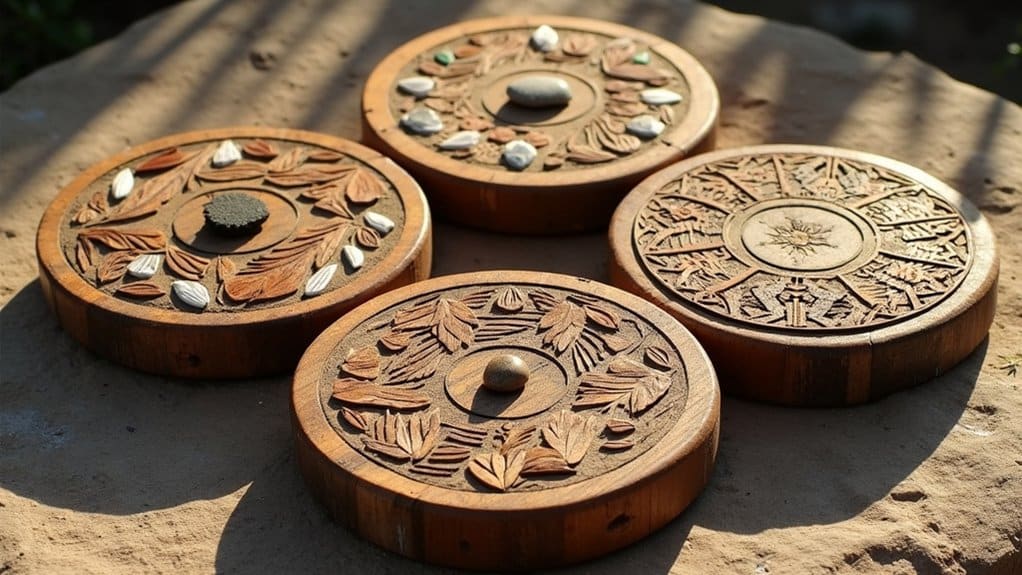
Although many contemporary mental health frameworks treat the mind as a separate domain, Indigenous Medicine Wheels represent mental balance as inseparable from physical, emotional, and spiritual well-being. You’ll find the iconic circle divided into four colored quadrants, each corresponding to body, mind, heart, and spirit, embodying interconnectivity rather than isolation.
Within this framework, the South direction addresses your inner peace through healing thoughts, self-empathy, and introspection. Unlike conventional symbols for mental health awareness, the Medicine Wheel doesn’t isolate cognition from emotion or spirit. Cree and Anishinaabek communities use these teachings to sustain balance through connection and reflection. You engage with cultural practices, smudging, prayer, Elder guidance, that address mental well-being holistically across life’s stages, from birth through death.
Eastern Symbols for Mental Disorders: Om, Lotus, and More
Where Indigenous Medicine Wheels frame mental balance through interconnected quadrants, Eastern traditions offer their own rich symbolic vocabulary for understanding and guiding mental health. When you explore eastern symbols for mental disorders: om, lotus, and more, you’ll find each carries distinct mental disorder symbol meaning rooted in centuries of spiritual practice. Understanding this symbolism is vital, as it resonates with a list of common mental illness disorders that many individuals face today. As you delve deeper into these associations, you may discover how traditional wisdom can complement modern therapeutic practices.
The Om symbol represents universal interconnection and inner peace, promoting mindfulness-based healing. The lotus flower, blooming from muddy water, embodies transformation and resilience through adversity. You’ll also encounter the Yin Yang, symbolizing the equilibrium essential for mental wellness, and Sei He Ki, a Reiki symbol connecting subconscious to conscious awareness. Even Medusa has emerged as a contemporary symbol representing survival and reclaimed strength.
The Cross and Western Symbols for Mental Health Recovery
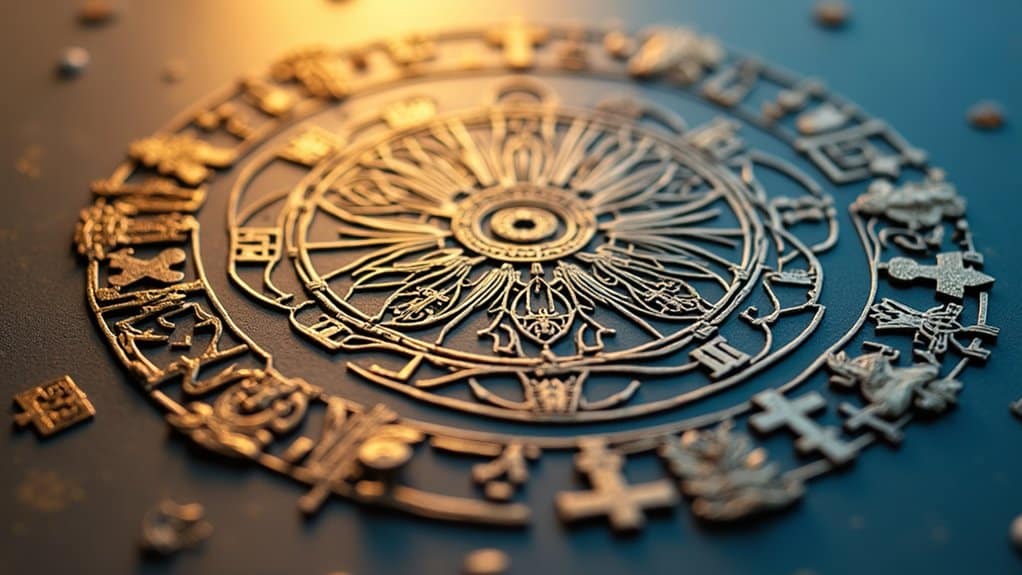
Because Western traditions carry their own layered visual language for healing, the cross stands as one of the most enduring symbols bridging spiritual faith and psychological recovery. You’ll find the cross as symbol of integration and wholeness in psychology rooted in Carl Jung’s individuation process, where conscious and unconscious minds learn to complement one another. This integration recovers repressed emotional content, fostering personality wholeness.
Beyond psychology, you encounter the cross in contemporary mental health ministry. Artist Mary Button’s 2015 Stations of the Cross installation directly connected Christ’s suffering to modern mental illness, addressing suicide epidemics with raw, provocative imagery. When you trace the cross consciously, whether through ritual, visualization, or reflection, you’re engaging an ancient axis mundi that joins fragmented aspects of selfhood, inviting realignment when you’ve gone spiritually or psychologically astray.
Transformation Symbols for Mental Health: Butterfly, Phoenix, and Medusa
When you explore transformation symbols in mental health, you’ll find the butterfly’s metamorphosis from caterpillar to winged creature mirrors the journey from psychological suffering to recovery, a meaning recognized across diverse cultural contexts. The phoenix, rooted in mythological traditions, represents your capacity for rebirth and renewal after even the most devastating mental health crises, signifying that recovery remains achievable regardless of severity. Medusa, reinterpreted as a modern recovery symbol, reflects resilience and survival, particularly embodying female empowerment and mental strength in contemporary mental health discourse.
Butterfly’s Transformative Journey
Much like the caterpillar can’t envision wings while crawling along a branch, you may struggle to see your own capacity for change while progressing through the earliest stages of psychological distress. The butterfly symbolizes hope, transformation, and rebirth across mental health frameworks, offering a cross-cultural mirror for your internal restructuring process.
Your journey through the chrysalis, where old beliefs dissolve into unrecognizable “goo”, isn’t pathology. It’s necessary reformation.
- Larvae stage: You’re exploring unconsciousness and uncertainty about identity, unable to perceive possibilities ahead.
- Chrysalis phase: You’re questioning foundational beliefs through therapy, coaching, and deep introspection, discomfort signals restructuring, not failure.
- Emergence: You’re aligning with your authentic self, shifting motivation from external validation to internal purpose.
Each stage demands patience and intentional self-reconstruction.
Phoenix Rebirth Symbolism
Though the butterfly captures transformation through gentle emergence, the phoenix demands something far more visceral from you, voluntary destruction of who you’ve been so that who you’re becoming can exist at all. Phoenix rebirth symbolism reflects conscious, deliberate transformation, you’re building your own pyre, placing upon it attachments, identities, and beliefs that no longer serve your healing.
Across Egyptian, Greek, and Christian traditions, this archetype consistently represents triumph over annihilation. You don’t simply survive crisis; you emerge fundamentally altered. Among mental health campaign symbols, the phoenix communicates that pain isn’t permanent, it’s catalytic. For those exhausting every treatment option, this symbol carries particular weight.
As awareness icons psychology continues evolving, the phoenix validates profound solitude during recovery, reframing radical self-reliance not as burden but as transformative power within your healing journey.
Medusa Represents Resilience
Because Medusa’s mythology has been recast so dramatically in recent decades, she now occupies territory neither the butterfly nor the phoenix can claim, she doesn’t symbolize gentle emergence or voluntary destruction, but the raw power that forms when others’ cruelty fails to define you. Among psychological disorder symbols, Medusa represents resilience forged through adversity, reclaiming agency from narratives of victimization.
- Trauma metaphor: Her petrifying gaze mirrors how trauma freezes your nervous system, making her a potent visual identity mental health advocacy tool
- Indirect healing: Like Perseus’s reflective shield, you approach overwhelming material through symbolic engagement rather than direct confrontation
- Stigma challenge: Alongside the green ribbon and mental illness ribbon colors worn on World Mental Health Day, Medusa functions as stigma reduction symbols mental illness communities increasingly embrace
Symbols for Specific Mental Disorders: Depression, Anxiety, and PTSD
You should recognize that some cultures lack direct equivalents for “depression,” making Western diagnostic symbols inadequate. Indigenous communities often express distress through undifferentiated physical and psychological complaints, requiring you to approach mental health symbolism with cultural sensitivity rather than assuming universal frameworks.
Modern Symbols: The Semicolon, Green Ribbon, and More
As mental health conversations have expanded globally, modern symbols like the semicolon, green ribbon, lotus flower, and phoenix have emerged as powerful tools for advocacy, recovery, and solidarity. You’ll find each carries distinct cultural weight and personal meaning.
- Green Ribbon: You wear it to signal that mental health deserves open dialogue and professional support, standing as the international awareness standard.
- Semicolon: You recognize it as a declaration that your story continues beyond struggle, mobilizing communities through shared resilience.
- Lotus Flower: You connect with its journey from mud to bloom, representing transformation and inner strength across diverse traditions.
The phoenix and sunflower further enrich this visual language, encouraging you to orient toward renewal and growth within your unique cultural context.
Why Mental Health Symbols Mean Different Things Across Cultures
When you encounter a symbol tied to mental health, its meaning shifts depending on the cultural soil it’s rooted in. A Celtic knot speaks to interconnected support and eternity within Celtic traditions, while Japan’s cherry blossom draws you toward present-moment awareness amid suffering. The Indigenous medicine wheel frames healing as balance among emotional, physical, spiritual, and mental dimensions.
These aren’t interchangeable metaphors. Each symbol carries implicit meaning shaped by heritage, worldview, and collective narrative. Om connects you to universal interconnection within Hindu and Buddhist frameworks, reinforcing that spiritual belief facilitates recovery. Mandalas bridge traditions, appearing across Hindu, Buddhist, Native American, and Western psychological practices, yet carry distinct significance in each context.
You’ll find that cultural symbols function as both identity markers and psychosomatic anchors, shaping health outcomes through shared meaning.
Take the First Step Toward a Healthier Mind
Mental health challenges are hard to face alone but the right support can change everything. At National Mental Health Support, we connect you with licensed counselors who specialize in Trauma Therapy built around your needs. Serving individuals throughout Albany County and surrounding areas, our team is ready when you are. Call (844) 435-7104 today and take the first step toward a better life.
Frequently Asked Questions
Can Mental Health Symbols Be Used Effectively in Therapeutic Art Therapy Sessions?
Yes, you can effectively use mental health symbols in therapeutic art therapy sessions. When you engage with meaningful symbols, whether spirals, butterflies, or culturally specific motifs, you’re bypassing verbal limitations and accessing deeper emotional material. You’ll find they help you externalize internal experiences, process trauma indirectly, and build emotional coherence. It’s essential, though, that your therapist understands each symbol’s cultural context, ensuring representations resonate authentically with your personal and collective meaning-making frameworks.
How Do Color-Blind Individuals Interpret Color-Based Mental Health Awareness Symbols?
You may struggle to distinguish color-based mental health symbols, like green for mental health awareness or blue for depression, if you’re color-blind, potentially losing their intended meaning. You’d benefit from symbols incorporating shapes, patterns, or text alongside color, such as the ColorADD accessibility system. Currently, there’s limited research specifically addressing how color-blind individuals interpret mental health awareness symbols, so designers should prioritize inclusive, multi-sensory approaches that don’t rely solely on color differentiation.
Are There Legal Protections for Mental Health Symbols Against Commercial Misuse?
Yes, you’ll find legal protections exist, though they’re layered. Trademark laws prevent improper use of registered mental health symbols, and false advertising regulations prohibit misleading commercial representations. If you misuse recognized symbols like awareness ribbons, you could face fraud charges or trademark opposition. SAMHSA restricts its logo usage, and advertising standards prevent creating unjustified expectations. You should understand these protections vary across cultural and jurisdictional contexts, so you’ll want to consult local regulations.
How Do Children Versus Adults Differ in Understanding Mental Health Symbolism?
You’ll find that children typically interpret mental health symbols literally, seeing a broken heart as a physical injury rather than emotional pain. As you mature, you develop abstract thinking that lets you grasp metaphorical layers, recognizing spirals as anxiety or butterflies as recovery. You should note that cultural context shapes this understanding differently; children in symbol-rich cultures may develop nuanced interpretations earlier. Adults generally connect symbols to broader societal narratives about psychological well-being.
Can Wearing Mental Health Symbols Reduce Self-Stigma in Diagnosed Individuals?
Yes, wearing mental health symbols can help you reduce self-stigma. When you display symbols like the semicolon, green ribbon, or butterfly, you’re externalizing your journey, which fosters empowerment and a sense of control over your narrative. Research shows that social support, often sparked by visible symbols, is negatively correlated with self-stigma. You’ll likely experience inner satisfaction recognizing your progress, while simultaneously inspiring others traversing similar challenges across diverse cultural contexts.