
















When stress hits, your body’s fight-or-flight response kicks in, but you can interrupt it before it takes over. Start with cyclic sighing: inhale slowly, then exhale for twice as long to activate your parasympathetic nervous system and lower cortisol. The 5-4-3-2-1 grounding technique redirects anxious thoughts by engaging your senses in the present moment. Combined with social support and consistent sleep habits, these strategies for staying calm in stressful situations build lasting resilience. Below, you’ll find exactly how to put each one into practice.
The 5-Minute Breathing Reset That Lowers Cortisol Fast
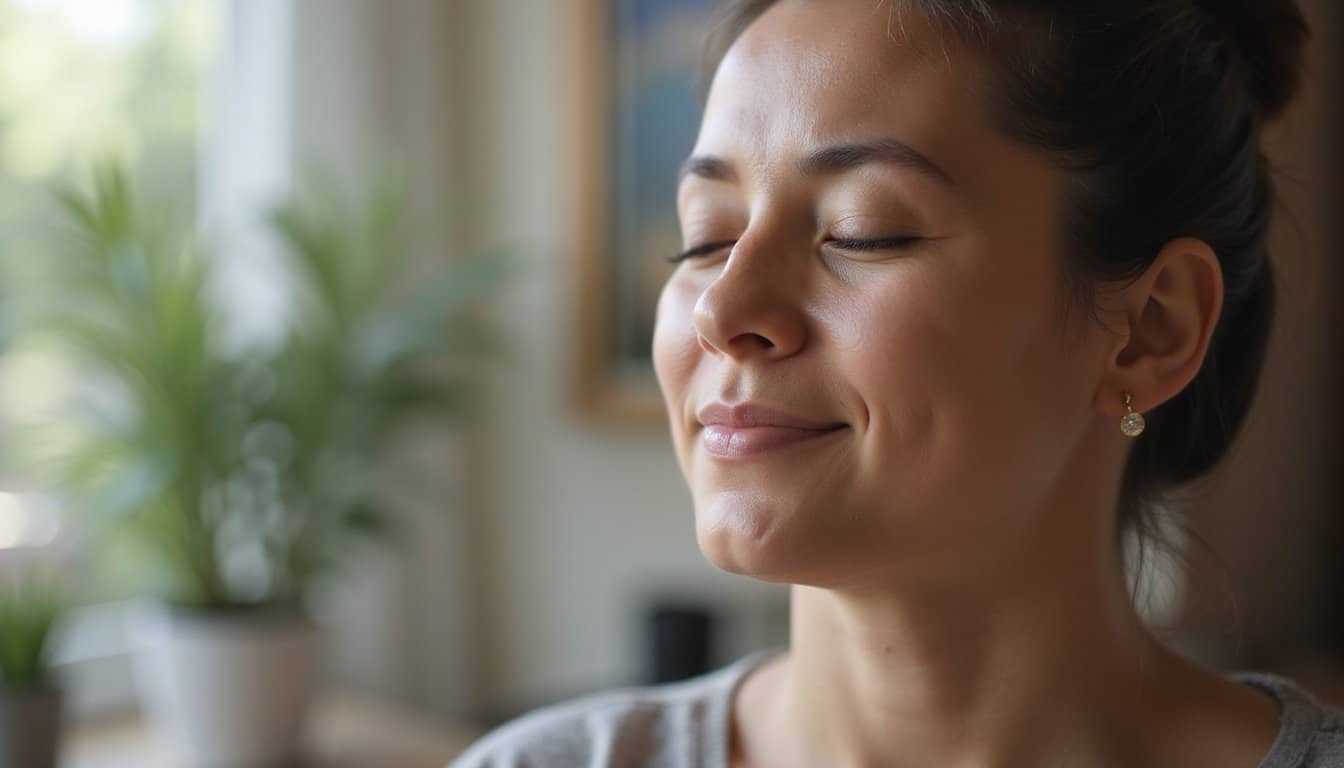
When stress hits, your body floods with cortisol, the hormone that keeps you alert but can also hijack your thinking and emotional control. Research shows you can counter this response in just five minutes. One effective approach is to develop healthy coping mechanisms for mental health, such as deep breathing exercises or mindfulness meditation. These techniques can help reduce cortisol levels and promote a sense of calm and clarity. Incorporating regular physical activity and maintaining a balanced diet also plays a crucial role in managing stress effectively.
Cyclic sighing, a breathing technique with extended exhales, significantly reduces cortisol levels and outperforms mindfulness meditation for mood improvement. This calm technique works by activating your parasympathetic nervous system, shifting you from reaction to response. In a study comparing breathwork to mindfulness meditation, 96% of participants found the video instructions for these techniques “very easy” or “somewhat easy” to follow.
Here’s how: Inhale slowly, then exhale for twice as long. Repeat for five minutes daily. Studies demonstrate this practice lowers respiratory rate, reduces anxiety, and builds a calm mindset over time. Research on diaphragmatic breathing also shows it increases antioxidant defense status while simultaneously decreasing cortisol levels. A study on women with type 2 diabetes found that combining aerobic exercise with deep breathing and mindfulness meditation significantly lowered fasting blood glucose compared to exercise alone.
For effective stress management and regulation under stress, this method offers reliable coping in public or high-pressure moments.
What’s Actually Happening When Stress Hits (And How to Stop It)
Breathing techniques work because they directly counter what’s happening inside your body during stress, but understanding that internal cascade gives you even more control.
When situational anxiety or conflict stress hits, your sympathetic nervous system triggers a rapid response. Your adrenal glands release epinephrine and cortisol, increasing heart rate, blood pressure, and muscle tension. Whether you’re experiencing performance nerves or boundary stress, the physiological pattern remains consistent.
| Stress Response | Your Counter-Move |
|---|---|
| Heart rate spikes | Slow, deep breathing activates parasympathetic recovery |
| Cortisol floods system | Intentional pauses prevent escalation |
| Muscles tense | Progressive relaxation redirects energy |
Effective pressure handling starts with recognizing these signals early. You can’t eliminate the stress response, but you can interrupt it before it hijacks your decision-making.
Use the 5-4-3-2-1 Method to Stop Spiraling Thoughts
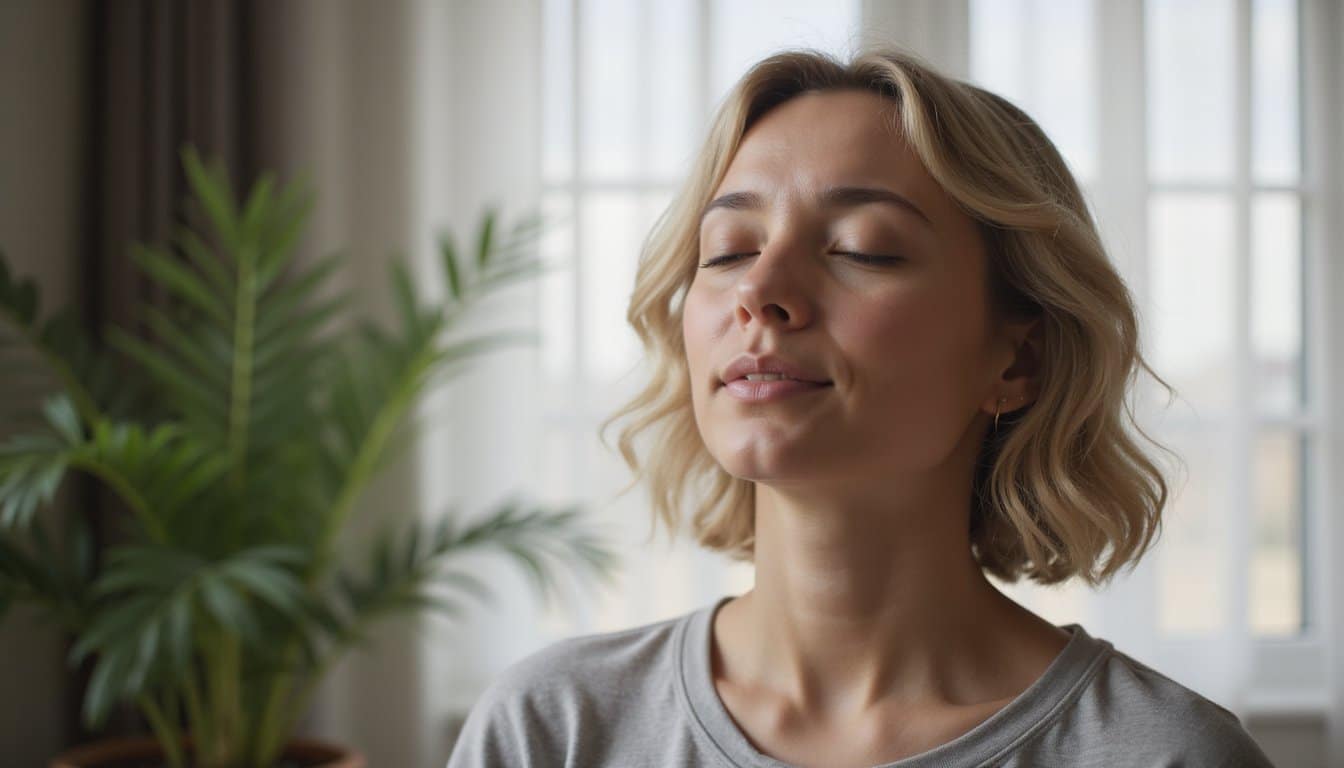
Spiraling thoughts can trap you in a loop of worry that feels impossible to escape, but the 5-4-3-2-1 grounding technique offers a practical exit. This method activates your parasympathetic nervous system by redirecting attention from anxious thoughts to immediate sensory input.
Here’s how to stay calm in stressful situations using this approach: Identify five things you can see, four you can touch, three you can hear, two you can smell, and one you can taste. Each step anchors you firmly in the present moment. When you’re overwhelmed, understanding how to calm down from an anxiety attack can greatly enhance your ability to cope. Practices such as deep breathing or grounding techniques can provide immediate relief.
Research confirms this technique reduces anxiety symptoms by calming your nervous system’s fight-or-flight response. For enhanced effectiveness, combine it with slow breathing, making your exhale twice as long as your inhale.
Calm Your Mind by Relaxing Your Muscles: Here’s How
While grounding your senses can interrupt anxious spiraling, your body often holds onto stress in ways your mind doesn’t immediately notice, and that’s where Progressive Muscle Relaxation (PMR) becomes a powerful tool. Research across 46 publications confirms PMR effectively reduces stress, anxiety, and depression in adults.
The technique builds staying calm through deliberate physical release. Breathe in while tensing a muscle group, then exhale as you release. Hold the relaxation phase for 10-15 seconds, noticing the contrast between tension and ease. This process activates your parasympathetic nervous system, promoting composure.
PMR strengthens stress tolerance and resilience skills you can deploy anywhere, during conflict, deadlines, or high-pressure moments. It’s straightforward, affordable, and shows no adverse effects, making it ideal for building lasting emotional steadiness.
Build Lasting Calm Through Daily Mindfulness Practice

Though muscle relaxation targets physical tension directly, mindfulness practice works from a different angle, training your brain to notice stress before it hijacks your responses. Research shows just 10 minutes daily produces measurable improvements, with consistency mattering more than duration.
Studies demonstrate that 30 days of mindfulness practice reduces depression by 19.2% and anxiety by 12.6% compared to control groups. Even better, these benefits persist after you stop practicing, the skills become part of how you navigate daily life.
What daily mindfulness builds over time:
- Stronger emotional regulation when pressure mounts
- Improved attention and working memory during high-stakes moments
- Better sleep quality that supports daytime resilience
- Natural stress buffering during normal activities
You don’t need lengthy sessions. Four 5-minute practices work as effectively as longer ones.
Why 21 Minutes of Movement Beats an Hour of Worrying
When stress hits, your brain often defaults to rumination, replaying scenarios, anticipating worst outcomes, and spinning through what-ifs. This mental loop feels productive but actually intensifies anxiety. Research shows a better alternative: just 21 minutes of movement outperforms an hour of worrying for stress reduction.
Physical activity works on multiple levels. It lowers cortisol and adrenaline while triggering endorphin release, your body’s natural tension relievers. Even five minutes of aerobic exercise stimulates anti-anxiety effects, and a 10-minute brisk walk improves mood more than staying inactive. In addition to physical activity, incorporating calming exercises for stress can further enhance mental well-being. Techniques such as deep breathing, meditation, and gentle yoga promote relaxation and help to manage anxiety levels effectively. Combining these approaches not only fosters a sense of tranquility but also contributes to overall emotional resilience.
You don’t need a gym or special equipment. Stretching at your desk, walking around the block, or doing squats between tasks all count. These micro-workouts interrupt the worry cycle and give your nervous system something concrete to process instead of imagined threats.
Lean on Your People: How Social Support Keeps You Calm
When stress hits, your social connections become one of your most powerful calming tools, research shows that support from family, friends, and professionals directly reduces stress hormones like cortisol while lowering heart rate and blood pressure. Building strong relationships before crisis strikes gives you a reliable network to lean on when pressure mounts, and reaching out during difficult moments isn’t weakness, it’s a proven strategy that boosts resilience and protects against stress-related health problems. Creating a trusted circle of people who understand your challenges means you’ll have immediate access to support that can keep stress from overwhelming your ability to think clearly and respond effectively.
Build Strong Social Connections
Because stress feels more manageable when you’re not facing it alone, building strong social connections serves as one of the most effective buffers against high-pressure situations. Research shows perceived social support correlates negatively with stress, anxiety, and depression, meaning the more supported you feel, the calmer you’ll stay.
Your body responds measurably to connection. When you have strong support, your cortisol levels drop, your heart rate steadies, and your blood pressure remains lower during challenging moments.
Why social support keeps you calm:
- You’ll view stressors as more controllable when people have your back
- Your physiological stress response dampens through oxytocin release
- You’re 180% less likely to develop trauma-related disorders with high support
- You’ll recover faster from setbacks with encouragement nearby
Invest in relationships before you need them.
Reach Out When Stressed
Although your instinct during stress might be to withdraw and handle things alone, reaching out to others actually triggers measurable changes in your body that help you stay calm. Studies show that having someone support you during stressful tasks dramatically reduces cortisol spikes, heart rate increases, and blood pressure elevation compared to facing challenges alone.
Different relationships offer distinct benefits. Friend support directly reduces your perception of stress, while family support works by building your resilience over time. Both pathways lead to better emotional balance when pressure hits.
Social support also helps you cope more effectively. You’re more likely to approach problems actively rather than avoid them, and you’ll make better decisions under pressure. Don’t isolate yourself, connection is a physiological calming tool.
Create Trusted Support Networks
Building a trusted support network isn’t just about having people to call, it’s about creating a physiological safety net that activates before stress spirals out of control. When you have strong social connections, your body responds differently to pressure, releasing less cortisol, maintaining steadier heart rate, and perceiving threats as more manageable.
Research shows people with high-quality support are considerably less likely to develop stress-related conditions and demonstrate better recovery outcomes across health challenges.
Why your network matters:
- Your brain releases oxytocin during close interactions, naturally calming your stress response
- You’ll perceive stressful situations as more controllable when you know someone has your back
- Your cardiovascular system stays more stable under pressure
- You’re 50% more likely to thrive long-term with strong relationships
Invest in these connections before you need them.
Sleep, Sunlight, and Diet Habits That Build Stress Resilience
When stress hits during a high-pressure moment, your body’s response depends partly on what you did hours, or even days, before. Research shows sleep quality strongly correlates with perceived stress, and longer sleep duration directly boosts your resilience. Aim for around seven hours nightly, studies link this to measurably higher resilience scores.
Sleep doesn’t just restore energy. It activates self-control, which reduces stress’s grip on you. Poor sleepers experience prolonged negative emotions after stressful events, while well-rested individuals recover faster.
Build habits that protect your baseline. Prioritize consistent sleep schedules, get morning sunlight to regulate your circadian rhythm, and eat foods that sustain steady energy rather than causing crashes. These aren’t luxuries, they’re protective factors. When you’ve slept well, you’ll notice stress signals earlier and respond more deliberately instead of reacting impulsively.
Healing Begins With One Call
Building healthy coping mechanisms is one of the most powerful steps you can take toward lasting mental wellness. At National Mental Health Support, we guide you toward licensed mental health counselors who specialize in Individual Therapy that addresses your unique needs and helps you build a calming plan for a healthier and more balanced life. Call (844) 435-7104 today and let us help you find the peace and clarity you deserve.
Frequently Asked Questions
How Do I Stay Calm When I Can’t Leave a Stressful Situation?
When you can’t physically leave, you can still create internal distance. Start by slowing your breathing, take a deep breath, hold briefly, then exhale slowly to interrupt your body’s stress response. Ground yourself by focusing on the present moment rather than spiraling thoughts. Ask yourself, “Will this matter next week?” to reality-test the situation. You might also squeeze a stress ball or shift your visual focus to regain composure.
What Should I Do if Calming Techniques Make Me Feel More Anxious?
If calming techniques increase your anxiety, you’re likely experiencing relaxation-induced anxiety, a real phenomenon, especially common with generalized anxiety. Your brain may interpret the shift toward calm as threatening.
Try shorter, gentler approaches like cyclic sighing (slow exhales) for just a few minutes, or use grounding techniques like 5-4-3-2-1 that keep you present without forcing relaxation. You can also reduce self-monitoring and simply re-engage with activity instead.
How Can I Stay Calm When Someone Is Actively Yelling at Me?
When someone’s yelling at you, focus on their underlying message rather than taking words as a personal attack. You can stay quiet and disengage, this prevents escalation and protects you emotionally. Keep your breathing slow and steady to reduce physical tension. If possible, remove yourself from the situation entirely. Afterward, reach out to a trusted colleague, friend, or family member for support. You don’t have to absorb someone else’s anger.
Why Do I Freeze Instead of Using Strategies I’ve Practiced at Home?
Your nervous system shifts into a protective mode during high stress, making it nearly impossible to access practiced strategies. This isn’t a failure, it’s biology. When threat feels real, your brain prioritizes survival over recall.
The fix? Practice techniques before stress peaks, not during. Build daily habits so responses become automatic rather than requiring conscious effort. You’re not broken; you’re just training at the wrong time.
How Do I Rebuild Calm After a Stressful Moment Has Already Passed?
You rebuild calm through intentional recovery behaviors. Try applied tension release, consciously relaxing muscle groups while doing something low-key like reading or watching TV. Box breathing helps your nervous system shift from alert mode back to baseline. Even brief positively challenging activities like a short walk can boost your recovery. Aim for at least 10 minutes of deliberate unwinding. Your body needs clear signals that the stressful moment has genuinely ended.