















When you see a semicolon tattoo, a green ribbon, or a lotus flower, you’re encountering powerful symbols that represent mental health awareness, resilience, and recovery. The semicolon signifies continuation of one’s story, while the green ribbon, adopted in the 1990s, creates safe spaces for conversation. Butterflies and phoenixes reflect transformation through adversity. With 1 in 5 adults experiencing mental illness, these icons normalize dialogue and reduce stigma. Each symbol below carries a deeper significance worth exploring.
Why Mental Health Symbols Drive Awareness and Reduce Stigma
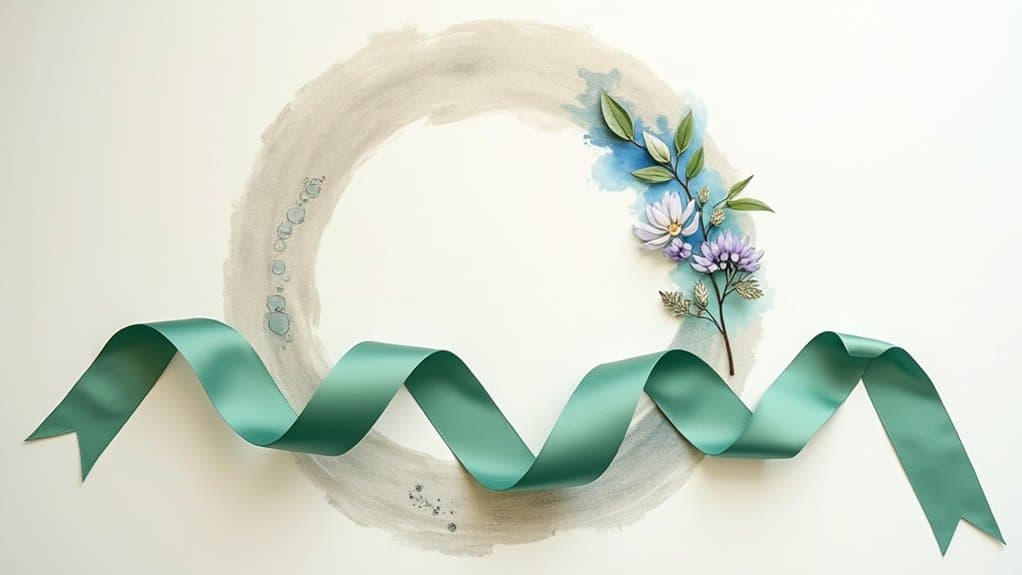
When you see a green ribbon pinned to someone’s jacket or a butterfly printed on a campaign poster, you’re encountering more than decoration, you’re processing a visual anchor designed to make mental health concepts stick. Mental health awareness imagery functions as non-verbal communication that crosses linguistic barriers, increasing message retention across diverse populations.
These symbols also mobilize communities. When you wear a badge or display a tattoo featuring a lotus or phoenix, you’re signaling solidarity, reducing isolation for those facing similar challenges. The Mental Health Bell, crafted from melted asylum shackles, directly confronts historical stigmatization. Public visibility through symbols normalizes conversations, diminishes shame around seeking help, and reframes mental health as fundamental to human wellness rather than taboo. Encountering these symbols can serve as emotional triggers that prompt individuals to take action, such as researching mental health resources or enrolling in treatment programs.
The Semicolon: Mental Health’s Most Recognized Symbol
A single punctuation mark has become mental health’s most powerful symbol. When you see a semicolon tattoo, you’re witnessing a statement of resilience, Amy Bleuel founded Project Semicolon in 2013 after losing her father to suicide, transforming grammar into one of the most recognized symbols of wellbeing worldwide.
The meaning is direct: a semicolon appears where a sentence could’ve ended but didn’t. Your story continues. This symbol affirms choice amid depression, anxiety, trauma, and addiction, functioning as what advocates call “a quiet act of defiance against isolation.”
Over 700,000 people die by suicide annually, making the semicolon’s role in normalizing mental health conversations critical. Each April 16th, National Semicolon Day, supporters share their tattoos using #ProjectSemicolon, proving that small symbols can drive powerful cultural shifts. During Suicide Prevention Month each September, the semicolon takes on even greater visibility as communities unite to raise awareness and encourage those struggling to seek help.
The Green Ribbon and Its Role in Mental Health Advocacy

Hope took physical form in the early 1990s when mental health advocates in the United States adopted the green ribbon as their defining symbol. You’ll recognize it today as one of the most powerful symbols of emotional wellbeing worldwide, chosen deliberately for green’s psychological associations with growth, renewal, and balance.
The green ribbon’s color variations carry specific meaning for mental health awareness:
- Dark green indicates general mental health advocacy
- Light green represents bipolar disorder and childhood depression
- Wearing it signals solidarity with those experiencing mental health struggles
- It creates safe spaces for open conversation, reducing stigma
When you wear this ribbon, you’re communicating something beyond awareness, you’re telling others they’re not alone. With approximately 1 in 5 adults experiencing mental illness, this simple act of visibility plays a crucial role in encouraging others to seek help and support.
Lotus, Phoenix, and Butterfly: Mental Health Recovery Symbols
Beyond ribbons and colors, three ancient symbols, the lotus flower, the phoenix, and the butterfly, carry profound weight in mental health recovery narratives. Each mirrors a distinct transformation process you can recognize in your own healing journey.
The lotus flower grows from mud before blooming on water’s surface, representing your emergence from adversity. The phoenix combusts entirely, then rises from ashes, symbolizing that you can restart life after severe suffering. The butterfly’s metamorphosis from larva to winged adult demonstrates that mental scars don’t have to define you permanently.
These mental health representation ideas share a unifying thread: resilience through transformation. You’ll find them commonly used as tattoos, therapeutic grounding tools, and visual reminders of inner strength. They cultivate self-awareness and communicate to others that you’re actively healing.
The Mental Health Bell Forged From Broken Chains

Before the Mental Health Bell existed as a symbol of hope, its raw materials served a darker purpose, iron chains and shackles that physically bound individuals with mental illness inside asylums across the United States.
On April 13, 1953, McShane Bell Foundry in Baltimore melted those discarded restraints into a 300-pound bell. Its inscription reads: “Cast from shackles which bound them, this bell shall ring out hope for the mentally ill and victory over mental illness.”
The bell’s transformation carries four essential mental health awareness ideas:
- Physical confinement reflected society’s fear and misunderstanding of mental illness
- Melting chains into a bell symbolizes turning oppression into advocacy
- Invisible chains, stigma, isolation, inaccessible care, still bind people today
- Each ringing reaffirms commitment to compassion over discrimination
You’ll find replicas displayed in Mental Health America offices nationwide.
The Blue Dot, Serotonin, and Other Symbols You Might Not Know
You may recognize the green ribbon or semicolon, but lesser-known symbols carry equally powerful meanings for mental health awareness. The Blue Dot, created in 2017 by Peggy O’Neil Nosti, serves as the international symbol for perinatal mental health awareness, addressing the #1 complication of childbirth that affects up to one in five U.S. mothers. Alongside it, the serotonin molecule symbol reframes mental health conditions as biological realities rather than personal failures, while clinical tools like genograms help professionals map mental health patterns across generations.
Blue Dot Maternal Awareness
Few people recognize the blue dot as a mental health symbol, yet it carries profound significance for the one in five U.S. mothers affected by perinatal mental health disorders, the #1 complication of childbirth.
Art teacher Peggy O’Neil Nosti created this blue dot maternal awareness symbol after experiencing postpartum anxiety, designing it with a silver lining to represent hope. You’ll find its impact extends through several key initiatives:
- Blue Dot Safe Spot program trains medical staff to create mental health safe spots during pregnancy, postpartum, and post-loss periods
- #askher campaigns encourage direct outreach to struggling mothers
- Maternal Mental Health Awareness Week runs annually each May
- Postpartum Support International now manages the project’s rights and associated resources
This non-trademarked symbol remains freely available for anyone’s advocacy efforts.
Serotonin Symbol Explained
Serotonin, the molecule behind mood regulation, sleep, and digestion, has become one of the most recognizable chemical structures in mental health advocacy. As a serotonin as neurotransmitter and chemical compound, 5-hydroxytryptamine operates through 14 known receptor types, influencing everything from cognition to social behavior. You’ll find its molecular structure tattooed on wrists, forearms, and collarbones worldwide.
The serotonin tattoo as mental health symbol functions much like the semicolon tattoo, it’s a visible declaration of resilience. If you’ve chosen this design, you’re signaling solidarity with others managing depression or anxiety. It creates a quiet fraternity among those who understand neurochemical struggles firsthand. While the tattoo won’t alter your brain chemistry, it serves as a tangible reminder that your well-being has a biological foundation worth fighting for.
Genogram Mental Health Tool
A genogram functions as a clinical mapping tool that charts family relationships, medical histories, and psychological patterns across multiple generations, think of it as a family tree with diagnostic depth. You’ll find that genogram structure relies on standardized symbols and mental health applications that clinicians use to identify hereditary psychological conditions.
When you examine a genogram, you’re tracking patterns that might otherwise stay hidden:
- Squares and circles represent male and female family members respectively
- Horizontal lines indicate partnerships, while vertical lines show parent-child connections
- Specific symbols denote mental health conditions, substance use, and emotional cutoffs
- Color coding highlights recurring psychological patterns across generations
You can use this tool to visualize intergenerational trauma, recognize behavioral cycles, and inform treatment planning with evidence-based precision.
What Mental Health Symbols Encourage Us to Notice: Mood and Behavior Changes
While many mental health symbols serve as tools for awareness and education, the serotonin molecule stands out because it directly connects mood and behavior changes to their biological roots. When you understand that serotonin regulates mood, sleep, and memory, you’re better equipped to recognize when chemical imbalances affect your daily functioning. This self care representation mental health framework shifts perspective from personal blame to biological understanding.
The green ribbon, butterfly, and mood swing icons further encourage you to notice emotional fluctuations. The butterfly’s life cycle mirrors mental health progression, while split-brain imagery with warm and cool tones visualizes emotional duality. The blue dot symbol specifically prompts recognition of maternal mood changes. Together, these symbols don’t replace professional support, they help you identify when behavioral shifts warrant closer attention.
When Someone Pulls Away: Social Withdrawal as a Warning Sign
Beyond the symbols and metaphors that help you recognize emotional shifts, one of the most telling behavioral indicators of declining mental health isn’t something you see, it’s someone’s absence. Social withdrawal representation in real life looks like canceled plans met with relief, muted group chats, and a quiet retreat from once-valued connections.
Sometimes the loudest cry for help is the silence where someone’s presence used to be.
Watch for these critical patterns:
- You notice someone consistently avoiding social gatherings and expressing exhaustion at the thought of interaction.
- They’ve abandoned hobbies and activities they previously enjoyed.
- Their communication has dropped considerably, unanswered calls, ignored messages.
- Daily responsibilities like work attendance or self-care are deteriorating.
Prolonged isolation carries measurable consequences: a 50% increased dementia risk and 25% greater likelihood of heart disease. If you’re witnessing escalating withdrawal, professional intervention isn’t optional, it’s essential.
Hallucinations, Disconnection, and Other Cognitive Red Flags
Five distinct types of hallucinations mark some of the most alarming cognitive red flags in mental health: visual, auditory, tactile, olfactory, and gustatory. You might see shapes, hear voices, feel phantom touch, smell nonexistent odors, or taste substances you haven’t ingested. These sensory experiences occur without any external stimulus. In some cases, these hallucinations can be symptomatic of rare mental illnesses that require specialized treatment. Individuals experiencing such conditions may find it challenging to differentiate between reality and their sensory experiences. Timely intervention and therapy can significantly improve their quality of life and manage symptoms effectively.
Beyond hallucinations, delusions distort your reality perception, generating extreme fear as your mind processes false beliefs as factual. Disorganized thinking disrupts coherent communication and logical reasoning, while unusual motor disturbances impair daily functioning. Clinicians require at least two of five core symptoms persisting for one month before diagnosis. Recognizing these icons for mental health awareness helps you identify when professional intervention isn’t optional, it’s urgent. Understanding the mental health disorders list and symptoms can empower individuals to seek help before situations escalate. Early recognition of signs like anxiety, depression, and bipolar disorder can lead to timely intervention and effective treatment. It’s crucial to educate ourselves about these conditions to foster a supportive environment for those affected.
How to Use Mental Health Symbols in Daily Life
Because mental health symbols carry measurable psychological weight, integrating them into your daily routine transforms abstract awareness into tangible action. You can anchor these representations in spaces where they’ll reinforce resilience and connection. Understanding what symbols represent mental illness can create a deeper connection to those around us who may struggle with these challenges. By incorporating these symbols into conversations and environments, we foster an atmosphere of empathy and support. Additionally, recognizing these symbols in art and media can help destigmatize mental health issues and promote awareness.
- Wear mental health symbols intentionally. Green ribbon pins, semicolon tattoos, or lotus flower jewelry function as personal declarations that normalize conversations around psychological well-being.
- Position symbols in recovery spaces. Placing phoenix or anchor imagery in your workspace reinforces daily emotional stability and renewal capacity.
- Display symbols to signal support. Open hands or green ribbons communicate compassion availability to loved ones maneuvering through mental health challenges.
- Integrate symbols into advocacy efforts. Community campaigns leveraging mental health symbols create focal points that mobilize policy change and reduce stigma.
Each application converts symbolic meaning into measurable social and personal impact.
Take the First Step Toward a Healthier Mind
Mental health challenges are hard to face alone but the right support can change everything. At National Mental Health Support, we connect you with licensed counselors who specialize in Trauma Therapy built around your needs. Serving individuals throughout Albany County and surrounding areas, our team is ready when you are. Call (844) 435-7104 today and take the first step toward a better life.
Frequently Asked Questions
Can Mental Health Symbols Be Culturally Offensive in Certain Countries or Regions?
Yes, mental health symbols can be culturally offensive. You’ll find that in collectivist societies, including many Asian, Hispanic, and Indian communities, mental health imagery may evoke shame or stigma, as mental illness reflects negatively on family lineage. Symbols like awareness ribbons don’t translate universally; some cultures associate mental distress with spiritual causes rather than psychological ones. You should consider cultural context carefully, since well-intentioned representations can inadvertently reinforce taboos or dismiss culturally specific expressions of distress.
Are There Copyright Restrictions on Using Mental Health Symbols for Fundraising?
Yes, you’ll find significant copyright restrictions when using mental health symbols for fundraising. Organizations like Mental Health America, NAMI, and the Mental Health Foundation protect their logos and branding under trademark laws. You can’t use their symbols, ribbons, or materials without prior written permission. Even fundraising on behalf of these organizations doesn’t automatically grant you usage rights. You should always secure written authorization before incorporating any trademarked mental health imagery into campaigns.
What Professional Certifications Exist for Mental Health Symbol-Based Art Therapy Practitioners?
You’ll find the Art Therapy Credentials Board (ATCB) serves as the primary certifying body for art therapy practitioners in the U.S. You’d need to complete a master’s degree from an ATCB-approved program, accumulate 1,000 hours of supervised clinical experience, and pass the Art Therapy Credentials Board Examination (ATCBE). If you’re already a credentialed mental health professional, you can pursue a Professional Certificate of Advanced Studies in Art Therapy requiring 30 credits plus clinical internship.
How Do Insurance Companies View Mental Health Symbol Tattoos During Policy Assessments?
There’s currently no substantial evidence showing that insurance companies specifically assess mental health symbol tattoos, like semicolons, during policy evaluations. You shouldn’t assume these symbols directly affect your coverage or rates. However, insurers may consider disclosed mental health history during underwriting. If you’re concerned, you’ll want to consult your provider directly about their specific policies. Research in this area remains limited, so you’d benefit from seeking personalized professional guidance.
Do Schools Need Permission to Display Mental Health Awareness Symbols on Campus?
You’ll typically need administrative approval before displaying mental health awareness symbols on campus. School districts generally follow internal policies governing signage and symbol displays, which may involve review by principals, school boards, or district officials. First Amendment considerations also play a role in educational settings. You should consult your specific district’s guidelines, as requirements vary greatly by state and locality. Connecting with your school’s administration guarantees you’re promoting awareness while following proper protocols.