















Healthy coping mechanisms protect your mental health by regulating emotions and building resilience against chronic stress. Research shows physical activity reduces poor mental health days by over 40%, while breathing techniques like cyclic sighing can boost positive affect by 33%. You’ll benefit most when you identify your top stressors and match them with targeted strategies, whether that’s movement, mindfulness, or creative expression. Understanding how each approach works helps you build a plan that truly lasts. Healthy coping mechanisms protect your mental health by regulating emotions and building resilience against chronic stress. Research shows physical activity reduces poor mental health days by over 40%, while breathing techniques like cyclic sighing can boost positive affect by 33%. Learning how to calm down anxiety through methods such as controlled breathing, mindfulness, and movement can help you match specific strategies to your biggest stressors. You’ll benefit most when you identify those stress triggers and pair them with targeted approaches, whether that’s exercise, meditation, or creative expression, so your coping plan remains practical and sustainable.
Why Strong Coping Skills Protect Your Mental Health
When you develop strong coping skills, you’re building more than just stress relief, you’re creating a foundation that protects your mental health across multiple dimensions. Healthy coping mechanisms directly regulate emotions, reducing symptoms of anxiety and depression while enhancing your self-awareness of emotional triggers.
Your emotional regulation skills also build resilience. Research shows that flexible coping strategies predict better adaptation to change and decrease reliance on avoidance behaviors. This resilience building strengthens your confidence in handling life’s pressures. Studies on physical education students during the epidemic found that immature coping styles are associated with poor mental health outcomes.
Perhaps most prominently, effective coping prevents stress from accumulating into chronic distress. When you manage daily tensions through adaptive strategies, you’re protecting both your psychological stability and physical health. Strong coping also improves relationships by enhancing communication and boundary-setting, creating lasting benefits across your entire life. Incorporating mind-body exercises like yoga or tai chi can further enhance these benefits by connecting physical movement with mental awareness. Research confirms that positive coping is associated with higher psychological well-being, while negative coping strategies increase distress and decrease overall mental wellness.
Physical Activity: Your Most Effective Coping Tool
Physical activity stands as one of the most powerful coping tools available, and the research backing this claim is overwhelming. Among 1.2 million adults surveyed, those who exercise experienced over 40 percent fewer poor mental health days. Exercise effectiveness matches psychotherapy and antidepressants for reducing depression symptoms.
For ideal nervous system regulation, aim for three to five 45-minute sessions weekly at moderate intensity. This perfect spot delivers maximum benefits, mental health improvements actually plateau and reverse beyond three hours weekly.
Your body responds through measurable changes: aerobic activity increases brain-derived neurotrophic factor by 31 percent and boosts hippocampal neurogenesis by 30-40 percent within weeks. These shifts directly support stress reduction habits and strengthen your mental health coping skills long-term.
Breathing and Mindfulness Techniques for Daily Stress
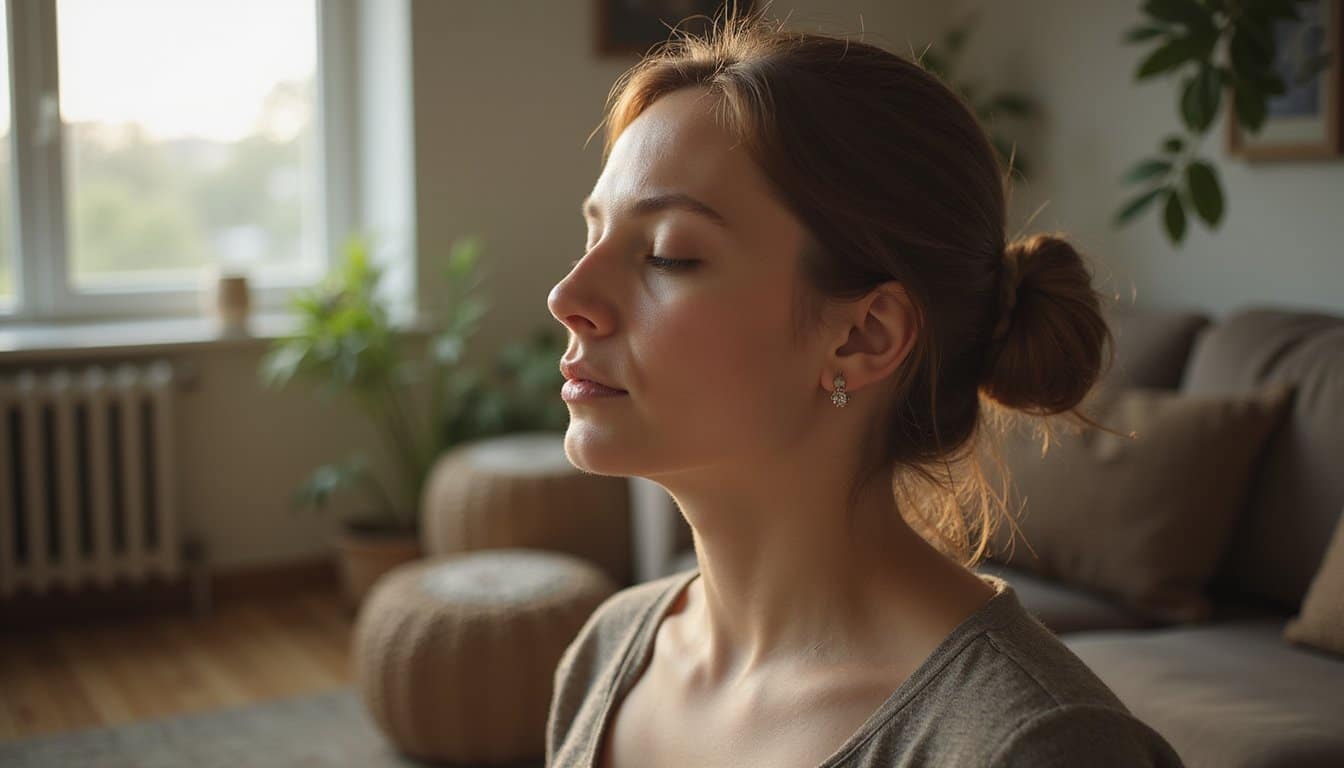
Breathing exercises offer one of the fastest, most accessible ways to shift your nervous system from stress to calm. Research shows that just five minutes of daily practice can considerably reduce anxiety and improve mood. The cyclic sighing technique, which emphasizes prolonged exhalations, proves more effective than mindfulness meditation alone, participants reported 33% greater improvements in positive feelings. When faced with overwhelming thoughts, integrating strategies such as how to calm your mind when overthinking can further enhance your mental clarity. Techniques like grounding exercises or visualization can help anchor your thoughts in the present moment, allowing for a more peaceful state of mind. Cultivating a mindful approach in daily routines encourages resilience against stressors, paving the way for better emotional well-being.
| Technique | Duration | Key Benefit |
|---|---|---|
| Cyclic Sighing | 5 min daily | Boosts positive affect by 33% |
| Diaphragmatic and Slow Breathing | 5+ min sessions | Lowers cortisol levels |
| 4-6 Breathing Pattern | Between tasks | Quick stress reset |
Practice before stressful events for prevention, and maintain daily consistency for cumulative benefits that compound over time.
Creative Expression as a Coping Strategy
Creative expression opens up a powerful pathway for emotional processing that goes beyond what words alone can achieve. When you engage in creative activities, your brain releases dopamine while activating your parasympathetic nervous system, creating a natural state of calm that reduces anxiety and depression symptoms.
Research shows 61% of people who participate in creative activities experience reduced stress, while 57% report improved overall mental well-being. Art therapy demonstrates significant improvements in psychological outcomes, with visual arts specifically lowering cortisol levels and soothing your nervous system.
You don’t need artistic talent to benefit. Expressive writing helps you process difficult life events, while painting or drawing translates emotions into tangible form. Whether you’re sketching, journaling, or making music, these activities give your feelings an outlet when talking isn’t enough.
Build Your Personal Coping Plan in 4 Steps
Building a personalized coping plan transforms scattered stress responses into a reliable system you can count on when anxiety hits. Start by identifying your top three to five stressors, whether that’s work deadlines, relationship tensions, or financial concerns. This clarity helps you match adaptive coping strategies to specific triggers.
Next, explore categories of self-help exercises that resonate with you:
- Physical strategies like walking, deep breathing, or yoga
- Cognitive techniques such as reframing worries or breaking tasks into smaller steps
- Social supports including trusted friends, support groups, or counselors
Document your coping plan by writing specific actions for each stressor and posting them where you’ll see them daily. Practice one strategy at a time until it becomes automatic. Track your progress weekly to reinforce what’s working. Consider researching how to reduce anxiety in stressful situations by exploring mindfulness techniques and deep-breathing exercises. Additionally, engaging in regular physical activity can significantly help manage stress levels effectively. Establish a routine that incorporates these practices to build resilience over time.
Healing Begins With One Call
Building healthy coping mechanisms is one of the most powerful steps you can take toward lasting mental wellness. At National Mental Health Support, we guide you toward licensed mental health counselors who specialize in Individual Therapy that addresses your unique needs and helps you build a calming plan for a healthier and more balanced life. Call (844) 435-7104 today and let us help you find the peace and clarity you deserve.
Frequently Asked Questions
How Does Income Level Affect My Ability to Develop Effective Coping Strategies?
Your income level directly shapes your access to mental health resources, therapy, and stress-reducing supports. Research shows lower incomes correlate with 1.5 to 3 times higher rates of anxiety and depression, partly because financial stress creates chronic nervous system activation. However, you can still build effective coping strategies using free tools, breathwork, movement, community support, and consistent routines don’t require money. Focus on what’s accessible while advocating for resources you deserve.
Can Coping Mechanisms Help Reduce the “Anxiety About Anxiety” Cycle?
Yes, coping mechanisms can directly reduce the “anxiety about anxiety” cycle. When you know you have tools to regulate your emotions, you’ll feel less afraid of anxiety itself. Research shows that gradual fear confrontation paired with breathing techniques builds confidence and reverses this cycle. Avoidance, however, worsens it, studies link avoidance coping to considerably higher anxiety odds. By practicing adaptive strategies consistently, you’ll develop self-trust that lowers your nervous system’s baseline activation.
Why Do I Need Multiple Coping Tools Instead of Just One Reliable Strategy?
You need multiple coping tools because different stressors require different responses. Problem-solving works well for controllable situations, while mindfulness better addresses anxiety about things you can’t change. When you rely on just one strategy, you’re vulnerable if it fails or isn’t accessible. Having varied options also prevents coping fatigue and reduces the risk of defaulting to unhealthy patterns when your go-to method doesn’t fit the moment.
How Does High Coping Capacity Influence Prosocial Behavior and Relationships With Others?
When you’re not overwhelmed by your own stress, you have more emotional bandwidth to support others. High coping capacity frees you to engage in prosocial behavior, helping, connecting, showing kindness, which research links to stronger relationships and reduced loneliness. These kind acts also boost your own positive affect and well-being, creating a reinforcing cycle. In essence, managing your emotions well allows you to show up meaningfully for others, deepening social bonds.
What Percentage of People Actually Use Physical Activity to Cope With Stress?
About 37% of adults exercise less than once weekly, meaning roughly 63% engage in some physical activity. However, only about 49% of U.S. adults meet minimum recommended activity levels. You’re not alone if exercise feels hard to maintain, research shows high-stress individuals are 2.63 times more likely to be physically inactive. When you do move, even briefly, you’re using one of the most effective coping tools available.