
















You’ll master nitrous oxide administration through thorough two-day training programs that integrate theoretical knowledge with hands-on practice. You must develop essential skills in patient assessment, equipment operation, and emergency response protocols while maintaining strict safety standards. Your training includes scenario-based roleplay, supervised clinical cases, and peer learning methods to guarantee competency. Modern programs focus on equipment mastery, scavenging systems, and documentation requirements, key elements for achieving clinical excellence in N2O therapy.
Core Components of Nitrous Oxide Training Programs
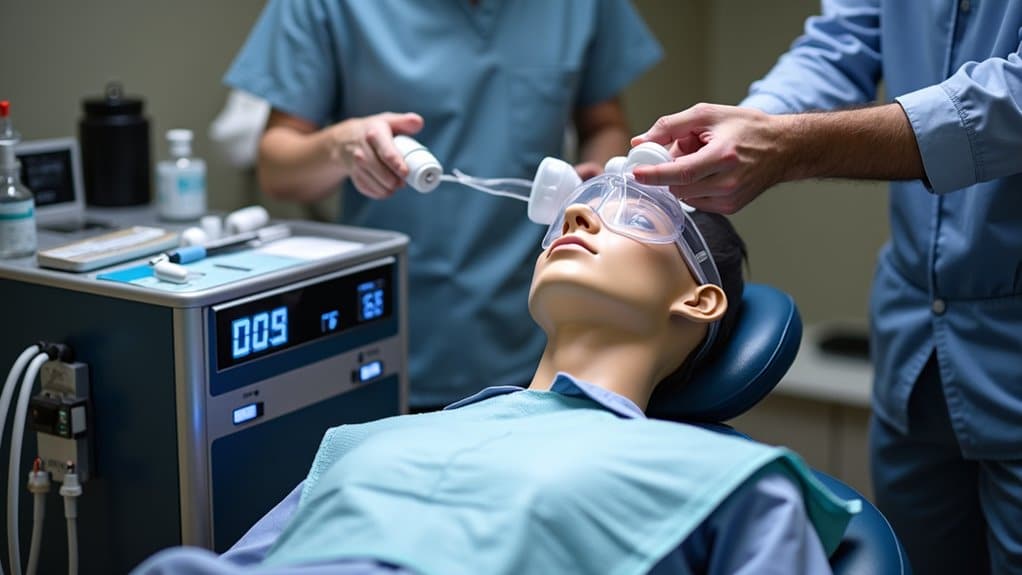
While nitrous oxide administration requires thorough training, modern programs integrate multiple learning phases to certify clinical competency. Curriculum design considerations focus on structured learning through a four-part approach combining self-study, video instruction, case assignments, and hands-on experience. Scavenging systems training ensures proper gas capture and safety compliance. Two-day courses provide foundational training for dental practitioners seeking certification.
Training delivery methods now incorporate hybrid models, where you’ll complete digital pre-training before attending mandatory clinical sessions. The Minnesota Board requirement mandates 12 hours of comprehensive training for certification. You’ll need to fulfill pre-clinical requirements, including CPR certification and a valid dental license, before advancing to hands-on practice. The program’s safety protocols emphasize fail-safe equipment operation and patient monitoring techniques. During clinical integration, you’ll participate in supervised administration sessions, typically spanning 15-hour training blocks. This extensive approach verifies you’ll master both theoretical knowledge and practical skills needed for safe nitrous oxide administration.
Essential Clinical Skills Development
Building on foundational training protocols, clinical skills development for nitrous oxide administration requires mastery across multiple competency domains. Under clinical governance frameworks, you’ll need to demonstrate proficiency in both technical and patient management skills while adhering to quality assurance principles. Since nitrous oxide is the least potent inhalational anesthetic, clinicians must be particularly skilled at combining it effectively with other agents during general anesthesia procedures.
| Core Competency | Required Skills |
|---|---|
| Patient Assessment | Pre-screening, vital signs monitoring, and contraindication identification |
| Equipment Mastery | Flow rate control, scavenging system operation, and maintenance checks |
| Emergency Response | Rapid intervention protocols, rescue breathing techniques, and crisis management |
| Documentation | Treatment planning, procedural records, outcome tracking |
| Safety Protocols | Environmental monitoring, exposure prevention, and equipment sterilization |
You’ll develop these skills through supervised clinical sessions, case study analyses, and hands-on practice. Regular peer review sessions and outcome tracking guarantee your techniques remain current with emerging best practices and safety standards.
Equipment Safety and Operation Protocols
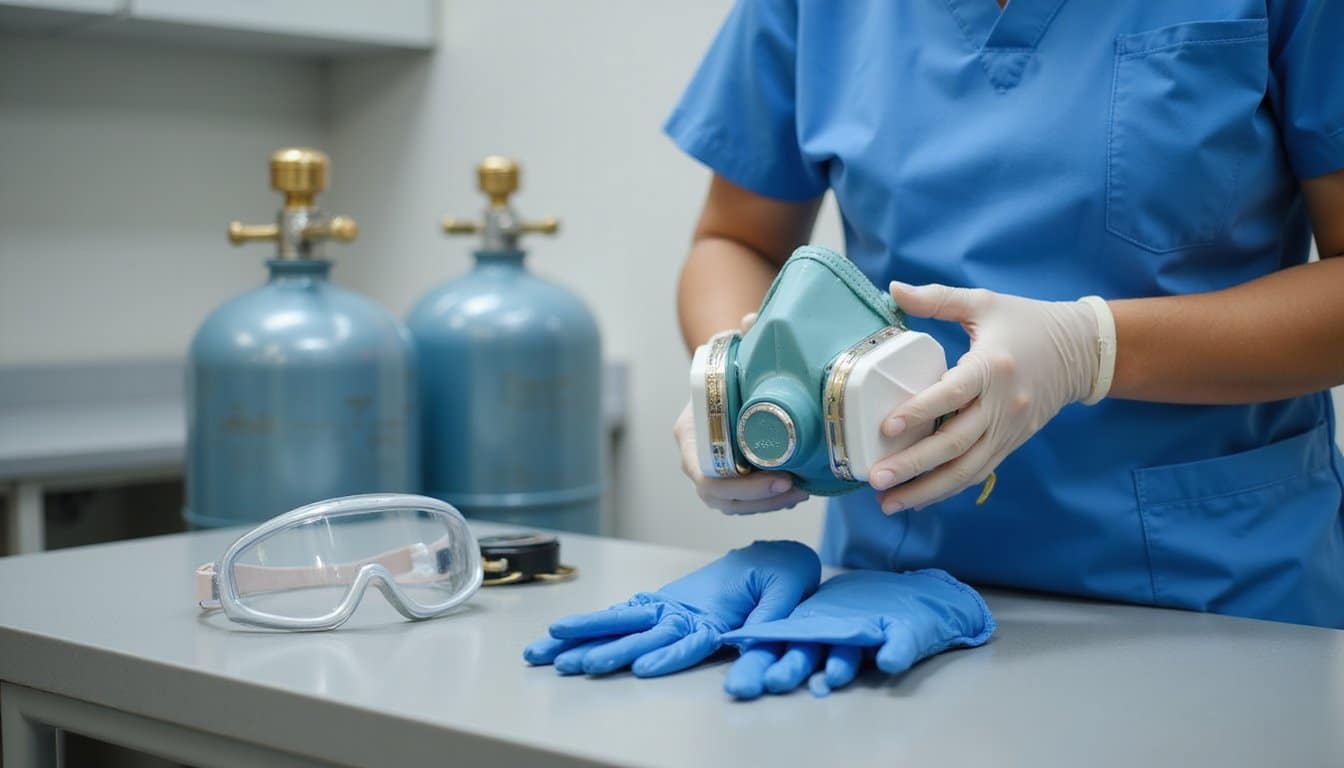
The safe operation of nitrous oxide equipment demands strict adherence to exhaustive safety protocols and operational standards. You’ll need to master ventilation systems, pressure monitoring, and emergency response procedures through hands-on safety assessments. Proper GABAA receptor activation produces the desired anxiolytic effects during administration. Pin-index safety systems help prevent incorrect gas cylinder connections during setup. Maintain ambient nitrous oxide levels below 25 ppm TWA using properly calibrated scavenging systems and local exhaust ventilation. Staff must complete minimum 75% exam score to achieve certification compliance with ADA CERP standards.
Your responsibilities include conducting annual system audits to verify fail-safe mechanisms, pressure-relief devices, and emergency air inlets. You must guarantee storage compliance with cryogenic safety guidelines and test pressure connections during cylinder changes. Monitor respiratory rates continuously while following precise dosage titration protocols: start with 100% oxygen for 1-2 minutes, then increase nitrous oxide by 10% increments up to 50%. Always conclude procedures with 3-5 minutes of 100% oxygen administration.
Patient Assessment and Selection Criteria
Successful nitrous oxide therapy requires thorough patient assessment through systematic evaluation of medical history, physiological readiness, and contraindications.
You’ll need to start by reviewing the patient’s complete medical history, including allergies, current medications, and previous adverse reactions. This guarantees proper pharmacological considerations and minimizes potential complications. Check crucial signs, assess respiratory function, and verify adequate nasal airway patency for safe gas administration. The continuing education course enhances clinicians’ ability to perform comprehensive evaluations. Be sure to obtain vital signs, including blood pressure, pulse rate, and oxygen saturation levels, to establish baseline measurements. As part of the hands-on training, clinicians must practice monitoring techniques and equipment operation to ensure patient safety.
Through interdisciplinary collaboration, you must screen for conditions that could compromise treatment safety, such as pregnancy, chronic respiratory diseases, or drug interactions. Document anxiety levels and establish clear pain management goals. You’ll also need to confirm that the patient meets all legal and regulatory requirements for nitrous oxide administration in your jurisdiction before proceeding with treatment.
Hands-On Practice and Peer Learning Methods
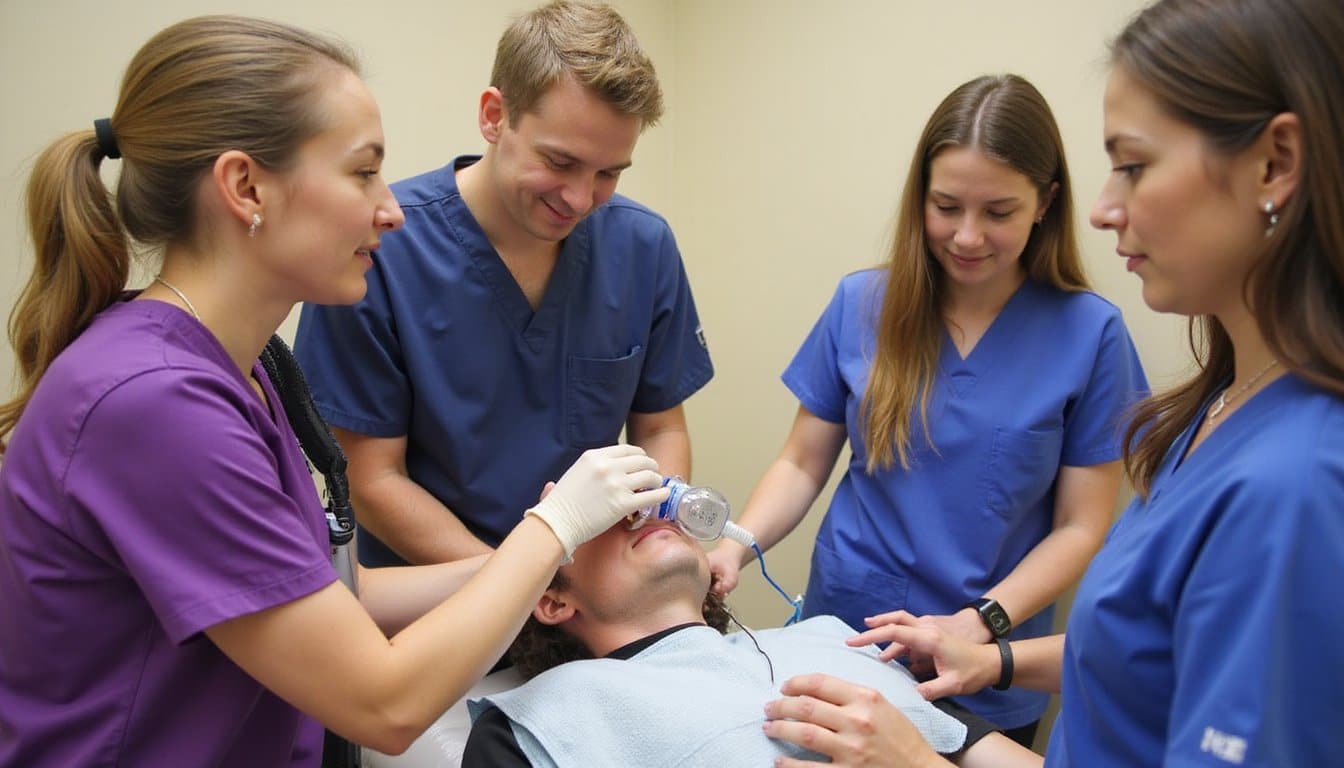
Once patient assessment confirms eligibility for nitrous oxide therapy, mastering proper administration techniques requires exhaustive hands-on training and peer-based learning methods. You’ll engage in scenario-based roleplay and complete self-assessment checklists while participating in intensive two-day workshops that combine clinical precision with practical application. Equipment demonstration specialists from gas supply companies provide essential guidance during training sessions.
Your hands-on training will include:
- Practicing N2O/O2 delivery on fellow clinicians under direct supervision
- Performing equipment proficiency drills with nitrous oxide delivery systems
- Completing supervised administration of 3+ documented patient cases
- Participating in team-based emergency response simulations
- Conducting cross-monitoring assessments with peer feedback
Through these structured learning experiences, you’ll develop technical fluency in administration protocols while building confidence in your clinical expertise. Regular competency checks guarantee you maintain the highest standards of patient care.
Managing Complications and Emergency Response
Vigilant monitoring and rapid response protocols form the cornerstone of safe nitrous oxide administration. You’ll need to closely track critical signs, particularly focusing on tachycardia and irregular heart rhythms that occur in nearly 20% of cases. Be prepared for psychiatric disorder presentation, including sudden onset of hallucinations or altered consciousness. The emergence of severe neurological damage has become increasingly concerning for medical professionals. Recent Michigan data shows emergency room visits have increased by 757% in the past four years.
You must implement immediate interventions for metabolic crisis management, especially when patients show signs of acidosis or respiratory depression. Keep B12 supplementation readily available, as deficiency commonly accompanies chronic exposure. When complications arise, you’ll contact poison control while simultaneously stabilizing the patient’s airway and cardiovascular status. For high-risk populations, particularly those between 20-39 years old or with poly-substance use patterns, you’ll need to maintain heightened surveillance and have emergency response protocols immediately accessible. Recent data shows that approximately 30% of cases involve concurrent use of other substances, requiring broader toxicology screening protocols.
Specialized Applications in Pediatric Care
Three critical components define effective pediatric N₂O administration: specialized training credentials, precise delivery techniques, and careful patient selection protocols. When treating pediatric patients, you’ll need to integrate behavior modification strategies with multimodal pain management approaches for ideal outcomes. The gas is rapidly metabolized and cleared from the body upon discontinuation, making it ideal for pediatric procedures requiring quick recovery.
Key pediatric applications include:
- Anxiety reduction during dental procedures through 50/50 N₂O/O₂ mixtures
- Emergency department sedation for laceration repairs
- Management of patients with special healthcare needs or autism
- Pain control during minor surgical interventions
- Anxiolysis support during diagnostic imaging
You’ll achieve the best results with patients of an appropriate developmental stage who can follow instructions and tolerate mask placement. Remember to maintain continuous monitoring through pulse oximetry while adjusting N₂O concentrations based on individual patient response. This targeted approach secures safe, effective sedation for your pediatric patients.
Documentation and Regulatory Compliance
Proper documentation of nitrous oxide administration requires you to record specific details, including maximum concentrations, start/stop times, and oxygen levels in patient charts. You’ll need to maintain thorough records that demonstrate compliance with state-specific regulations, such as Washington’s 14-hour training requirement and Texas’s CODA-accredited course completion. Your record-keeping system must facilitate audit readiness while tracking continuing education requirements, emergency protocols, and equipment maintenance standards in accordance with jurisdictional mandates.
Record-Keeping Best Practices
Thorough record-keeping forms the cornerstone of safe and compliant nitrous oxide administration therapy. You’ll need to maintain thorough documentation that aligns with staffing protocols and facilitates quality assurance audits. Your records should capture critical data across multiple dimensions of care delivery.
Essential documentation components include:
- Real-time logging of N2O concentrations and administration durations
- Digital verification of provider credentials and continuing education completion
- Patient-specific titration adjustments and response monitoring
- Equipment maintenance schedules and safety system verifications
- Incident reports and emergency response drill participation records
When documenting, you’ll need to guarantee all entries are time-stamped, legible, and accessible through your facility’s record-keeping system. Track both routine procedures and any deviations from standard protocols, maintaining detailed logs that support regulatory compliance and patient safety initiatives.
Safety Monitoring Requirements
Extensive safety monitoring stands as a critical requirement for nitrous oxide administration, encompassing both documentation protocols and regulatory compliance measures. You’ll need to maintain quarterly monitoring records using lapel-mounted sensors, documenting worker IDs, dates, and measurement locations. Environmental impact considerations require scavenging systems and proper gas discharge management to minimize ambient contamination.
You must guarantee your facility meets NFPA 99’s requirement of 10 air changes per hour, while implementing real-time infrared sensor technology to detect N₂O levels. When measurements exceed NIOSH’s 25 ppm TWA limit, you’re required to take immediate corrective action. Cross-check sensor data with manual samplings to verify accuracy, and maintain thorough records of all monitoring activities, equipment checks, and maintenance procedures for regulatory compliance.
Advanced Monitoring Techniques and Technology
Modern pulse oximetry during N₂O administration requires you to maintain consistent SpO₂ monitoring while integrating advanced digital safety protocols. You’ll need to verify equipment calibration against established baselines and implement real-time alerts through AI-driven monitoring systems like the FD-600M-N₂O. Your facility’s digital safety protocols should incorporate multi-sensor fusion technology that aggregates data from infrared sensors and continuous air quality analysis to prevent peak exposure risks.
Pulse Oximetry Best Practices
While pulse oximetry has become a cornerstone of nitrous oxide monitoring, recent FDA guidelines have revolutionized device selection and validation protocols to address historical accuracy disparities across diverse patient populations. You’ll need to master sensor calibration techniques and implement perfusion improvement methods to guarantee reliable readings across all skin tones.
Key implementation steps:
- Establish baseline SpO2 readings before N2O administration
- Position sensors ideally, avoiding areas with compromised circulation
- Apply hand-warming protocols when necessary to boost peripheral blood flow
- Verify device validation across the Monk Scale spectrum
- Document continuous SpO2 trends with corresponding clinical observations
Remember to combine pulse oximetry data with other crucial signs and clinical indicators for thorough patient assessment. For at-risk patients, consider supplementing with capnography monitoring to safeguard optimal safety during N2O administration.
Digital Equipment Safety Protocols
Digital equipment safety protocols have evolved to integrate sophisticated IoT monitoring systems with automated risk management features. You’ll need to implement remote parameter tracking through IoT-enabled sensors that continuously monitor N₂O concentrations and transmit data to your centralized systems. These sensors connect to AI-driven alert mechanisms that flag potential exposure risks before they exceed the 25 ppm threshold.
Track your equipment maintenance through cloud-based maintenance logs, which enable real-time status monitoring and automated compliance reporting. You’ll perform daily system diagnostics using UV leak detection and automated valve checks, while biannual calibrations guarantee accurate gas delivery. Link your monitoring data directly to EHRs for thorough safety profiles, and utilize predictive algorithms to anticipate potential equipment failures before they impact patient care.
Professional Growth and Continuing Education
Professional competency in nitrous oxide administration requires structured, ongoing education through multiple pathways of learning. You’ll need to engage with accredited programs that align with state board regulations while pursuing continuous professional development.
- Complete self-study modules covering essential pharmacology and chemistry concepts
- Participate in instructor-led video training for clinical protocols
- Analyze complex case studies to develop critical thinking skills
- Demonstrate hands-on competency through supervised clinical exams
- Document required CEUs specific to your state’s requirements
Your professional growth path varies by state, with Minnesota requiring 12 hours of training by 2025, while Michigan mandates 8 hours plus a certification exam. You’ll need to maintain compliance through ADA CERP or AGD-approved programs, ensuring your credentials remain current with evolving industry standards.
Frequently Asked Questions
How Long Does Nitrous Oxide Certification Typically Remain Valid Before Renewal?
Your nitrous oxide certification remains valid for 5 years from your initial course completion date. You’ll need to undergo recertification requirements before this period expires to maintain your active status. These requirements include retaking the full 8-hour didactic program and passing both written and practical competency assessments with a minimum score of 75%. Don’t let your certification lapse, as you must demonstrate continued proficiency in administration techniques and safety protocols.
What Are the Average Costs Associated With Nitrous Oxide Training Programs?
You’ll find estimated training fees vary based on your professional role. For dental hygienists, expect to pay around $445, while dentists and therapists typically invest $695-$795 for thorough programs. Ongoing maintenance costs include mandatory textbooks at $58.36 and online monitoring training between $215-$225 to fulfill state board requirements. Extra expenses you’ll need to include are travel and accommodation if attending in-person clinical sessions in NJ, MD, or MN.
Can International Dental Professionals Participate in U.S. Nitrous Oxide Certification Programs?
You’ll need to graduate from a U.S. or Canadian accredited dental program to participate in nitrous oxide certification programs. International certification requirements don’t typically allow direct reciprocity. If you’re an international dental professional, you’ll initially need to complete the necessary steps for U.S. dental licensure through your state board before pursuing nitrous oxide certification. There’s no direct licensing reciprocity consideration for international credentials in this specialized training.
Are There Remote Learning Options Available for Nitrous Oxide Administration Training?
Yes, you can access complete remote learning options for nitrous oxide administration training through several pathways. Online modules deliver core content including physiology, safety protocols, and administration techniques. Remote assessments verify your understanding through case studies and virtual simulations. While hands-on clinical components remain required by most states, you’ll find flexible hybrid programs combining digital self-study with live-streamed instruction to accommodate your schedule and location needs.
What Percentage of Dental Practices Currently Offer Nitrous Oxide Sedation Services?
You’ll find that exact statistics on dental practice adoption trends for nitrous oxide sedation aren’t extensively documented nationwide. However, current estimates suggest that 35-45% of general dental practices offer nitrous oxide services, with higher rates in pediatric specialties. Patient demand for nitrous oxide continues to influence adoption rates, though implementation varies greatly by region due to regulatory requirements, equipment costs, and practice size. These numbers fluctuate as practices respond to patient preferences and evolving sedation protocols.