









When anxiety hits, you can calm your nervous system quickly using breath-based techniques. Box breathing, inhaling for 4 counts, holding for 4, exhaling for 4, and holding for 4, activates your parasympathetic response and lowers cortisol within minutes. Cyclic sighing, which emphasizes long exhalations, actually outperforms meditation for mood improvement. For overwhelming moments, the 5-4-3-2-1 grounding technique redirects your focus through your senses. These quick calming techniques for anxiety in the moment offer step-by-step guidance for different situations below.
Which Anxiety Relief Technique Fits Your Situation?
When anxiety strikes, how do you know which calming technique will actually work for you? The answer depends on your symptoms and environment. If you’re experiencing panic symptoms like racing heart and shaking, your body is flooded with adrenaline, you’ll need rapid relaxation methods that calm your body first.
Grounding techniques work well when you feel disconnected or overwhelmed. Sensory regulation helps redirect your nervous system calming response through touch, temperature, or sound. Self-soothing techniques for anxiety are most effective when they’re portable and simple enough to use anywhere. Deep breathing techniques activate the body’s relaxation response, slowing heart rate and lowering blood pressure to provide immediate relief.
Research shows applied relaxation achieves medium-large effect sizes for anxiety reduction. A meta-analysis found that meditation showed even higher efficacy compared to other relaxation methods. A randomized clinical trial from Georgetown University Medical Center found that mindfulness-based stress reduction achieved a 30% reduction in anxiety symptom severity, matching the effectiveness of antidepressant medication. The key is matching your in-the-moment coping skills to what’s happening physically. Start with techniques that calm nerves through the body, then address thoughts.
Cyclic Sighing: The 5-Minute Method That Outperforms Meditation
Cyclic sighing uses a specific breathing pattern, two inhales followed by a long exhale, to rapidly shift your nervous system toward calm. A 2023 randomized controlled trial found this technique improved mood more effectively than mindfulness meditation, even in just five minutes daily. The key lies in those extended exhalations, which directly activate your parasympathetic nervous system and lower physiological arousal.
How Cyclic Sighing Works
Although many breathing techniques promise calm, cyclic sighing stands apart because it leverages your body’s built-in reset mechanism. When you’re learning how to calm anxiety quickly, understanding the science helps you trust the process.
Cyclic sighing emphasizes long exhalations, the key to activating your parasympathetic nervous system. You’ll inhale deeply through your nose, then stack a second inhale to fully expand your lungs. Next, exhale slowly through your mouth, making it longer than both inhales combined.
This quick calming technique works because extended exhales directly slow your heart rate and reduce physiological arousal. Research shows it considerably decreases your resting respiratory rate, creating lasting calm throughout the day. When you need to calm down fast, you’re working with your nervous system’s natural sigh reflex, not against it.
Research-Backed Mood Benefits
Beyond its rapid physiological effects, cyclic sighing delivers measurable mood benefits that surprise even researchers. In a randomized controlled trial of 111 participants, just five minutes of daily practice produced greater improvements in positive affect than mindfulness meditation, a significant finding for anyone seeking relief during an anxiety spike.
The data reveals compelling advantages:
- Superior mood enhancement: Cyclic sighing increased positive affect by 1.91 points versus 1.22 for meditation on standardized scales
- Cumulative benefits: Unlike meditation, improvements strengthened with consecutive days of practice
- Reduced anxiety states: Participants reported decreased state anxiety alongside increased energy, joy, and peacefulness
You’re not simply calming down, you’re actively building emotional resilience. The exhale-focused technique outperformed inhale-dominant methods, confirming that how you breathe matters. how to calm down when angry becomes a skill that can be refined over time. By incorporating breath-focused strategies and mindfulness practices, you can enhance your ability to manage your emotions effectively.
Long Exhalations Activate Calm
Why does extending your exhale create such rapid calm? When you breathe out longer than you breathe in, you directly activate your parasympathetic nervous system, the body’s built-in brake pedal. This shifts you out of fight-or-flight mode and into a state of physiological safety.
During acute anxiety, your breathing typically becomes rapid and shallow. Cyclic sighing counteracts this pattern by emphasizing prolonged exhalations, which vastly reduce resting respiratory rate. Research shows this respiratory slowdown correlates inversely with positive affect improvements, meaning slower breathing equals better mood.
Unlike meditation, which requires 20-30 minutes for physiological effects, controlled breathing produces more rapid results. You’re fundamentally using your breath as a direct line to your nervous system, bypassing the mental chatter that often intensifies anxiety. The effect strengthens with consecutive days of practice.
Use Box Breathing for Anxiety Anywhere
Box breathing offers a structured, portable technique you can use anywhere, at your desk, in a crowded space, or even while waiting in line, without anyone noticing. The method follows a simple pattern: inhale for four counts, hold for four, exhale for four, and hold empty for four, repeating this “box” for several minutes. Research shows this practice activates your parasympathetic nervous system, lowering cortisol and shifting your body from fight-or-flight into a calmer state, with studies demonstrating an average 3.75-point reduction in anxiety scores with regular use.
Steps for Box Breathing
When anxiety spikes and your body shifts into high alert, box breathing offers a portable technique you can use anywhere, at your desk, in a parked car, or standing in a restroom stall. This method works by regulating your breathing patterns to activate your parasympathetic nervous system.
Follow these steps:
- Inhale slowly through your nose for 4 counts, feeling air fill your lungs progressively
- Hold your breath for 4 counts without straining
- Exhale through your mouth for 4 counts, releasing tension from your chest and abdomen
Hold again for 4 counts before repeating. Complete 3-4 cycles total. If 4-second counts feel difficult, start with 2-3 seconds and build up gradually. One full cycle takes just 16 seconds to restore calm.
Benefits Without Calm Environments
The technique you’ve just learned doesn’t require a quiet room or ideal conditions to work. Box breathing operates as an on-demand tool you can use anywhere, at your desk, in a crowded store, or stuck in traffic. Research shows it produces measurable anxiety reduction without environmental requirements.
| Setting | How It Works |
|---|---|
| At work | Practice silently during stressful meetings or before presentations |
| In public | Use discreetly while waiting in lines or traversing crowds |
| While commuting | Apply at red lights or on public transit |
| At home | Integrate into morning routines or before difficult conversations |
You don’t need to escape your environment to calm your nervous system. The portability of this technique means relief stays accessible whenever anxiety spikes. In addition to taking breaks throughout the day, self soothing techniques for anxiety can empower you to manage stress effectively. From mindfulness exercises to deep breathing, these methods provide a toolkit for finding balance during challenging moments. The more you practice these techniques, the more resilient you become in the face of everyday pressures.
Belly Breathing for Deep Anxiety Relief
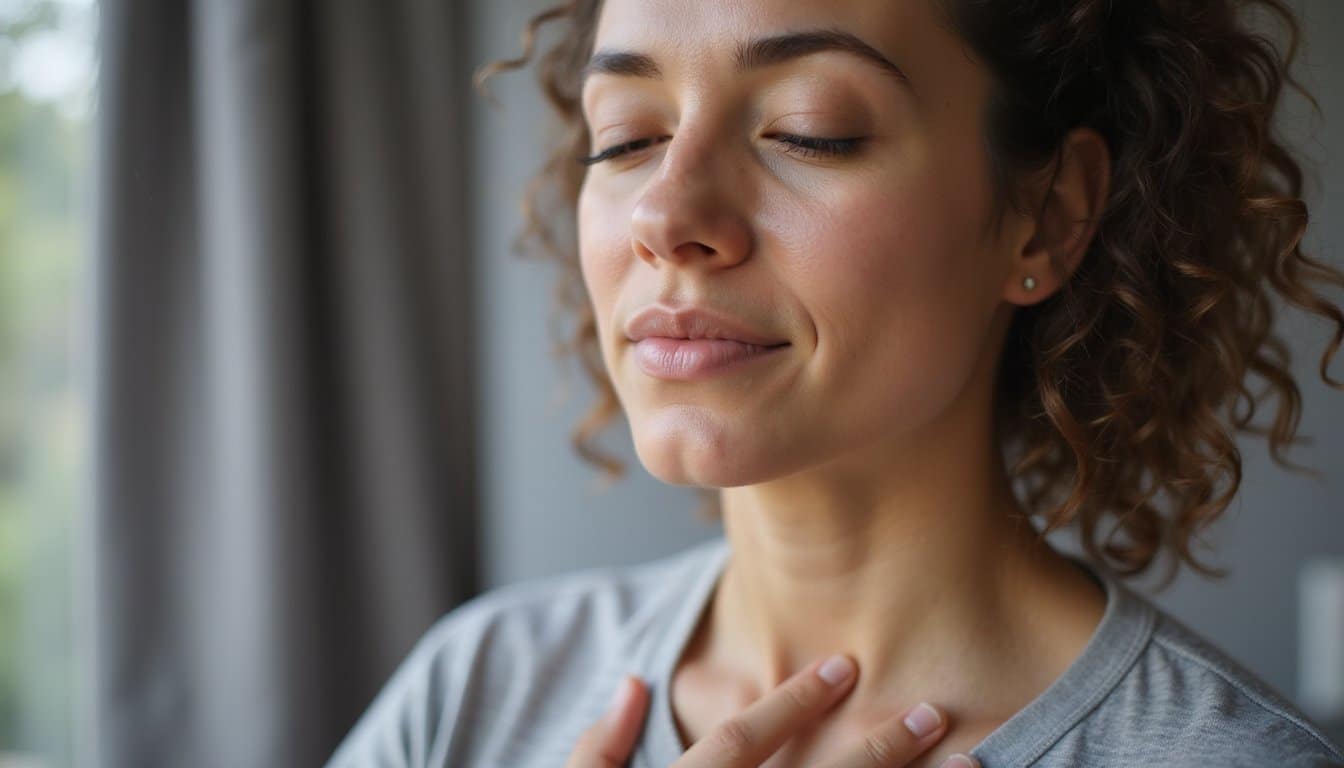
Although anxiety often feels like it originates in the mind, your body holds powerful tools to interrupt the stress response, and belly breathing is one of the most effective. This diaphragmatic technique activates your parasympathetic nervous system, slowing your heart rate and countering the fight-or-flight response.
Research confirms its effectiveness. A Stanford study found that just five minutes of daily cyclic sighing, emphasizing prolonged exhales, reduced anxiety more than mindfulness meditation.
How to practice:
- Place your hand on your belly and inhale through your nose for 4 counts, letting your abdomen rise while your chest stays still
- Exhale slowly through your mouth for 6-8 counts
- Repeat for 1-2 minutes, or until you feel calmer
You can use this technique anywhere, it’s free, discreet, and requires nothing but your breath.
Try 5-4-3-2-1 Grounding for Instant Anxiety Relief
Breath-based techniques like belly breathing offer powerful relief, but sometimes anxiety pulls your mind so far into racing thoughts that focusing on breath alone feels impossible. That’s where 5-4-3-2-1 grounding becomes invaluable, it redirects your attention through systematic sensory engagement.
Here’s how it works: Identify five things you can see, four you can touch, three you can hear, two you can smell, and one you can taste. This structured sequence shifts brain activity from emotional centers to categorization areas, activating your parasympathetic nervous system.
Research supports this technique for panic disorders, PTSD, and acute stress. It breaks the thought-spiral cycle by anchoring you firmly in the present moment. You can perform it anywhere, discreetly at work, in public, or while seated. For enhanced effect, pair it with slow breathing between each step.
Progressive Muscle Relaxation to Release Anxious Tension
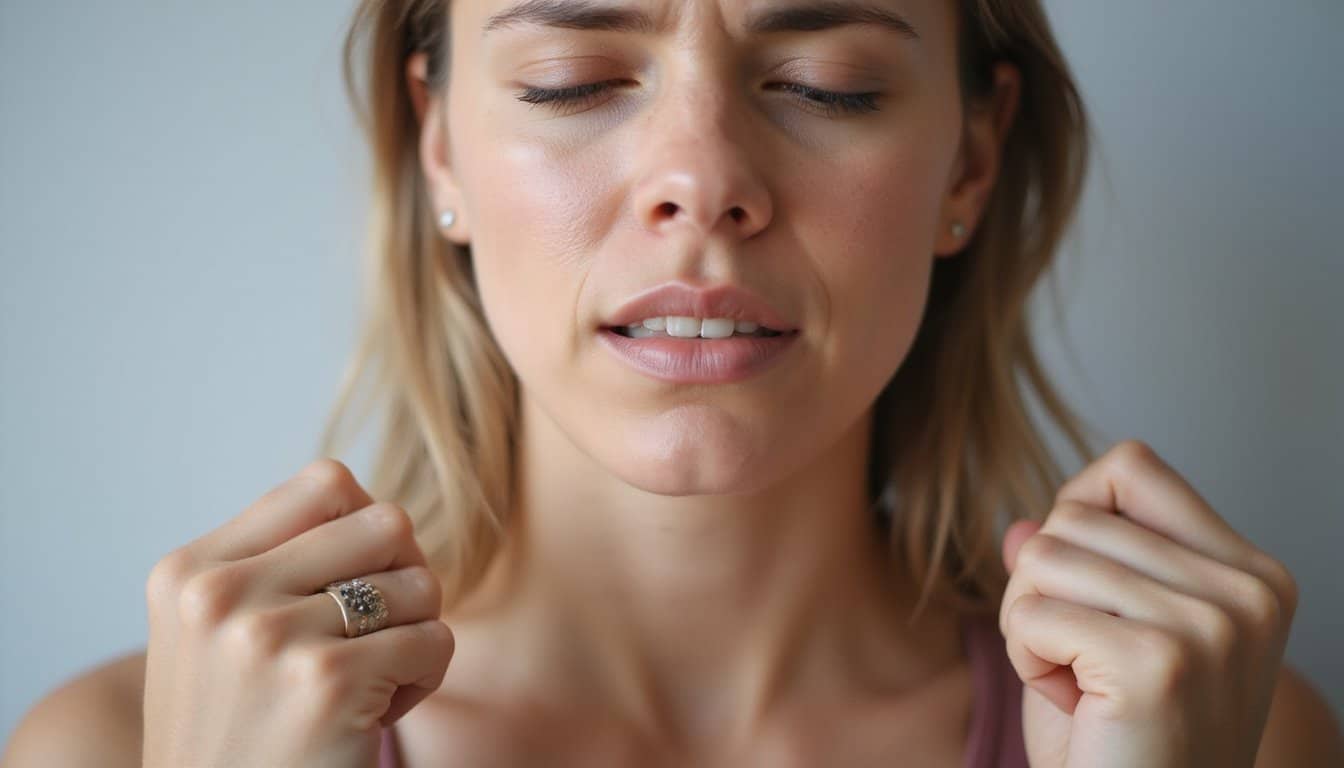
When anxiety takes hold, your body often responds before your mind catches up, muscles tighten in your shoulders, jaw clenches, hands ball into fists. Progressive Muscle Relaxation (PMR) works by intentionally tensing and releasing muscle groups, teaching you to recognize and release this physical stress response.
Your body feels anxiety before your mind names it, PMR teaches you to release what you’re holding.
Here’s how to practice PMR:
- Tense each muscle group for 5 seconds while inhaling, focusing on the sensation without causing pain
- Release and relax for 10-20 seconds while exhaling, noticing the contrast between tension and relaxation
- Progress systematically from hands to forearms, shoulders, face, neck, chest, and down through your legs
Research shows PMR effectively lowers overall tension levels and reduces anxiety symptoms like headaches and stomach discomfort. You’ll need no equipment, just attention and body awareness.
Three One-Minute Mindfulness Techniques for Anxiety
Because anxiety often overwhelms the mind before you can think clearly, one-minute mindfulness techniques offer a practical way to interrupt the stress response and regain stability. Research shows that acceptance-based approaches, where you observe thoughts without judgment, are most effective for reducing intrusive negative thoughts. Even brief breath-focused meditation activates your parasympathetic nervous system, lowering heart rate and blood pressure within seconds. Additionally, practicing techniques on how to calm overthinking can further alleviate anxiety during stressful moments. Engaging in grounding exercises, such as focusing on your surroundings or sensations in your body, can help redirect your thoughts. Over time, these strategies foster resilience, allowing you to approach challenges with a clearer mind.
| Technique | What You Do |
|---|---|
| Acceptance Breathing | Notice anxious thoughts without fighting them; let them pass |
| Focused Breath Attention | Count breaths, noting sensations as you inhale and exhale |
| Quick Body Scan | Rapidly scan from head to feet, acknowledging tension without judgment |
You’ll need only three to six breaths, about 20 seconds, to trigger measurable physiological calming. These portable skills work anywhere stress strikes.
Simple Stretches That Calm Anxiety Fast
While mindfulness techniques calm the mind, targeted stretches directly release the physical tension that anxiety creates in your body. Research shows stretching increases serotonin levels, which stabilizes mood and interrupts the stress-tension cycle. A 12-week yoga study found participants experienced increased GABA levels in the brain, producing significant anxiolytic effects.
Even brief stretching sessions work. Just 20 minutes of yoga or tai chi postures reduces state anxiety measurably from pre- to post-exercise.
Try these quick stretches anywhere:
- Neck rolls: Slowly circle your head to release shoulder and neck tension where stress accumulates
- Forward fold: Drop your head toward your knees to calm your nervous system
- Savasana position: Lie flat for two minutes to counteract fight-or-flight response and lower cortisol
You’ll feel calmer within minutes.
Why These Anxiety Techniques Work So Quickly
The speed of relief isn’t accidental, it’s neurobiological. When you control your breathing, you directly reduce cortisol and catecholamines like epinephrine, the chemicals triggering your anxiety response. This creates measurable calm within minutes, not hours.
Research shows cyclic sighing produces significant anxiety reduction in just five minutes daily. That’s faster than mindfulness meditation, which typically requires 20-30 minutes for comparable effects. Controlled breathing also lowers your resting breathing rate throughout the day, indicating lasting physiological changes beyond the practice itself.
Your body responds quickly because these techniques target the physical root of panic. Abdominal breathing interrupts the rapid breathing pattern that amplifies anxiety perception. The benefits compound with consecutive days of practice, meaning today’s five-minute investment builds tomorrow’s resilience.
Healing Begins With One Call
Building healthy coping mechanisms is one of the most powerful steps you can take toward lasting mental wellness. At National Mental Health Support, we guide you toward licensed mental health counselors who specialize in Individual Therapy that addresses your unique needs and helps you build a calming plan for a healthier and more balanced life. Call (844) 435-7104 today and let us help you find the peace and clarity you deserve.
Frequently Asked Questions
Can I Combine Multiple Calming Techniques During the Same Anxiety Episode?
Yes, you can combine multiple calming techniques during the same anxiety episode. Research shows combining methods like deep breathing with progressive muscle relaxation or grounding exercises may enhance relief beyond using just one technique. You might start with slow breathing to settle your nervous system, then add the 5-4-3-2-1 sensory grounding method. There’s no single “best” combination, experiment to find what works for your body and situation.
How Do I Remember These Techniques When I’m Already Panicking?
Practice techniques daily when you’re calm, this builds muscle memory so they become automatic under stress. Keep physical reminders nearby: a written cue card, a textured object, or a phone note with simple steps. Choose one technique as your go-to, like 4-7-8 breathing, so you’re not deciding mid-panic. You can also designate a trusted person to guide you through steps when your own recall falters.
What if a Calming Technique Makes My Anxiety Feel Worse?
This reaction is real and documented, it’s called relaxation-induced anxiety. Some people experience a paradoxical spike in anxiety when attempting to calm down, especially if you’re used to staying on alert.
If a technique backfires, don’t force it. Try switching to a more active approach like cold water on your wrists or structured movement. You can also stay with the discomfort briefly, repeated practice often reduces this response over time.
Should I Tell Others What I’m Doing When Using Techniques Publicly?
You don’t have to explain yourself, but sharing can sometimes help. Research shows that intentional disclosure may reduce stigma and improve outcomes for some people, though it’s not universally beneficial. If telling someone feels supportive, keep it brief: “I’m using a breathing technique.” If it feels exposing or adds pressure, practice quietly. Your comfort matters most. Choose what helps you feel safer, not what others might expect.
How Long Until These Techniques Stop Working if Overused?
Non-pharmacological techniques like controlled breathing, progressive muscle relaxation, and grounding exercises don’t show tolerance or diminishing returns with repeated use. Research actually suggests the opposite, daily practice of breathing exercises builds cumulative benefits over time, lowering your resting respiratory rate and improving mood consistently.
Unlike some fast-acting medications that can lose effectiveness, these body-based techniques remain reliable tools you can use as often as needed without worrying about them “wearing out.”