













The scariest and most disturbing phobias aren’t just intense fears, they’re conditions where your brain’s threat response won’t shut off despite repeated safe exposure. You might experience thanatophobia’s relentless death obsession, thalassophobia’s paralyzing ocean terror, or eisoptrophobia’s unsettling fear of your own reflection. What makes these phobias genuinely disturbing is how they shrink your world through avoidance behaviors and trigger real physiological responses like racing heartbeats and panic attacks. Understanding why certain phobias develop can reveal paths toward effective treatment.
What Makes a Phobia Disturbing Instead of Just Scary?
When fear crosses from uncomfortable to truly disturbing, the distinction often lies in how the brain processes threat signals. Your amygdala activates disproportionately, triggering survival instincts even when actual danger is minimal. This disconnect between threat perception and reality creates visceral dread that feels impossible to control.
Disturbing phobias involve fear conditioning that won’t extinguish naturally. Your brain fails to habituate through repeated safe exposure, and sensitization actually intensifies reactions over time. You’re not just scared, you’re trapped in a neurological pattern that resists logic. Research shows that low serotonin levels in the amygdala may contribute to the pathophysiology of phobia, making emotional regulation even more difficult. Phobias can manifest in numerous ways, and some of the more peculiar ones lead to fascinating insights. For instance, interesting phobia facts reveal that people can develop irrational fears of everyday objects or situations, such as buttons or public speaking. Understanding these phobias can help demystify their origins and ultimately aid in developing effective treatments.
What makes these fears truly unsettling is the unpredictability. Panic attacks strike randomly, training you to anticipate terror in any situation. You develop fear of the fear itself, and avoidance spirals beyond the original trigger into daily functioning. Left untreated, these phobias can lead to other anxiety disorders and serious health conditions. Some individuals experience unique phobias that defy logic, leading to bizarre fears like a sudden dread of the color purple or an irrational aversion to the sound of a clock ticking. These unusual fears can manifest without any preceding trauma or reason, complicating the path to understanding and healing. As your world shrinks around these illogical fears, everyday activities become increasingly daunting, fostering isolation and distress.
Thanatophobia Turns Death Into an Unbearable Obsession
When thanatophobia takes hold, you can’t escape the relentless awareness that death awaits, every heartbeat, headache, or news headline becomes a reminder that spirals into panic. Your daily routines collapse under the weight of obsessive mortality checks, avoidance behaviors, and dread that makes leaving home feel impossibly risky. This isn’t occasional worry about dying; it’s a consuming fixation that hijacks your concentration, disrupts your sleep, and isolates you from the life you’re desperately afraid of losing. Research shows that up to 20.3% of Americans experience significant fear of death, though thanatophobia represents a more severe and debilitating form of this anxiety. Fortunately, exposure therapy and medication can help manage this overwhelming fear when combined with professional guidance and relaxation techniques like meditation and breathing exercises.
Daily Life Becomes Paralyzed
Though most people experience occasional unease about mortality, thanatophobia transforms this universal concern into a relentless obsession that hijacks daily functioning. Among disturbing phobias, this condition stands out because you can’t escape its trigger, death remains an inevitable reality you must confront mentally every day.
Your world shrinks dramatically when thanatophobia takes hold. You refuse to leave home, fearing death-related situations lurk everywhere. You avoid necessary conversations about end-of-life planning or skip medical appointments that might reveal bad news. These terrifying fears damage your relationships as loved ones struggle to understand your avoidance behaviors.
Research confirms thanatophobia ranks among the scariest phobias because it infiltrates every aspect of existence. You obsessively check your heart rate, blood pressure, and body for signs of illness, turning routine self-care into anxiety-fueled rituals. This chronic worry and emotional stress can trigger various mental health conditions, including anxiety disorders, PTSD, OCD, depression, and eating disorders. Studies show that death anxiety tends to decline in young adulthood but experiences a significant spike around age 50, making middle-aged individuals particularly vulnerable to this condition.
Constant Mortality Anxiety Spirals
Because death represents the one certainty you cannot outsmart or avoid, thanatophobia creates a uniquely torturous cognitive trap that feeds on itself. Among scary phobias, this condition transforms ordinary moments into existential crises. Your mind interprets minor sensations, a skipped heartbeat, slight chest tightness, as proof of imminent death.
| Physical Symptoms | Cognitive Patterns |
|---|---|
| Racing heart, palpitations | Catastrophic thinking about dying |
| Chest pressure, breathlessness | Hypervigilance toward body sensations |
| Nausea, digestive distress | Intrusive thoughts about illness |
| Trembling, excessive sweating | Uncontrollable existential rumination |
| Sleep disruption, chronic fatigue | Anticipatory anxiety about death |
Unlike creepy phobias or gross phobias with external triggers, thanatophobia’s source lives within your own awareness. You can’t escape your consciousness of mortality, making this fear particularly relentless. Treatment approaches like exposure-based techniques can help by gradually confronting feared scenarios to reduce the anxiety’s grip over time. Researchers have identified that existential death anxiety stems from the basic knowledge that human life must end, distinguishing it from fears triggered by immediate threats or harm to others.
Athazagoraphobia Makes Being Forgotten Feel Like Dying
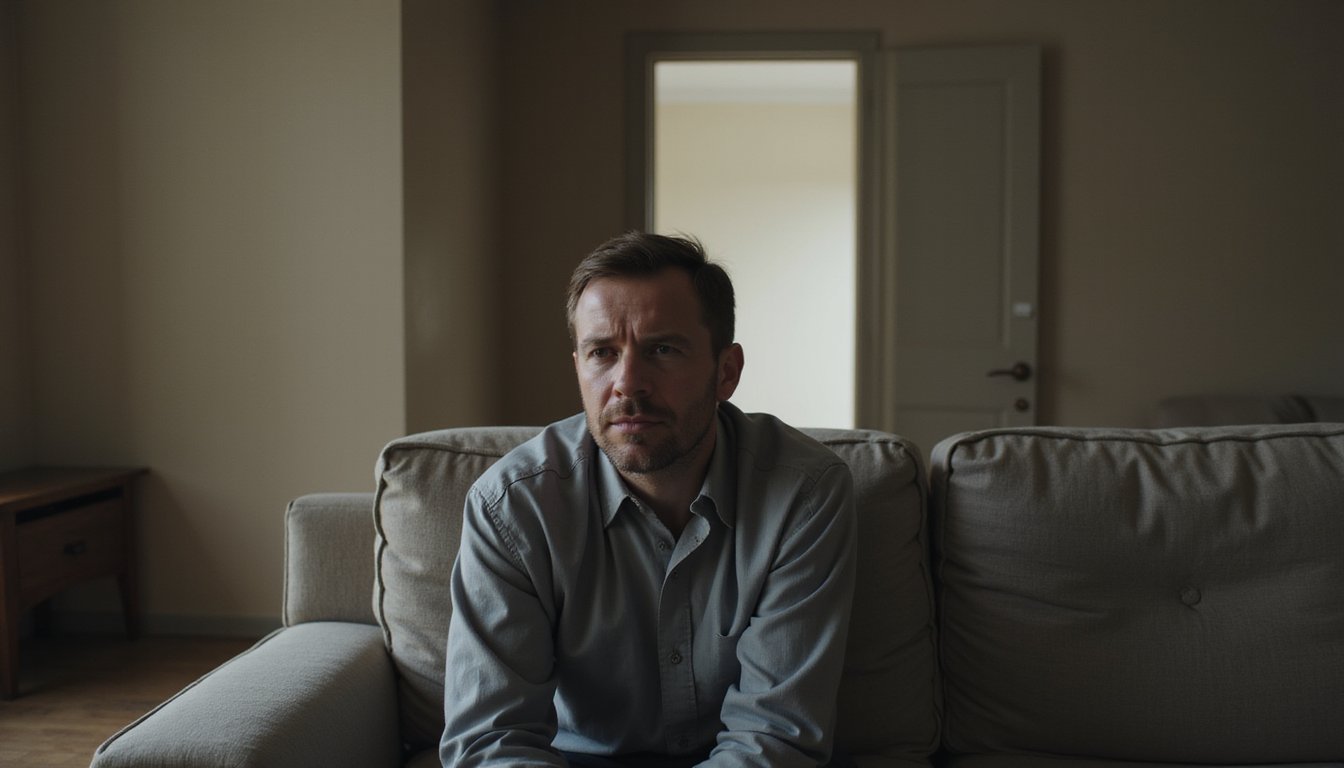
Athazagoraphobia strikes at something fundamental to human existence, the need to matter to others. When you experience this phobia, the prospect of being forgotten triggers responses that mirror actual survival threats. Your heart races, panic sets in, and you feel as though your very identity is dissolving.
The fear of being forgotten doesn’t just hurt, it activates your survival instincts as if existence itself were threatened.
This fear drives compulsive behaviors. You might constantly seek reassurance, check in excessively with loved ones, or interpret minor oversights as evidence of impending abandonment. The hypervigilance becomes exhausting.
The origins often trace to childhood attachment wounds, neglect, inconsistent caregiving, or sudden losses that taught your nervous system that connection is fragile. Caring for someone with dementia can also trigger this phobia, making memory loss feel personally threatening. Watching a family member with Alzheimer’s disease struggle to recognize you can intensify the fear that you too will be forgotten.
Depression and isolation frequently follow as you withdraw to avoid the pain of potential rejection. Fortunately, exposure therapy and CBT have proven effective in helping sufferers reclaim their lives from this debilitating fear.
Thalassophobia Transforms the Ocean Into Pure Terror
When you stand at the ocean’s edge, thalassophobia can transform what others see as beauty into something deeply threatening. This specific phobia, classified under natural environment phobias in the DSM-5, triggers intense anxiety disproportionate to actual danger. Your fear stems from the vastness, darkness, and perceived unknown dangers lurking beneath the surface.
| Physical Symptoms | Psychological Symptoms | Common Triggers |
|---|---|---|
| Rapid heartbeat and palpitations | Overwhelming panic and terror | Deep ocean water |
| Hyperventilation and breathlessness | Catastrophic drowning thoughts | Boats and submarines |
| Trembling and muscle tension | Dissociation and helplessness | Marine life imagery |
Evolutionary survival mechanisms likely contribute to this fear, as your brain perceives unknown depths as potentially dangerous terrain. Traumatic experiences, including near-drowning incidents or exposure to shark attack coverage, can solidify these responses. For a diagnosis to be made, symptoms must persist for at least six months and cannot be better explained by another mental health condition. Effective treatments include cognitive behavioral therapy and exposure therapy, with virtual reality exposure therapy emerging as a particularly promising technology-assisted intervention for safely confronting ocean-related fears.
Claustrophobia Shrinks Your World Into Suffocating Spaces

While the ocean’s vastness threatens to swallow you whole, claustrophobia flips this terror inward, the walls close in, and suddenly there’s not enough air, not enough space, not enough room to escape. This anxiety disorder affects 5-10% of people worldwide, transforming ordinary spaces into psychological prisons.
Your body responds with unmistakable signals:
- Accelerated heart rate and chest tightness
- Hyperventilation and choking sensations
- Overwhelming dread and urgent escape needs
- Dizziness, trembling, and disorientation
- Recognition that your fear exceeds actual danger
Elevators, MRI machines, crowded trains, these everyday situations become unbearable. The fear isn’t really about size; it’s about perceived suffocation and trapped helplessness. You know logically you’re safe, yet your nervous system screams otherwise. This disconnect between rational thought and visceral terror defines claustrophobia’s cruel grip. Research has shown that individuals with panic disorder and claustrophobia often have a smaller amygdala, the brain region responsible for processing fear responses. The good news is that claustrophobia can be successfully treated with psychological therapies such as cognitive behavioral therapy and self-exposure therapy.
Trypophobia Triggers Disturbing Reactions to Simple Patterns
Trypophobia forces you to confront an unsettling reality: ordinary patterns like lotus seed pods, honeycombs, or even condensation on glass can trigger intense visceral reactions. When you encounter these clustered holes or bumps, your body may respond with skin crawling, goosebumps, nausea, and a racing heart, research shows 67.2% of those affected report itchiness and goosebumps, while 53.8% experience nausea. Your brain processes these repetitive visual patterns as potential threats, overgeneralizing an evolutionary aversion designed to protect you from parasites and disease. If your symptoms become severe enough to disrupt daily functioning, Cognitive Behavioural Therapy can help you challenge negative thought patterns and gradually face your triggers in a controlled, therapeutic setting.
Common Visual Pattern Triggers
Few phobias demonstrate the brain’s hair-trigger threat detection system quite like trypophobia, where simple clustered holes or repetitive patterns spark intense disgust and discomfort. Your visual cortex processes these images faster than neutral ones, suggesting your brain treats them as potential threats requiring immediate attention.
Research reveals specific characteristics that trigger the strongest responses:
- Clustered holes with particular spacing between elements
- Patterns matching body markings of venomous creatures like spiders and snakes
- Low and midrange spatial frequencies in images
- Phase spectrum determining small cluster arrangements
- Visual similarities to actual skin disease symptoms
You’re not imagining the intensity of your reaction. When you see trypophobic patterns superimposed on human skin, your pupils dilate dramatically more than with object backgrounds, and disgust consistently outweighs fear in affected individuals.
Physical Symptoms and Reactions
Your body doesn’t just register trypophobic images, it launches a full physiological assault. Upon exposure to clustered holes or repetitive patterns, your heart rate spikes, sweat breaks across your skin, and goosebumps emerge as if responding to genuine danger. Many people experience intense nausea, trembling, and that unmistakable crawling sensation across their skin.
The reaction extends beyond surface symptoms. Your breathing becomes labored, blood pressure elevates, and dizziness may set in as your brain demands more oxygen. In severe cases, you might experience full panic attacks, vomiting, or debilitating headaches.
These aren’t exaggerated responses, they’re measurable neurovegetative symptoms that research has documented. Your nervous system treats these harmless visual patterns as legitimate threats, triggering fight-or-flight mechanisms designed for actual predators, not lotus seed pods or honeycomb textures.
Eisoptrophobia Makes Your Own Reflection Feel Threatening
While most people glance at mirrors dozens of times daily without a second thought, those with eisoptrophobia experience genuine terror when confronted with their own reflection. Your brain’s amygdala records these fearful encounters, triggering intense physical and psychological responses that feel impossible to control.
You might experience:
- Chest tightness and shortness of breath when approaching reflective surfaces
- Rapid heartbeat and trembling at unexpected glimpses of yourself
- Overwhelming dread that interferes with basic grooming routines
- Intrusive thoughts about what you’ll see in the mirror
- Social isolation from avoiding reflective environments
This phobia often stems from traumatic experiences, horror media exposure, or cultural superstitions about mirrors. Cognitive behavioral therapy and gradual exposure techniques offer effective treatment paths. Early intervention typically resolves symptoms, preventing complications like depression or missed health warning signs.
Scopophobia Turns Every Glance Into a Disturbing Threat
A stranger’s lingering gaze across a crowded room triggers nothing more than mild curiosity for most people, but if you have scopophobia, that same glance sparks genuine terror. Your brain transforms ordinary eye contact into a perceived threat, flooding your body with panic symptoms like rapid heartbeat, sweating, and trembling.
This fear often stems from past trauma, bullying, public humiliation, or harsh criticism that conditioned you to interpret attention as danger. Your mind develops cognitive distortions, catastrophizing every glance as negative judgment. Research shows you may experience a widened “cone of gaze perception,” meaning you interpret looks directed nearby as focused directly on you.
The consequences extend beyond discomfort. You might avoid phone calls in public, decline social invitations, or withdraw from professional opportunities, creating isolation that reinforces the phobia’s grip.
Anatidaephobia Proves “Silly” Phobias Are Genuinely Disturbing
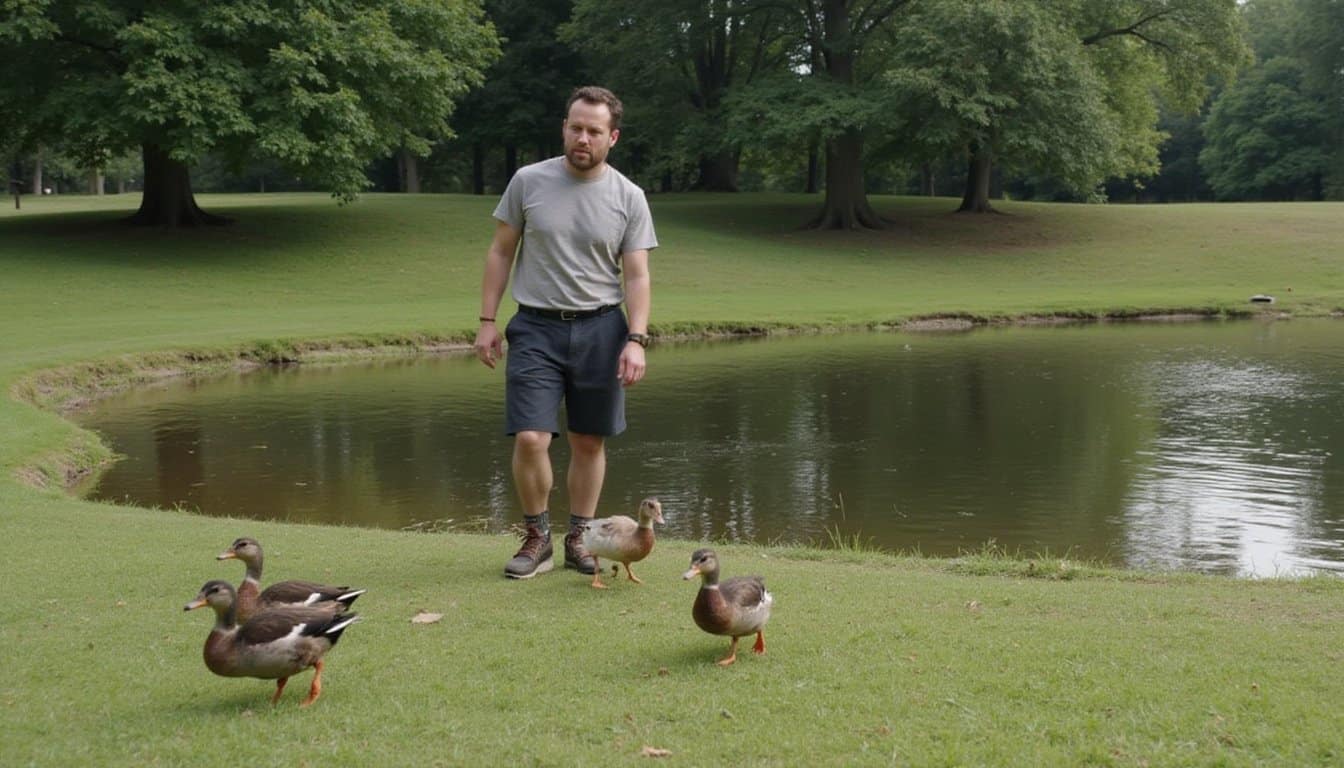
Most people chuckle when they first hear about anatidaephobia, the persistent fear that somewhere, somehow, a duck is watching you. Yet this phobia triggers genuine physiological distress that’s anything but funny.
A duck is watching you right now. Sounds absurd, but for some people, this fear is devastatingly real.
When you encounter your trigger, your body responds with:
- Sweating, trembling, and dry mouth
- Rapid heartbeat and shortness of breath
- Nausea and dizziness
- Paralyzing panic attacks
- Overwhelming urge to flee
These reactions stem from real causes, traumatic encounters with aggressive geese, underlying anxiety disorders, or genetic predisposition to phobias. You can’t simply laugh away a condition rooted in your nervous system’s threat response.
The impact extends beyond momentary discomfort. You might avoid parks, ponds, and public spaces entirely. Without treatment, your world shrinks as the phobia intensifies, proving that no fear deserves dismissal.
Why These Disturbing Phobias Develop and How to Cope
Understanding why your brain develops these intense fears requires examining four key factors: genetics, trauma, evolution, and learned behaviors. Research shows specific phobias affect women at considerably higher rates, 12.2% compared to 5.8% in men, suggesting biological predisposition plays a substantial role. Your ancestors’ survival instincts also shape modern fears; arachnophobia affects 2.7% of people globally despite spiders posing minimal actual danger. Understanding why your brain develops these intense fears requires examining four key factors: genetics, trauma, evolution, and learned behaviors. When researchers analyze the rarest phobias in the world, they often find these same drivers underlying even the most unusual fear responses. Research shows specific phobias affect women at considerably higher rates, 12.2% compared to 5.8% in men, suggesting biological predisposition plays a substantial role. Your ancestors’ survival instincts also shape modern fears; arachnophobia affects 2.7% of people globally despite spiders posing minimal actual danger.
Direct traumatic experiences trigger many phobias. Trypanophobia drives 16% of adults to avoid vaccines due to past medical trauma. You might also acquire fears through observation, watching family members model avoidance behaviors.
If you’re struggling, evidence-based treatments offer real hope. Exposure therapy and cognitive behavioral therapy effectively address the 19 million Americans affected by specific phobias. Early intervention proves particularly valuable, especially for adolescents experiencing the 19.3% prevalence rate.
Frequently Asked Questions
Can Children Develop Disturbing Phobias, and Do They Experience Them Differently Than Adults?
Yes, children can develop disturbing phobias, and they experience them differently than adults. You’ll find that most specific phobias emerge before age 10, with peak onset around 9-10 years. Children with multiple phobia subtypes show elevated comorbidity rates, up to 75.6% develop other internalizing disorders. Unfortunately, only 8-16% seek treatment, meaning you’re likely seeing many cases go unrecognized while these fears persist into adulthood.
Are Disturbing Phobias Hereditary or Passed Down Through Family Members?
Yes, disturbing phobias have a significant hereditary component. Research shows you’re more likely to develop phobias if your family members have them, with genetic factors accounting for 30, 50% of phobia development. Twin studies reveal that if one identical twin has a phobia, there’s a 75% chance their sibling shares it. However, you’re not destined by genetics alone, unique environmental experiences also shape whether these fears actually manifest.
How Do Medications Compare to Therapy for Treating Intensely Disturbing Phobias?
Both medications and therapy effectively treat disturbing phobias, but they work differently for you. Exposure-based therapies like CBT reduce symptoms more effectively and provide longer-lasting relief because they extinguish your learned fear responses. While medications offer quicker symptom relief within weeks, you’re more likely to relapse after stopping them. Therapy teaches you lifelong coping skills without dependency risks, making it the preferred long-term approach for conquering intense phobias.
Can Virtual Reality Therapy Effectively Treat the Most Disturbing Phobias?
Yes, virtual reality exposure therapy (VRET) can effectively treat deeply disturbing phobias. Research shows you’ll experience significant symptom reduction, studies demonstrate large effect sizes (Cohen’s d = 1.03 for acrophobia, 0.85 for spider phobia) compared to control groups. VRET works for fear-based and disgust-based phobias alike, including contamination fears. You’ll find it’s statistically equivalent to traditional in vivo exposure while offering a controlled, gradual approach to confronting your most distressing fears.
Do Disturbing Phobias Ever Disappear on Their Own Without Professional Treatment?
Yes, disturbing phobias can disappear without treatment, though research shows they’re among the least likely anxiety disorders to resolve spontaneously. Studies indicate specific phobias demonstrate virtually no significant improvement without intervention. Your chances improve if you have lower baseline anxiety, strong social support, and stable employment. However, behavioral avoidance, which intense phobias often trigger, actively maintains your fear. You’ll likely need professional help rather than waiting for natural remission.